Apple Fritter Pancakes Recipe
I have a confession: there are mornings when the whole house could be silent and boring, and then I make these pancakes and everything changes. The smell of warm apples and cinnamon pulls people out of bed faster than any alarm I own. I call it my Apple Fritter Pancakes Recipe, and it’s the kind…
I have a confession: there are mornings when the whole house could be silent and boring, and then I make these pancakes and everything changes. The smell of warm apples and cinnamon pulls people out of bed faster than any alarm I own. I call it my Apple Fritter Pancakes Recipe, and it’s the kind of thing I make when I want breakfast to feel like a small celebration. If you like the idea of a soft pancake studded with tender apple bits and a sweet glaze that soaks into every crevice, stay with me.
How I stumbled into this morning favorite
This recipe came from one of those accidental experiments. I had leftover apples and a vague memory of the fritters my grandmother used to buy at the county fair. I wanted that flavor but in pancake form, and after a few tries I landed here. There’s a quick note: if you ever want a crunchier, more fried fritter experience, I’ve played around with variations like the baked apple fritters recipe for a different texture, but what I’m sharing now is softer and more breakfast-friendly.
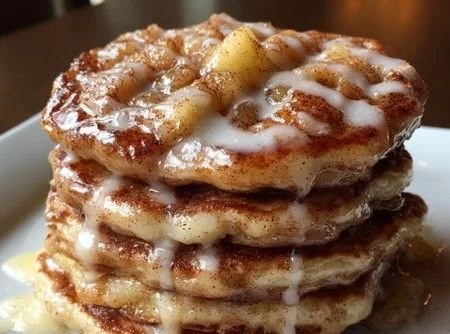
The first time I made them my kitchen sounded like a little bakery. The batter sizzles on the pan, the apples soften and release a perfume of cinnamon and sugar, and the glaze—thin and glossy—drips like morning sunshine. It’s simple to put together but somehow feels indulgent.
The ingredients I keep on hand
I don’t like rigid lists when I’m talking to a friend, so picture me riffling through the cabinet and the fridge: I always start with a cup of all-purpose flour (120 g), two teaspoons of baking powder, half a teaspoon of baking soda, and a quarter teaspoon of salt. For flavor there’s a teaspoon of ground cinnamon and two tablespoons of granulated sugar. Wet ingredients are three quarters of a cup of milk (180 ml), one large egg, a teaspoon of vanilla extract, and two tablespoons of unsalted butter, melted. Then you need one medium apple, peeled, cored, and diced—about a cup worth. For the glaze I mix a cup of powdered sugar (120 g) with about two tablespoons of milk and a half teaspoon of vanilla extract, and I always finish with a half teaspoon of ground cinnamon to sprinkle on top.
If I’m honest, I sometimes double the apple if they’re small, and sometimes swap in a bit of brown sugar for the granulated sugar if I want deeper caramel notes. Once I started making these, they became my go-to when I want something comforting but not fussy. Also, if you ever use these pancakes as part of a weekend brunch spread, I’ve found that pairing them with a savory dish like apple brie stuffed chicken keeps the meal interesting.
Bringing the batter together
Prepare the apple mixture by peeling, coring, and dicing the apple. I like my dice to be small so they soften quickly in the pancake, about quarter-inch pieces. Make the pancake batter by whisking together the dry ingredients in one bowl and the wet ingredients in another, then combine them. That separation helps avoid overmixing, which can make pancakes tough. When I combine, I stir until the batter is just cohesive; it should be a little lumpy.
Fold in the diced apples into the batter. The batter will be thick but pourable—think spoon-and-drop rather than pour-and-river. Heat a skillet over medium and brush it lightly with butter. When the pan is ready, ladle about two tablespoons of batter per pancake, or use a quarter-cup measure if you want uniform discs. You’ll hear a soft sizzle; that sound feels like progress. Cook the pancakes on a preheated skillet, flipping when bubbles form on the surface. The underside should be golden, not deep brown. I usually give them a minute or two more after flipping so the apple pieces have time to soften fully.
While they rest, whisk the glaze together: powdered sugar, milk, and vanilla. Start with two tablespoons of milk and add a drop more if it’s too thick. The glaze should ribbon off the spoon slowly.
Little tricks that make a big difference
There are a few tricks I learned by messing up more than I’d like to admit. First, don’t overpeel your apples; leaving a whisper of skin adds color and texture. Second, if your batter seems too thick, a splash more milk will bring it to the right consistency; if it’s too thin, a spoonful of flour will help. Third, cook on medium rather than high heat—lower and slower gives the apples time to tenderize without burning the outside.
You can tell these pancakes are done when they’re puffed slightly, edges set, and the bubbles have formed and popped before you flip. The color is an even golden tan. When I cut into one, the center should be tender and moist, not gummy. Taste-wise, the warmth should release a soft apple sweetness, the cinnamon should be present but not shouty, and the glaze should add a creamy sweetness that pulls everything together.
If I want to change things up, I sometimes add a handful of chopped walnuts for crunch or a pinch of nutmeg for a more autumnal profile. Alternatively, for a lighter version I fold in grated apple instead of diced, which melts into the batter and leaves softer pockets of flavor. Another variation is to caramelize the apples first with a little butter and sugar for a richer, more dessert-like pancake.
I also often make these into a casserole when friends come over and I need to feed a crowd; it’s surprising how well the flavors translate. If you like that idea, take a peek at a savory-sweet take with the apple fritter breakfast casserole for inspiration on scaling the concept.
What to serve and how to keep them for later
I love serving these with just the glaze and a sprinkle of cinnamon, but they’re also fantastic with a side of thick Greek yogurt or a smear of lemon curd. Bacon or sausage on the side provides a salty counterpoint that many people enjoy. If you’re having them for a lazy weekend, a small pitcher of extra warm maple syrup makes everyone happy.
Storage is straightforward and fits right into my weeknight planning. Leftover pancakes cool to room temperature and go into an airtight container in the refrigerator for up to three days. When I reheat, I prefer a toaster oven or a skillet to keep the edges lively; a quick 3-5 minutes at 350 degrees brings them back to life without making them soggy. You can also freeze them separated by parchment and stacked in a freezer bag, then reheat from frozen for a few minutes.
I think what keeps me coming back is that these pancakes feel like an old-fashioned treat but live in the real world of weeknights and small kitchens. They’re forgiving, they smell like home, and they feed both nostalgia and appetite.
Conclusion
If you want a reliable reference or another take on apple fritter pancakes, this Apple Fritter Pancakes Recipe – Allrecipes is a solid companion to what I’ve described here.
Apple Fritter Pancakes
Ingredients
Method
- Prepare the apple mixture by peeling, coring, and dicing the apple into small quarter-inch pieces.
- Whisk together the dry ingredients in one bowl and the wet ingredients in another. Combine them gently to avoid overmixing.
- Fold in the diced apples into the batter, which should be thick but pourable.
- Heat a skillet over medium and brush lightly with butter.
- Ladle about two tablespoons of batter per pancake into the skillet. Cook until bubbles form on the surface and flip when the underside is golden.
- Cook for an additional minute or two after flipping to ensure the apple pieces are tender.
- While the pancakes rest, whisk together the glaze ingredients until smooth.