Baked Salmon
A Little Story Before the Oven I still remember the first time I baked salmon for a crowd and felt like I had finally figured something out. It was a simple weeknight dinner that turned into a small celebration because the fish came out flaky and glossy, the kitchen smelled like lemon and roasted garlic,…
A Little Story Before the Oven
I still remember the first time I baked salmon for a crowd and felt like I had finally figured something out. It was a simple weeknight dinner that turned into a small celebration because the fish came out flaky and glossy, the kitchen smelled like lemon and roasted garlic, and everyone asked for seconds. If you ever want a small win that’s simple to repeat, try my version of Baked Salmon. If you like spicy-sweet flavors you might also enjoy a bolder, saucy riff like this baked cajun salmon with creamy avocado lime sauce I bookmarked for inspiration.
What I Keep on Hand
The beauty of this recipe is that most of the pantry items are things I always have. For four fillets I usually use 4 fillets Salmon, skin-on or skinless depending on whether I want a crispy skin or an easier fork-and-go. I brush the fish with 2 tbsp Olive oil for brushing and sprinkle it with Salt to taste and Pepper to taste. There are several layers of garlic in this dish: I mince 2 cloves Garlic to mix with the oil, then use another 2 cloves Garlic minced in a lemon-butter drizzle, and a final 2 cloves Garlic minced if I want to punch up a honey-soy glaze. Yes, that is a lot of garlic, but I love that deep roasted garlic aroma. For brightness I use 1 Lemon Sliced for topping and 2 tbsp Lemon juice freshly squeezed in the main sauce, plus 1 tbsp Lemon juice if I make the sweet soy glaze; for extra zing I grate 1 tsp Lemon zest. I like to finish with Fresh dill or parsley as an Optional garnish. Other precise additions that make this recipe feel a touch fancy are 3 tbsp Butter melted to bathe the fillets, 3 tbsp Honey, 2 tbsp Soy sauce low-sodium recommended, and a pinch of 1/4 tsp Red pepper flakes if I want a little heat.
If you enjoy honey-garlic combos as much as I do, this version reminds me of the easy snacky bites in my recipe box—here’s a tiny inspiration for an appetizer-style take baked honey garlic salmon bites.
How I Cook It (and little hacks)
I start by taking the salmon out of the fridge so it can warm up a bit. Let salmon sit at room temperature and pat dry thoroughly. That step matters more than people realize; it prevents the fish from steaming and helps the surface get coated nicely. Once it’s dry I mix 2 tbsp Olive oil with the first 2 cloves Garlic minced, 2 tbsp Lemon juice, 1 tsp Lemon zest, and a little salt and pepper. I brush the fillets with olive oil, garlic, lemon, and herbs evenly. If I am using butter, I melt 3 tbsp Butter and spoon a little over each fillet before sliding the tray into the oven.
For the honey-soy finish, I whisk together 3 tbsp Honey, 2 tbsp Soy sauce, the extra 2 cloves Garlic minced, 1 tbsp Lemon juice, and 1/4 tsp Red pepper flakes. If I want the glaze to caramelize, I spoon it over the salmon in the last 5 minutes of baking so the sugars do not burn. While that glaze is optional, it is one of my tricks for turning a plain fillet into something that tastes restaurant-caliber.
Cook in preheated oven until flaky, opaque, and tender. I usually bake at 400°F (200°C), and the timing depends on thickness—about 10 to 14 minutes for average fillets. A trick I learned is to set a timer for the minimum time, then check: press gently with a fork at the thickest part. If it flakes easily and looks opaque, it is done. If you like a slightly more roasted top, switch to broil for a minute while watching closely.
Knowing When It Is Perfect
How do I know it is done right? The texture should be moist and still a little springy; overcooked salmon is dry and chalky. Another way I check is by inserting a small knife in the thickest part and seeing the color and flake. Cook until flaky, opaque, and tender but not falling apart. After it comes out of the oven I always follow one more important step: Allow salmon to rest so juices redistribute fully. Letting it rest for five minutes keeps the juices where you want them and makes plating much prettier.
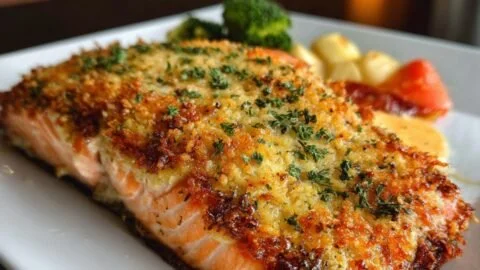
When plating, I lift each fillet and drizzle with the pan juices and any remaining lemon-butter or honey-soy glaze. Plate fillets, drizzle with pan juices, and garnish with herbs like fresh dill or parsley. The smell of lemon, butter, and roasted garlic will make the whole table swoon.
If you want a playful idea for family-style or kid-friendly shapes, I sometimes turn leftovers or small pieces into meatballs—this recipe inspired some fun variations like baked salmon balls with creamy avocado sauce and even savory meatball-style portions baked salmon meatballs when I am feeding a crowd.
Extra Ways to Change It Up
I love this recipe because it is forgiving. One variation is to go fully sweet-and-spicy: use the honey-soy glaze and add extra red pepper flakes for a sticky, glossy finish. Another is to emphasize citrus: double the lemon juice and add extra zest for a bright, Mediterranean riff. If you prefer Asian flavors, swap the butter for a little sesame oil and scatter scallions on top before serving. For finger-food nights I have even hollowed out crostini and made tiny salmon cups, a playful twist related to the idea in baked salmon sushi cups.
A few personal tips: always pat the salmon dry, use fresh lemon rather than bottled juice for brightness, spoon glaze at the end so it caramelizes without burning, and if the fillets are thick give them a few extra minutes under a gentle tent of foil. If you’re short on time, let the glaze sit overnight on the fillets and bake them straight from the fridge—just add a few extra minutes and be sure to let salmon sit at room temperature briefly before baking.
About sides, this salmon sings with simple roasted vegetables, a lemony salad, or fluffy rice. I often serve it with steamed green beans tossed in butter and lemon, or a grain pilaf when I want something heartier.
When I meal-plan, I sometimes make a double batch and keep leftovers in an airtight container in the fridge for up to three days. To reheat, I find gentle warming in a low oven keeps the texture better than microwaving. You can also flake leftover salmon into salads or pasta for quick lunches.
Conclusion
If you want another home cook’s riff on a simple oven approach, I like this Best, Easy Healthy Baked Salmon Recipe for a healthy baseline, and for a neat foil-wrapped method try Baked Salmon | Easy, Healthy Recipe – WellPlated.com.
Baked Salmon
Ingredients
Method
- Take the salmon out of the fridge and let it warm to room temperature for about 15 minutes.
- Pat the salmon dry thoroughly to prevent steaming.
- Mix 2 tablespoons of olive oil, minced garlic, 2 tablespoons of lemon juice, lemon zest, salt, and pepper in a bowl.
- Brush the fillets evenly with the olive oil mixture. If using butter, melt it and spoon it over the fillets.
- Preheat the oven to 400°F (200°C).
- For the optional glaze, whisk together honey, soy sauce, minced garlic, lemon juice, and red pepper flakes.
- Place the salmon in the oven and bake for 10 to 14 minutes, depending on the thickness of the fillets.
- If desired, spoon the glaze over the salmon for the last 5 minutes of baking.
- Check doneness by pressing gently with a fork; the fish should flake easily and look opaque.
- Let the salmon rest for 5 minutes after baking to allow juices to redistribute.
- Drizzle with pan juices and herb garnish before serving.