Beef and Broccoli Lo Mein Noodles
The Night This Recipe Won My Heart I made Beef and Broccoli Lo Mein Noodles on a rainy Tuesday when nothing else in my fridge looked inspiring, and it turned into one of those dinners that smells like a restaurant and feels like home. I remember tossing a pound of steak into a quick marinade…
The Night This Recipe Won My Heart
I made Beef and Broccoli Lo Mein Noodles on a rainy Tuesday when nothing else in my fridge looked inspiring, and it turned into one of those dinners that smells like a restaurant and feels like home. I remember tossing a pound of steak into a quick marinade while the kettle boiled for the noodles, the kitchen filling with that warm soy-and-garlic scent that makes everyone wander in. If you want a shortcut or a different texture one night, I sometimes lean on a crockpot version I tried once, but when time allows, stir-frying this is the version I go back to.
The Secret Behind Perfect Beef and Broccoli Lo Mein Noodles
What makes this recipe hum is the balance of a bold sauce and a glossy finish. For the sauce I mix 3/4 cup low sodium soy sauce, 1/2 cup oyster sauce, 1/2 cup honey (you can also use brown sugar), 2 tablespoons rice vinegar, and 1 tablespoon browning (optional – I like to use this because it adds color). Separately, I whisk together 2 tablespoons cornstarch and 2 tablespoons water to make a slurry, and slowly add it into the soy sauce mixture and set aside. The noodles carry all that flavor, so I usually use 16 ounces of noodles (I used spaghetti once when I was out of lo mein noodles and it worked great).
For the beef, slice 1 pound steak (I love using flank steak or sirloin for this recipe). In a large bowl add the sliced beef, 3 tablespoons soy sauce, 1 tablespoon cornstarch, 1 tablespoon rice wine vinegar, and 1 teaspoon ground ginger. Stir together until the beef is coated all over. For aromatics and texture I keep on the counter 2 tablespoons sesame oil, 1/4 cup onions diced, 1/8 cup garlic diced, 1/8 cup ginger diced, and 16 ounces broccoli cut into florets. It’s a straightforward list but each piece matters: the split of soy in sauce and marinade, the little hits of rice vinegar, and the cornstarch in both the beef and the slurry for that sheen and body.
If you’re curious about variations that use different base noodles or approaches, I also look at an easy Asian beef and noodles twist when I want to mix things up.
Stir-Frying: Sounds, Scent, and Timing
First things first, cook your noodles according to package instructions, then drain and set aside. I always salt the water like pasta and undercook by 30 seconds so they finish in the wok. In a small bowl, whisk together the ingredients for the sauce – soy sauce, oyster sauce, honey, rice wine vinegar, and browning (if using). In another bowl, whisk together the cold water and cornstarch to make a slurry. Slowly add the slurry into the soy sauce mixture and set aside. That slurry step is where the sauce becomes silkier instead of watery.
Heat up your wok until it’s screaming hot, then add the sesame oil and sear the beef until cooked to your preference. Add the sesame oil to a hot wok and sear the beef until cooked to your preference. Transfer to a plate and set aside. I like a little crust on the beef, so I don’t crowd the pan — it’s why I sear quickly and in batches if needed. In the same wok, add the onions, garlic, and ginger. Saute for 2 to 3 minutes, until fragrant. Then, add broccoli florets and cooked noodles to the wok. Stir-fry on high heat until the broccoli is tender. That high heat gives you the sizzle, and you’ll hear the oil pop and smell the garlic and ginger bloom.
Gradually add the sauce to your dish while constantly mixing it to ensure that it is evenly incorporated. Add the beef back in and cook all of the ingredients together until warmed through. Serve hot. The whole finish takes just a couple of minutes; once the sauce clings to the noodles and the beef is warmed, you’re done.
A Few Tricks I Swear By
I have a handful of little habits that make this reliably good. First, dry your beef with paper towels before marinating — it helps the cornstarch grab and creates a better sear. Second, don’t skip the slurry: adding the cornstarch-water mix slowly keeps the sauce from clumping and gives it that glossy coat that clings. Third, use high heat and don’t overcrowd the wok or pan; if it steams you instead of sears, you’ll lose flavor and texture. Fourth, I sometimes toss the noodles with a teaspoon of sesame oil after draining so they don’t stick before hitting the wok. That’s three or four tricks, depending on how you count them, but they all save you from common mistakes.
If you want to experiment with different vegetables or grains, I once tried the same flavor profile in a skillet with quinoa and found it surprisingly satisfying — here’s an example of a quinoa-beef-and-broccoli skillet I made that keeps the soul of the dish but changes the base.
When It’s Done — and What to Serve With It
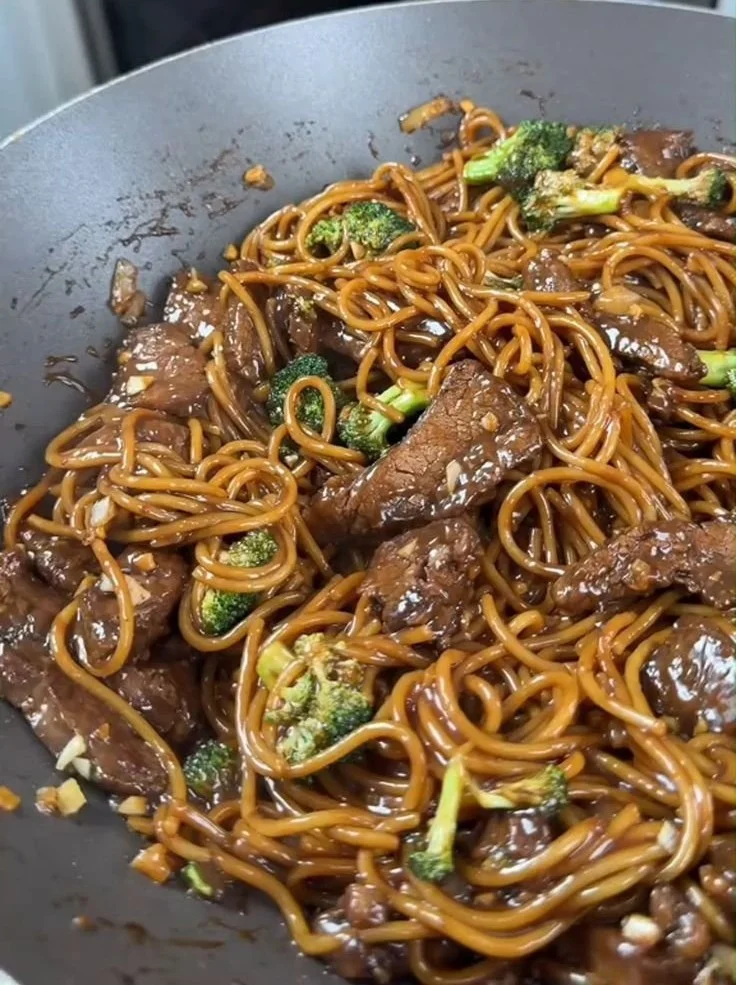
You’ll know it’s right when the broccoli is tender but still bright green and slightly crisp, the noodles are glossy and coated, and the beef is just cooked through with a hint of caramel at the edges. The smell should be warm, savory, with a touch of sweetness from the honey. I serve this hot, usually with steamed edamame or a simple cucumber salad to cut through the richness. Leftovers store well: refrigerate in an airtight container for up to 3 days. When reheating, sprinkle a little water or broth and microwave covered, or toss in a hot pan to revive the texture. For make-ahead meals, you can prepare the sauce and slice the beef the night before, keeping them separate until you’re ready to cook.
If you ever want a slow-cooker take on noodle-ish beef dinners for busy days, I sometimes adapt elements from a slow-cooker beef ramen noodles idea and then finish with fresh noodles at the end.
Small Swaps and Other Ways to Make It Yours
There are a couple of easy variations that keep the spirit of Beef and Broccoli Lo Mein Noodles while changing the vibe. Swap honey for brown sugar for a deeper caramel flavor. Use chicken or tofu instead of beef if you want a lighter or vegetarian option; press the tofu and dust with cornstarch for a crisp finish. For extra heat, add a sliced chili or a pinch of red pepper flakes when you sauté the garlic. If you’re short on oyster sauce, a mixture of hoisin and a splash of fish sauce can mimic some of that savory depth.
I love this recipe because it’s forgiving: a little overcooked broccoli or slightly sticky noodles can be fixed in the pan, and it always comes together fast enough for weeknights yet impressive enough for guests.
Conclusion
If you want another take on the technique or a professionally tested version to compare, the Serious Eats stir-fried lo mein recipe is a thoughtful deep dive. For a home-cook’s twist with different measurements and photos, check out Blond Cook’s beef and broccoli lo mein.
Beef and Broccoli Lo Mein Noodles
Ingredients
Method
- Cook your noodles according to package instructions, then drain and set aside. Salt the water like pasta and undercook by 30 seconds.
- In a small bowl, whisk together the soy sauce, oyster sauce, honey, rice wine vinegar, and browning sauce (if using) to make the sauce.
- In another bowl, whisk together the cold water and cornstarch to make the slurry and set aside.
- Slice the beef and marinate it with soy sauce, cornstarch, rice wine vinegar, and ground ginger in a large bowl.
- Heat up a wok until hot, add sesame oil, and sear the beef until cooked to your preference. Transfer to a plate and set aside.
- In the same wok, add onions, garlic, and ginger, and sauté for 2 to 3 minutes until fragrant.
- Add the broccoli florets and cooked noodles to the wok and stir-fry on high heat until the broccoli is tender.
- Gradually add the sauce while mixing to ensure even incorporation, then add the beef back in and cook until everything is warmed through.