Best Beef & Potato Stew
How I Found This Stew The first time I made what I now call my Best Beef & Potato Stew, it was raining so hard that the whole neighborhood smelled like wet pavement and wood smoke. I wanted something slow, thick, and honest—something that would warm the house and invite people to linger. I started…
How I Found This Stew
The first time I made what I now call my Best Beef & Potato Stew, it was raining so hard that the whole neighborhood smelled like wet pavement and wood smoke. I wanted something slow, thick, and honest—something that would warm the house and invite people to linger. I started with a classic idea and kept tweaking until it felt like mine. If you enjoy trying different takes on beef dishes, I often pull ideas from roundups like 10 best beef slow cooker recipes for inspiration, but this version is the one friends ask me to bring over.
The Ingredient That Changes Everything
What makes a stew feel like a hug is, for me, the balance between good meat and the pot’s braising liquid. For this Best Beef & Potato Stew I use 2.5 lbs beef chuck (cubed), 2 tbsp olive oil, 1 yellow onion (diced), 4 cloves garlic (minced), 3 tbsp tomato paste, 4 cups beef broth, 1 cup water, 2 lbs potatoes (peeled and chunked), 3 carrots (sliced), 2 stalks celery (sliced), 2 bay leaves, 1 tbsp thyme (fresh), 1 tsp paprika, 1 tsp salt (to taste), and 0.5 tsp black pepper. The thyme and bay leaves give it that evergreen, savory backbone while the tomato paste adds a deep, slightly sweet earthiness that clings to the beef and softens as it cooks.
Building It in the Pot
I always start by patting the beef dry; moisture is the enemy of a good sear because it makes the meat steam instead of caramelize. Season beef with salt and pepper. Brown in olive oil in batches. When the pieces get that browned crust and the pan starts to sing, I remove the beef and let it rest on a plate. Remove beef and sauté onion and garlic until fragrant. The sound of the garlic hitting the hot oil is one of my favorite kitchen sounds, a little crackle that promises flavor. Stir in tomato paste and cook until deepened in color. That extra minute or two on the paste is crucial; it caramelizes and loses that raw tinny edge, becoming almost jammy.
Return beef to pot and add broth, water, and seasonings. I tuck in the bay leaves and toss in the fresh thyme stems because they release the scent as the liquid begins to bubble. Simmer covered for 1 hour. During that hour the house fills with a savory perfume and the beef starts to tenderize without becoming mushy. Then I add potatoes, carrots, and celery. Simmer until tender. You can tell it’s close when the potatoes look almost translucent at the edges and the carrots give if you prod them with a spoon. Adjust seasoning, remove bay leaves, and serve hot. The moment you remove the bay leaves, the stew seems to breathe; the flavors settle into place.
Little Tricks That Save the Day
I’ve learned a few small things that make this stew sing. First, brown in batches. Crowding the pan dumps heat and you’ll lose all the fond that makes the sauce rich. Second, don’t rush the tomato paste; letting it darken in the hot pan makes a big difference. Third, if the stew feels thin at the end, mash a few of the potatoes into the pot with a fork and stir—that natural starch thickens the broth without needing cornstarch. Also, if you want to build an even deeper flavor, add a splash of red wine when you return the beef to the pot and let it reduce for a few minutes before adding broth. I sometimes reach for a reference when thinking about texture and proportions, like this beef stew roundup, but I keep things simple at home.
I’ll usually taste and adjust salt just before serving. If you add too much early, the liquid reduces and becomes too salty. A small squeeze of lemon or a tablespoon of vinegar at the end can brighten everything up if it tastes a little flat. When it’s done right, the stew has a glossy, spoon-coating broth, beef that nearly falls apart but still gives a pleasant chew, and vegetables that hold their shape.
When I Make It Different
There are a few variations I rotate through depending on mood and what’s in the pantry. If I want something heartier, I add a cup of pearl barley with the liquid at the beginning and let it cook through. When I aim for a lighter weeknight meal, I swap the potatoes for sweet potatoes and reduce the simmer time slightly. For a Spanish-leaning twist, a teaspoon of smoked paprika and a handful of chopped chorizo added with the onions gives a different smoky warmth. These small changes keep the base recipe exciting without losing the comforting core of beef, potatoes, carrots, and celery.
I often pair this stew with crusty bread to mop the bowl or a green salad to cut the richness. Sometimes I serve it with something simple like a potato omelet, inspired by flavors in a recipe I love: best easy potato omelet. It feels like the most cozy, lazy Sunday dinner when people sit around the table with bowls and tell stories while the stew cools just enough to scoop.
A Few Things About Leftovers and Timing
This recipe is a perfect make-ahead meal. It actually tastes better the next day because the flavors meld. To store, let it cool to near room temperature, transfer to airtight containers, and keep in the fridge for up to four days. For longer storage, freeze in portions for up to three months and thaw overnight in the fridge before reheating gently on the stove. When reheating, add a splash of water or broth to loosen it, and warm slowly so the beef stays tender. If I’m planning a busy weeknight, I’ll brown the meat the night before and finish the simmer the next day; everything cooks faster when the aromatics are already caramelized.
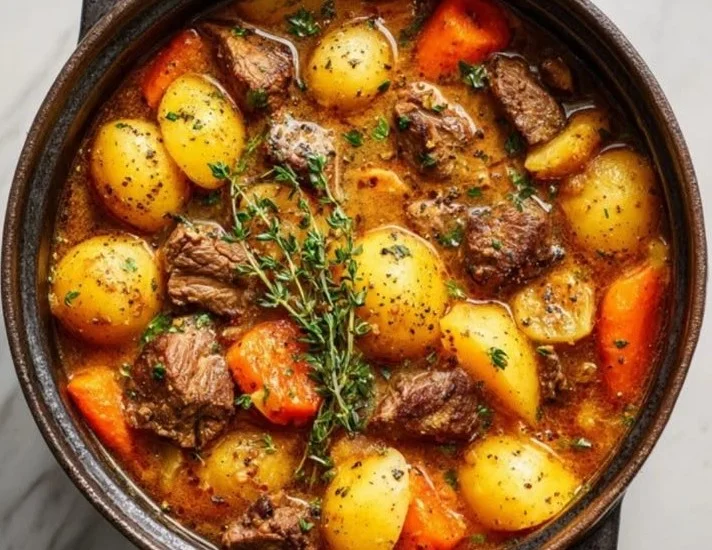
How do you know it’s done right? The beef should be tender enough that a fork can pull it apart a little, but not so overcooked that it disintegrates. The potatoes and carrots are tender but not falling to mush. The broth should coat the back of a spoon, glossy and rich, with a balance of savory, slightly sweet tomato, and herbal notes from thyme and bay leaf.
Personal memory: once my in-laws came over and one of them, who never finishes soups, had two bowlfuls and asked for the recipe. That felt like the highest compliment. Another time I mistakenly added too much salt but rescued it with a peeled potato that sucked up some of the salt while simmering. That little kitchen save is why I always keep an extra potato handy.
Conclusion
If you want to explore more takes on beef-and-potato combinations, I like the one-pot riff found at Beef Stew (with Potatoes) – Chew Out Loud, and for a slow cooker adaptation that spends less time at the stove check out Slow Cooker Beef and Potato Stew – Rachel Hollis. Give this Best Beef & Potato Stew a try on a cool afternoon, and let the house fill with the scent of browning meat and simmering herbs. It’s the kind of dish that keeps giving, both in the first steaming bowl and in the leftovers the next day.
Best Beef & Potato Stew
Ingredients
Method
- Pat the beef dry and season with salt and pepper.
- In batches, brown the beef in olive oil until caramelized, then remove and set aside.
- Sauté onion and garlic in the same pot until fragrant.
- Stir in tomato paste and cook until deepened in color.
- Return the beef to the pot, add broth, water, and seasonings, including bay leaves and thyme.
- Simmer covered for 1 hour.
- Add potatoes, carrots, and celery, and simmer until tender.
- Adjust seasoning, remove bay leaves, and serve hot.