Best French Macarons (Foolproof Guide)
A Little Story Before the Flour Flies I still remember the first time I dared to make French macarons at home: a tiny kitchen, a nervous playlist, and the faint almond perfume that convinced me halfway through that maybe, just maybe, this would work. It did, after a few awkward, flat attempts and one miraculous…
A Little Story Before the Flour Flies
I still remember the first time I dared to make French macarons at home: a tiny kitchen, a nervous playlist, and the faint almond perfume that convinced me halfway through that maybe, just maybe, this would work. It did, after a few awkward, flat attempts and one miraculous batch that actually had feet. If you’re the type who likes a gentle challenge that rewards patience with delicate texture and a crush of flavor, stick with me. By the way, if you love French breakfasts as much as I do, I often make a batch of these alongside my favorite morning treats—like the recipe I follow for best French toast—they make weekends feel festive.
What You’ll Need (yes, it’s specific)
I say specific because macarons are finicky, and the ingredients have to play nice. For the shells you’ll want 1 ¾ cups confectioners’ sugar, 1 cup blanched almond flour, 1 tsp salt, divided, 3 large egg whites at room temperature, ¼ tsp cream of tartar, ¼ cup superfine sugar, ½ tsp vanilla extract, and 2 drops gel food coloring if you want color. For the filling I usually make a simple buttercream with 1 cup unsalted butter softened, 3 cups confectioners’ sugar, 3 tbsp heavy cream, and 1 tsp vanilla extract. Saying those amounts aloud makes the recipe feel real and manageable, like I’m telling a friend what to pull from the pantry.
Walking Through the Batter
I always start by pulsing the dry ingredients so there’s no surprise grit later. Combine confectioners’ sugar, almond flour, and ½ teaspoon salt in a food processor and pulse until extra-fine. Then sift that mixture through a fine-mesh sieve into a large bowl so the texture is perfectly even. Meanwhile I pop the egg whites into the stand mixer. Beat egg whites with the remaining ½ teaspoon salt and cream of tartar in a stand mixer with a whisk attachment until frothy. At this point the kitchen smells faintly sweet and the whites fluff. Gradually add the superfine sugar and vanilla and continue to beat on medium speed until stiff peaks form; the tips should hold their shape but curl over slightly. That look tells you the meringue is ready for the delicate folding.
Gently fold a third of the almond flour mixture into the egg whites to lighten them. This is when I drop in the 2 drops of gel food coloring; a little goes a long way. Add the remaining almond flour mixture in two additions, gently folding until the batter falls off the spatula in thick, continuous ribbons. That stage is called macaronage and it’s the one that feels like magic the first time you get it right—the batter should flow but not be runny.
When the batter looks right I transfer it to a piping bag fitted with a round pastry tip. Pipe neat circles onto silicone macaron mats and then tap the baking sheets four times against the counter to release stubborn air bubbles. This helps reduce cracking and gives the shells a smooth finish.
Let them sit at room temperature until a dry skin forms on the surface, typically 30 minutes to 1 hour. This step is crucial; if you rush, the shells won’t form their signature feet. While they rest I preheat the oven to 300°F (150°C). Bake the macarons until the bottoms rise to form feet, usually 17 to 20 minutes, rotating the baking sheets halfway through for even color. I let them cool on the mats for 15 minutes, then carefully transfer to a wire rack to cool completely.
A quick note about the buttercream: beat the softened butter and the 3 cups confectioners’ sugar together until creamy, then add the 3 tablespoons heavy cream and 1 teaspoon vanilla extract; beat until combined. Transfer the buttercream to a piping bag and pipe it onto the flat side of half the macarons, topping each with the other half to create sandwiches. I like to chill the finished macarons for at least 24 hours when I can; they improve in texture and flavor after some resting time in the fridge.
When They Come Out Right (and what to do when they don’t)
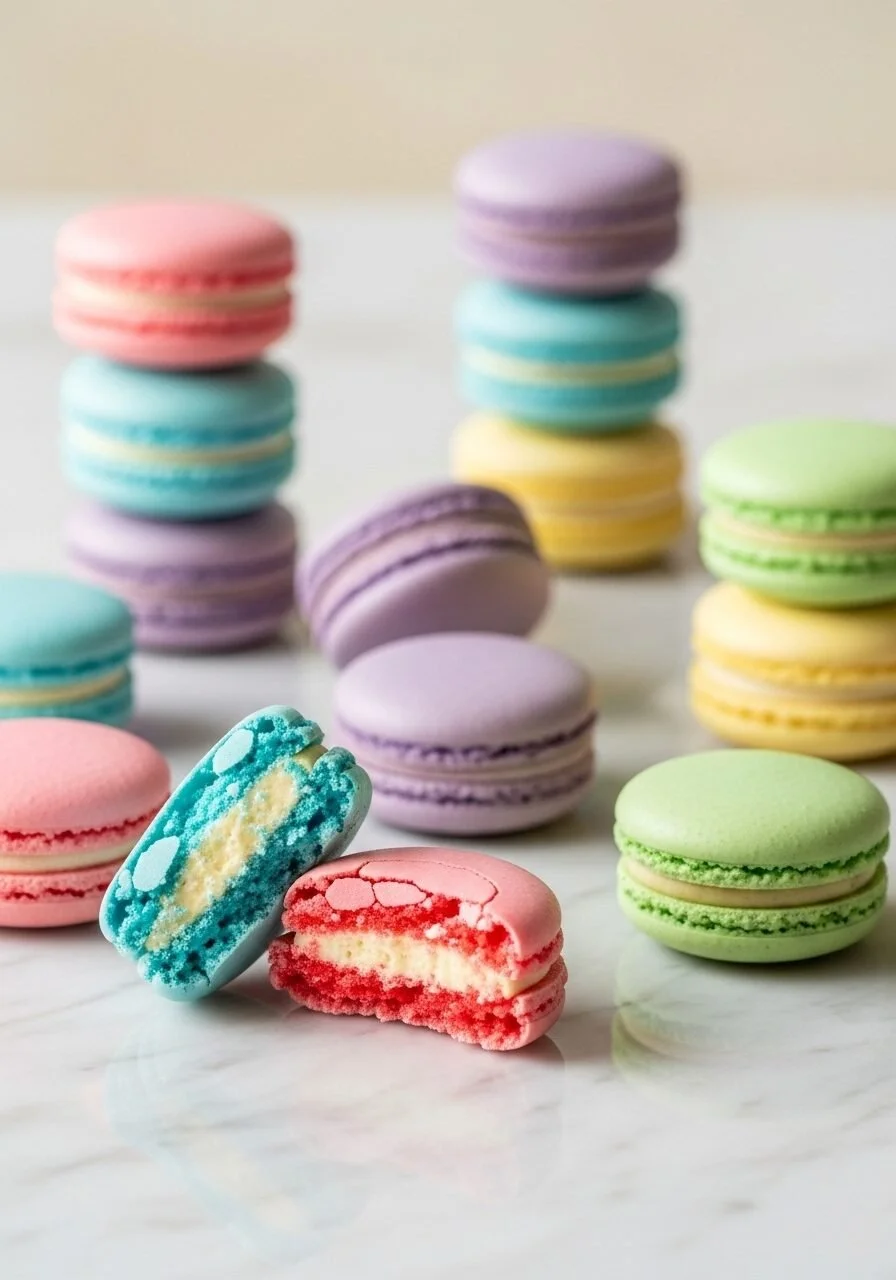
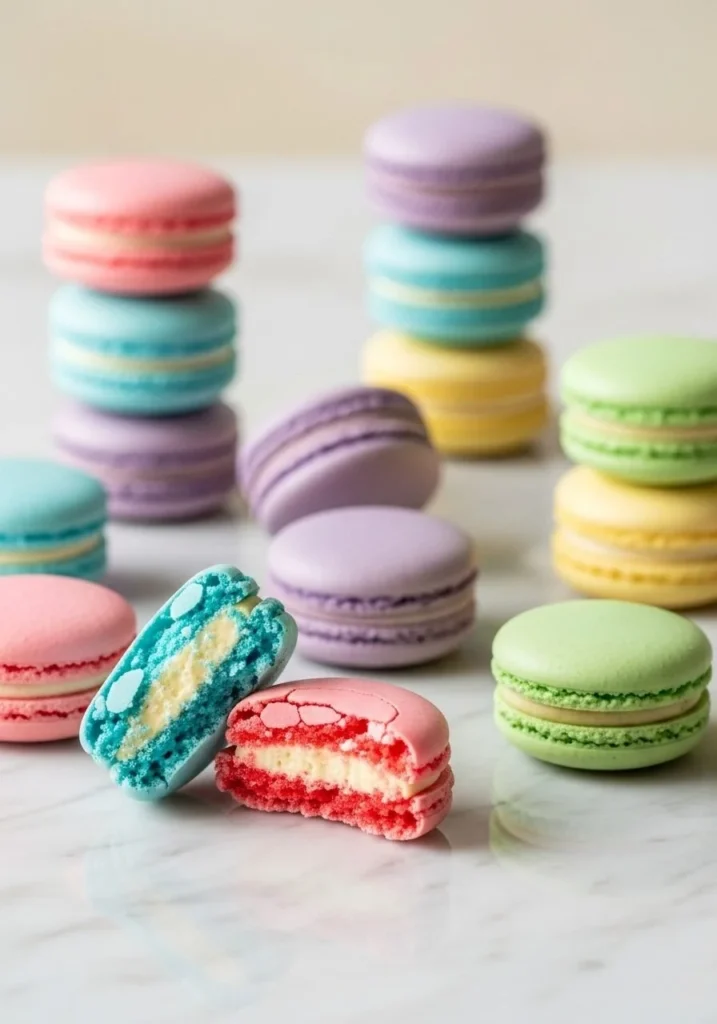
You’ll know they’re done when the shells are smooth and matte, the bottoms have risen to create small ruffled feet, and a gentle squeeze between finger and thumb gives a slight chew without crumbling. If the tops crack or the feet don’t form, think back to the drying step and the macaronage—either you didn’t let a skin form or the batter was overmixed or undermixed. If they’re hollow, you probably had too much air in the batter; next time try tapping the tray more firmly a few extra times and fold a tiny bit less. A personal trick: if my kitchen is humid, I slide the tray near a slightly warm but switched-off oven to encourage a quicker skin without overheating the shells.
Little Variations I Love
I don’t always stick to the buttercream above. Two of my favorite variations are a simple chocolate ganache and a lemon curd filling. For chocolate, use equal parts cream and chopped dark chocolate, warmed and whisked smooth, chilled to piping consistency. For lemon, spoon a little tangy curd into the center for brightness against the sweet shells. Another easy change is flavoring the buttercream: swap the vanilla for a teaspoon of instant espresso for coffee macarons, or fold in a tablespoon of matcha powder to the dry ingredients for a pale green, earthy twist. If you want something extra, you can also try pairing this method with a richer double-chocolate version I experimented with once and wrote about later; for a decadent spin see my notes on double chocolate French macarons.
A Few Practical Notes (Storage, timing, and why I love this recipe)
I love this recipe because it feels like a craft: there is technique, but it is forgiving when you learn the signs—the dry skin, the ribbon, the feet. Leftovers keep wonderfully. Store them in an airtight container in the fridge for up to a week; bring to room temperature before serving for the best texture. If you want to make them ahead for a party, you can assemble and freeze the sandwiches for up to a month, thawing them in the fridge overnight before bringing them to room temperature.
A few tips I always pass along: age your egg whites in the fridge for a day if you want a slightly more stable meringue, but don’t forget to return them to room temperature before whipping. Use a kitchen scale if you have one; a small difference in almond flour can change the batter. And taste your buttercream before piping—adjust the cream or sugar to get the mouthfeel you prefer.
Conclusion
If you want a visual, step-by-step companion that complements what I’ve described here, I recommend following the detailed tutorial at Foolproof Macaron Recipe (Step by Step!) – Broma Bakery for extra photos and charts to guide you through each stage. Making macarons taught me patience and the joy of tiny victories, and once you get that first tray with feet, you’ll understand why I bake them anytime I need something both simple and dazzling.
French Macarons
Ingredients
Method
- Pulse the confectioners' sugar, almond flour, and ½ teaspoon salt in a food processor until extra-fine.
- Sift the mixture through a fine-mesh sieve into a large bowl.
- In a stand mixer, beat the egg whites with the remaining ½ teaspoon salt and cream of tartar until frothy.
- Gradually add the superfine sugar and vanilla, beating until stiff peaks form.
- Gently fold a third of the almond flour mixture into the egg whites, adding gel food coloring.
- Fold in the remaining almond flour mixture in two additions until the batter flows in thick, continuous ribbons.
- Transfer the batter to a piping bag and pipe neat circles onto silicone macaron mats.
- Tap the baking sheets on the counter to release air bubbles.
- Let the macarons sit at room temperature until a dry skin forms (30 minutes to 1 hour).
- Preheat the oven to 300°F (150°C).
- Bake the macarons for 17 to 20 minutes, rotating the sheets halfway through.
- Cool the macarons on the mats for 15 minutes before transferring to a wire rack.
- Beat the softened butter and confectioners' sugar together until creamy.
- Add heavy cream and vanilla extract, beating until combined.
- Pipe the buttercream onto the flat side of half the macarons and top with the other half.
- Chill the finished macarons for at least 24 hours for the best flavor and texture.