Candied Ginger (Crystallized Ginger)
How I Discovered This Little Treasure The first time I made candied ginger was the winter my kitchen smelled like a spice shop for a full week. I had a pound of fresh ginger sitting on the counter, young and pale at the edges, and a craving for something sweet with a little bite. If…
How I Discovered This Little Treasure
The first time I made candied ginger was the winter my kitchen smelled like a spice shop for a full week. I had a pound of fresh ginger sitting on the counter, young and pale at the edges, and a craving for something sweet with a little bite. If you like reading recipes online, you might enjoy a different take, but I prefer to fiddle in the kitchen until I have something that feels like mine; that’s why I often compare what I’m doing with an easy homemade candied ginger recipe I bookmarked, then adapt it. The ingredients are simple: 1 pound fresh ginger, preferably young ginger, about 2 cups water to get things boiling, 2 cups granulated sugar to candy it, and extra sugar for that final sparkly coating. No complicated pantry raid, just time and attention.
The Secret Behind Perfect Candied Ginger (Crystallized Ginger)
What makes crystallized ginger sing is texture and timing. I always peel the ginger with the edge of a spoon; it feels silly but it works—so much less waste than a knife. Then I slice it deliberately thin, about 1/8 inch thick. Those thin slices cook evenly and become translucent without turning rubbery. Next comes a long, gentle simmer that softens the fibers and plumps the pieces without boiling them to oblivion. If you rush it, you get chewy knobs instead of elegant slices. If you overdo the sugar stage you end up with a glassy mess. It’s a delicate balance, which is why I babysit the pot and stir occasionally.
A Walk Through the Recipe
I start by peeling the ginger using the edge of a spoon and slicing it into 1/8-inch thick pieces. Then I bring a large pot of water to a boil, add the sliced ginger, cover the pot, and let it boil for 30 minutes. Once the ginger is soft, I drain it and make sure to reserve the water; that starchy, gingery liquid is part of the trick. I return the ginger to the pot and add 2 cups of that reserved ginger water along with 2 cups of granulated sugar. Bring the pot back to a boil, then lower the heat and simmer gently for 30 to 35 minutes, stirring occasionally so nothing sticks or burns. As the sugar cooks it becomes a glossy syrup that clings to the ginger and turns the slices clear around the edges.
When the pieces look translucent and the syrup has thickened, I drain the ginger again, saving the syrup because it is golden and wonderful for cocktails, tea, or drizzling over yogurt. I spread the ginger on a cooling rack set over a parchment-lined sheet so any extra drips are caught, and let it cool for about 30 minutes. While the slices are still tacky, I toss them in extra granulated sugar so they pick up that crystal coating. Finally I lay each sugared piece flat on parchment paper to dry completely, preferably overnight, before transferring everything to an airtight container.
A few small habits I’ve learned make this easier: set up a drying station with parchment and racks before you begin so you’re not scrambling when the ginger needs to cool; keep a bowl of extra sugar nearby and a spoon to toss pieces quickly; and mark the time for the simmer so you don’t get distracted.
When It’s Done, and What to Do With It
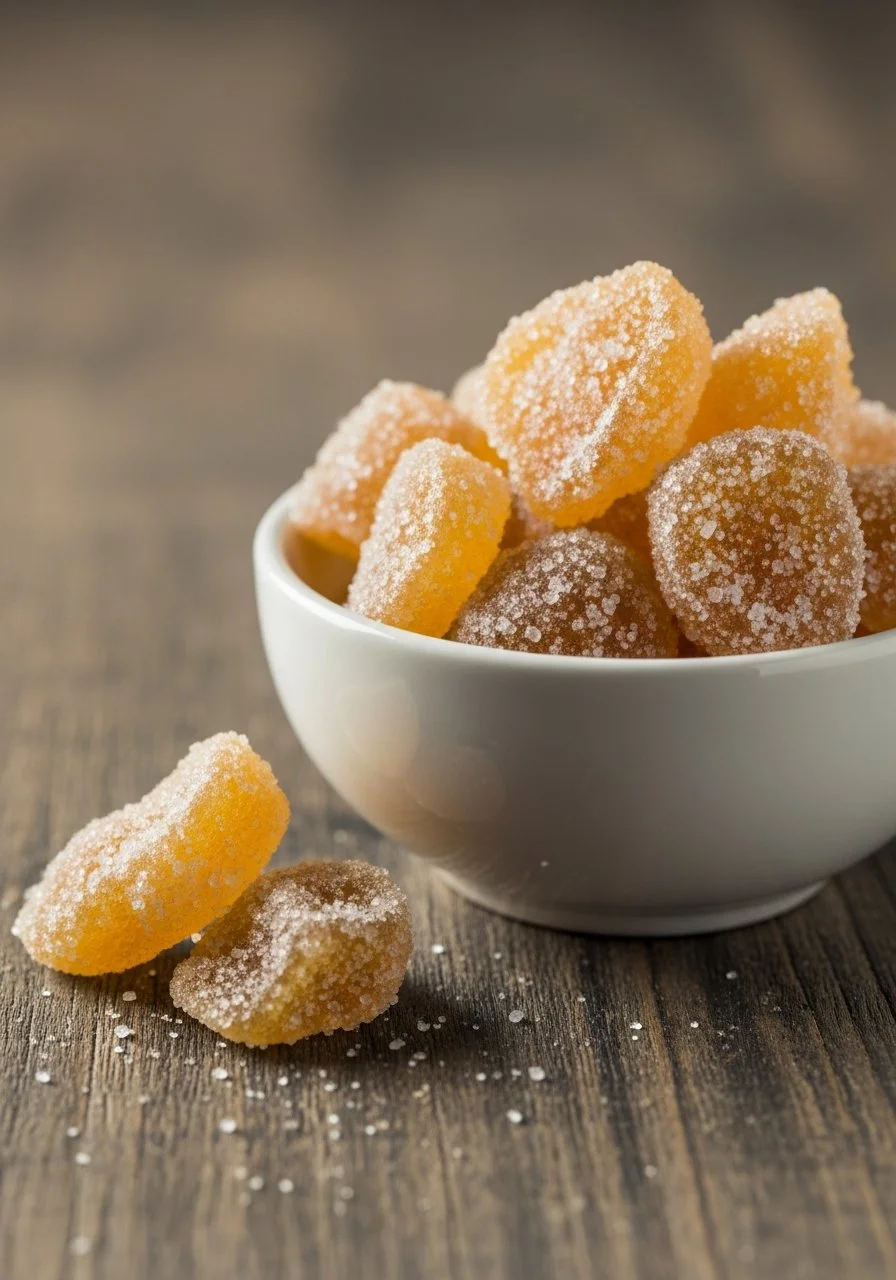
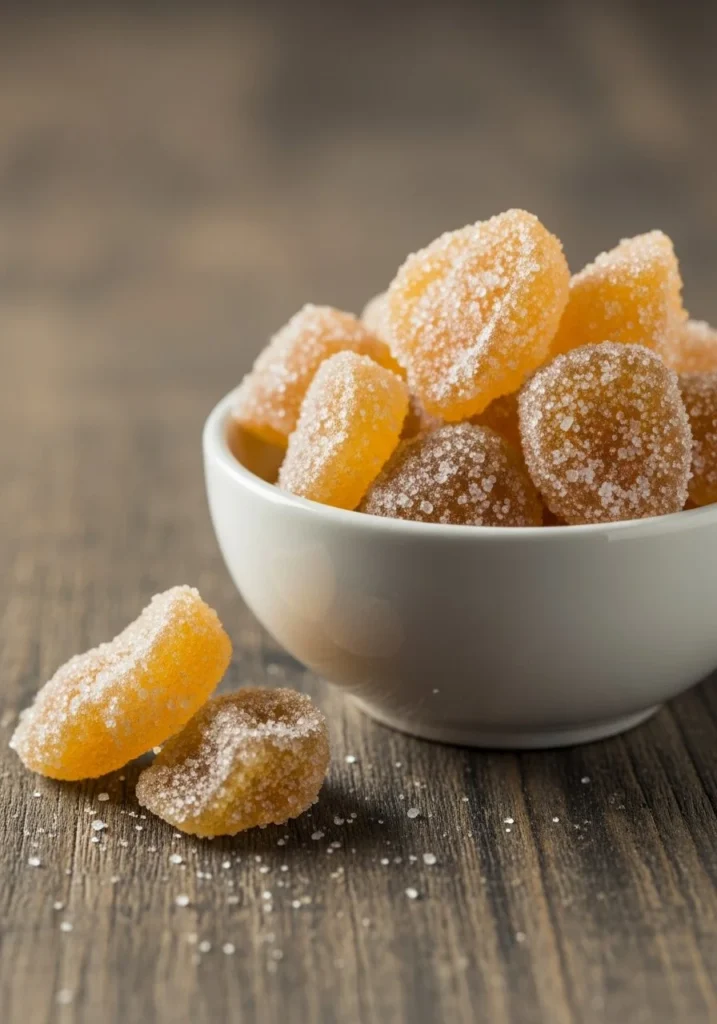
You’ll know the ginger is done when the slices are translucent with a slight chew, not soggy or too hard, and the outside has a crystalline sugar dust. The syrup left behind should be syrupy but pourable, not thin water. I check a slice by letting it cool for a minute; if it holds its shape and the sugar crystals aren’t melting into a film, it’s good. The smell at this point is intoxicating: bright, warm ginger with a sweet, almost caramel whisper from the syrup.
I love serving these slices with tea—green tea, late afternoon, when the sugar offset the tannins perfectly. They also make a nice accompaniment to dark chocolate, sprinkled over a pound cake, or chopped into cookie dough; once I tossed some into an almond cookie recipe and it turned ordinary holiday cookies into something with a happy, spicy surprise. If you want to try that, there’s a fun idea in a recipe I like for almond ginger Christmas tree cookies, which makes me think of the holidays every time I candy a new batch.
A Few Variations and Practical Notes
You can change the flavor profile easily. Tossing the ginger with a little finely ground cinnamon or cardamom before the final drying gives it a warm, holiday twist. If you want heat, a pinch of cayenne added to the syrup while it simmers wakes up the back of the tongue in the most satisfying way. For a lux variation, dip halves of the dried slices in dark chocolate and let them set; those disappear first at parties.
Storage is straightforward: once dry, put the ginger in an airtight container and keep it at room temperature. It will last for several weeks that way. If you make a big batch and want to extend the life, a cold pantry or the refrigerator will keep it for a few months, but bring it back to room temperature before snacking so the sugar isn’t too hard. And don’t throw away the syrup; I keep a jar in the fridge to sweeten teas, cocktails, or glaze roasted carrots.
Here are a few tips I tuck into the process: use young ginger when possible because it’s less fibrous; reserve the boiling water from the initial blanch because it keeps the ginger flavor concentrated and prevents waste; and simmer on low so the sugar can concentrate without scorched notes. If your sugar starts to look grainy in the pot, that usually means it was stirred too vigorously or cooked too hot—lower the heat and be patient.
The Memory That Keeps Me Making It
I think of the first jar I gave to a friend who was recovering from a cold. She kept one slice by her tea and said it was like tiny, spicy medicine and candy at once. That memory makes me keep a jar in the pantry, partly because I genuinely enjoy snacking on it and partly because it’s a comfort to have something home-made and fragrant ready to lift a gray afternoon. There’s a ritual to this recipe: the peeling, the simmer, the clinking of sugar as you toss the slices. It slows me down in the best way.
Conclusion
If you want a step-by-step reference to compare techniques or explore more on the process, this guide on How To Make Crystallized Ginger is a helpful complement to the way I do it at home. Give it a try—start small with a pound of fresh ginger and let the kitchen perfume your house for a day.
Candied Ginger
Ingredients
Method
- Peel the ginger using the edge of a spoon and slice it into 1/8-inch thick pieces.
- In a large pot, bring water to a boil. Add the sliced ginger and cover the pot.
- Boil the ginger for 30 minutes until soft. Reserve the boiling water.
- Return the ginger to the pot and add 2 cups of reserved ginger water along with 2 cups of granulated sugar.
- Bring to a boil again, then lower the heat and simmer gently for 30 to 35 minutes, stirring occasionally.
- Once translucent and syrup has thickened, drain the ginger, saving the syrup for other uses.
- Spread the ginger on a cooling rack over a parchment-lined sheet and let it cool for about 30 minutes.
- While still tacky, toss the ginger pieces in extra granulated sugar for coating.
- Lay each sugared piece flat on parchment paper to dry completely, preferably overnight.