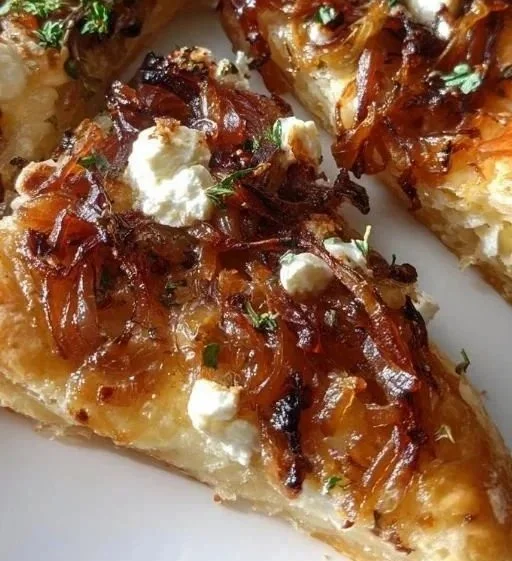
Caramelized Onion and Goat Cheese Tarts
How I stumbled into this tart The first time I made these Caramelized Onion and Goat Cheese Tarts I had nothing fancy planned—just a leftover sheet of puff pastry and two enormous onions languishing in my crisper. I love recipes that feel like happy accidents, and this one is exactly that. If you want to…
How I stumbled into this tart
The first time I made these Caramelized Onion and Goat Cheese Tarts I had nothing fancy planned—just a leftover sheet of puff pastry and two enormous onions languishing in my crisper. I love recipes that feel like happy accidents, and this one is exactly that. If you want to see another take on the same idea, there’s a similar version I sometimes peek at online that helped me tweak the onions the first week I made them: Caramelized Onion and Goat Cheese Tarts recipe. What I kept coming back to was how few ingredients you actually need: 1 sheet of puff pastry, 2 large onions thinly sliced, 2 tablespoons olive oil, 1 tablespoon balsamic vinegar, salt and pepper to taste, 4 ounces goat cheese crumbled, and a little fresh thyme if you’re feeling fancy. That simplicity is part of why I love this recipe so much.
The Secret Behind Perfect Caramelized Onion and Goat Cheese Tarts
There’s something magical about onions that have been cooked slowly until they’re sweet and tawny. For me, the trick is patience: I heat the olive oil gently and let the slices soften before they start to color. When they finally hit that deep golden, almost coppery stage, I splash in a tablespoon of balsamic vinegar and season with salt and pepper; the vinegar brightens and deepens the flavor without stealing the show.
When it comes to assembling, think of the pastry as the stage and the onions as the lead actor. I follow a simple sequence when I make these tarts so I don’t forget a step: 1. Preheat the oven to 400°F (200°C). 2. Roll out the puff pastry and cut it into squares of about 4-5 inches. 3. Place the squares on a baking sheet, ensuring space for puffing. 4. In a skillet, heat the olive oil over medium heat. 5. Add the sliced onions and cook, stirring occasionally, until golden and caramelized, about 15-20 minutes. 6. Stir in balsamic vinegar, salt, and pepper to taste. 7. Top each puff pastry square with a generous amount of caramelized onions. 8. Sprinkle crumbled goat cheese on top. 9. Bake for 15-20 minutes, or until the pastry is golden brown. 10. Garnish with fresh thyme before serving warm. Saying those steps aloud makes them feel less like a list and more like the flow I fall into when I’m in the kitchen.
Getting the Texture Just Right
Texture is the thing that separates a good tart from a forgettable one. The puff pastry needs room to puff, so when you roll out the sheet and cut it into 4-5 inch squares, give each piece enough breathing space on the baking sheet. If they’re too close the edges won’t crisp properly. Another small win is to gently score a border around each square with the tip of a knife so the center settles under the onions and the rim rises into a crisp, pillowy edge.
A quick tip: don’t pile the onions on so high that the pastry can’t cook through. I like a generous layer, but not a mountain of onions. If you’d rather a thinner topping or a more rustic flatbread version, you might enjoy the flatter approach in this other recipe I came across: caramelized onion and goat cheese flatbread. When the tarts are in the oven, listen for the soft crackle as the butter in the pastry warms and the edges start to brown—that’s the sound of success.
A Few Things I’ve Learned
Over the years I’ve collected a handful of tiny hacks that consistently improve the result. First, slice the onions thin and evenly; uneven pieces mean some burn while others stay undercooked. Second, don’t crank the heat in the skillet. Medium is fine—low and slow gives a sweeter, silkier texture. Third, crumble the goat cheese by hand right before you top the tarts; the chunks melt into little pockets of tang that contrast beautifully with the sweet onions. If you get distracted and your onions look a touch dry, a teaspoon of water in the pan will help them release steam and prevent burning.
Sometimes I like to riff on the basic idea. Two variations I love are adding a few thin slices of prosciutto on top after the tarts come out of the oven for salty contrast, or folding in a little honey with the balsamic in the onions for a deeper, richer glaze. If you’re in the mood for something entirely different later in the week, I sometimes make an apple-and-goat-cheese croissant that plays on the same sweet-and-tangy combo: apple goat cheese croissant sandwich.
When I Bring These to a Party
These tarts are my go-to for casual entertaining because they feel elevated but are incredibly easy to scale. I usually bake a tray, warm another in the oven as guests arrive, and let everyone graze. Serve them warm with a crisp green salad and a light vinaigrette, or pair them with a bowl of tomato soup for a cozy dinner. When they come out of the oven, the pastry should be puffed and golden and the cheese should have softened without completely losing its shape—that’s how you know they’re done right.
Leftovers keep surprisingly well. I store them in an airtight container in the fridge for up to three days. To revive the crispness, pop them back into a 350°F oven for five to eight minutes rather than microwaving; the oven brings back the flaky texture. If I want to prep ahead, I’ll caramelize the onions a day or two earlier and refrigerate them; they’ll last about a week and actually taste better as the flavors settle. For an idea that uses similar flavors in a handheld format, there’s another variation worth checking out: apple goat cheese croissant sandwich variations.
I still remember the first time I brought these to a book club—someone asked for the recipe before we left. That moment planted the idea that this simple tart could be my signature party move. It’s one of those recipes that tastes like effort but is almost all about timing and sensible technique.
The Best Part About This Dish
Honestly, it’s the aroma. There’s an instant, cozy warmth that fills the kitchen when onions hit the caramelized stage and the oven begins to do its work. The pop of the pastry, the sweet-sour tang of balsamic, and the creamy bite of goat cheese make each mouthful complex without being fussy. If you want to play, try adding chopped fresh thyme before serving for a little herbaceous lift. For something a touch sweeter, scatter halved figs or drizzle a whisper of honey over the warm tarts.
If you ever want a flatter, more rustic spin on the same flavors, I sometimes consult that flatbread version again for inspiration and technique tweaks. These tarts are easy enough for a weeknight and pretty enough for company, and they’ve earned a permanent spot in my rotation.
Conclusion
If you want a recipe that marries simplicity with rich, layered flavor, this classic take is a good place to start; you can also compare another cook’s approach with the Caramelized Onion and Goat Cheese Tart with Thyme for a slightly different presentation. For more inspiration and an alternate version that highlights the same caramelized-onion-and-goat-cheese combination, take a look at this delightful write-up on Caramelized Onion and Goat Cheese Tarts – Our Happy Mess.
Caramelized Onion and Goat Cheese Tarts
Ingredients
Method
- Preheat the oven to 400°F (200°C).
- Roll out the puff pastry and cut it into squares of about 4-5 inches.
- Place the squares on a baking sheet, ensuring space for puffing.
- In a skillet, heat the olive oil over medium heat.
- Add the sliced onions and cook, stirring occasionally, until golden and caramelized, about 15-20 minutes.
- Stir in balsamic vinegar, salt, and pepper to taste.
- Top each puff pastry square with a generous amount of caramelized onions.
- Sprinkle crumbled goat cheese on top.
- Bake for 15-20 minutes, or until the pastry is golden brown.
- Garnish with fresh thyme before serving warm.