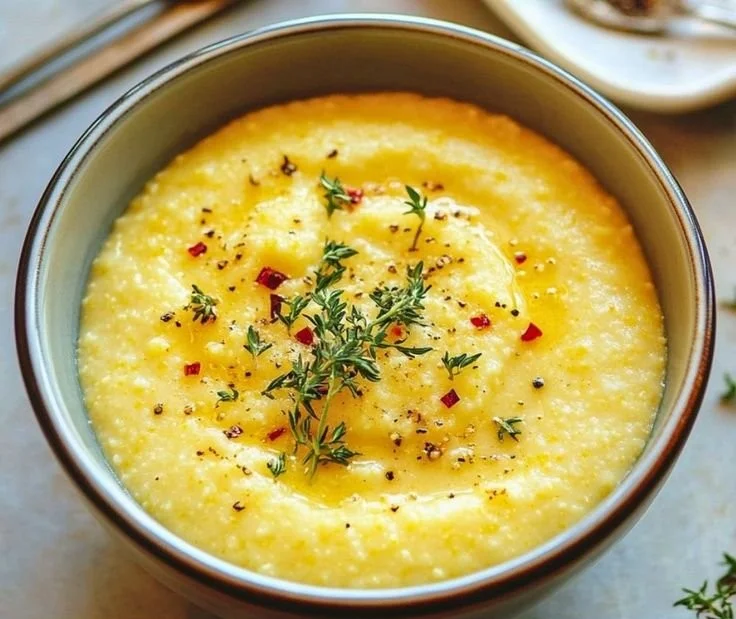
Cheesy Garlic Parmesan Polenta
Ever wondered why polenta can be thrilling? I used to think polenta was a lazy side—pale, polite, and easily ignored at the dinner table. Then I started treating it like a canvas and a tool at once: coarse cornmeal, hot liquid, butter, garlic, and Parmesan. Transforming those few things into something soulful changed the way…
Ever wondered why polenta can be thrilling?
I used to think polenta was a lazy side—pale, polite, and easily ignored at the dinner table. Then I started treating it like a canvas and a tool at once: coarse cornmeal, hot liquid, butter, garlic, and Parmesan. Transforming those few things into something soulful changed the way I cook quick weeknight meals. If you like bold, savory contrasts, consider pairing this polenta with something garlic-forward like an air-fryer garlic Parmesan chicken; the textures and flavors sing together.
I want to take you on a short discovery: why this simple Cheesy Garlic Parmesan Polenta becomes more than the sum of its parts, how to know when it’s finished, and a few playful detours if you feel like experimenting.
The exact ingredients I use
- 1 cup cornmeal
- 4 cups water or broth
- 1/4 cup butter
- 1 cup grated parmesan cheese
- 2 cloves garlic, minced
- Salt and pepper to taste
A quick recipe for steady results
- In a pot, bring the water or broth to a boil.
- Gradually whisk in the cornmeal, stirring constantly to prevent clumps.
- Cook for about 15-20 minutes on low heat, stirring occasionally, until the polenta is thick and creamy.
- Stir in the butter, parmesan cheese, and minced garlic.
- Season with salt and pepper to taste.
- Serve hot as a side dish or enjoy on its own.
The order above is deliberate: hot liquid first, slow incorporation of cornmeal, then low-and-slow cooking. I list the steps plainly so you can follow them or fold them into your own routine.
"I thought it would take longer"
The first time I made this, I assumed real comfort required hours. But the cornmeal I use cooks quickly into a voluptuous, creamy porridge in 15 to 20 minutes. That realization turned polenta from an occasional indulgence into a weekday staple. Cooking becomes easier when you trust the process: boil, whisk, simmer. Letting it rest for a minute off the heat while you stir in butter and cheese is my small ritual—this is where the mouthfeel develops.
The Garlic Situation
Garlic is the personality of this dish. Two cloves, finely minced, give a bright, aromatic lift without overpowering the corn. I add the garlic at the same time as the butter and Parmesan so the raw edge softens into that warm, heady fragrance instead of burning on the pan. If you want a gentler garlic presence, sweat the minced garlic in the butter for 30 seconds first before adding to the polenta.
The Fifteen-Minute Mark
How do you know polenta is done? Look for texture and sound. Finished polenta will be thick but flowing—like soft mashed potatoes—not gluey and not grainy. When you drag a spoon through it, it should leave a faint trail that slowly fills back in. Taste a spoonful: the corn should be fully cooked without a chalky bite. A glossy surface and a slight pull from the pot’s sides are good signs. If it’s still toothy, keep simmering and stir a little more frequently.
Three practical tips I swear by
- Use broth instead of water when you want depth; vegetable or chicken broth adds savory complexity.
- Whisk in the cornmeal gradually to avoid lumps—this is the small step that saves you from a gritty mess.
- Stir in the cheese and butter off the heat for a silkier finish; high heat can make dairy separate.
If you want different textures
Polenta is forgiving. Want it spoonable? Stop at the 15- to 20-minute mark and serve immediately. Want it firm and sliceable? Pour the cooked polenta into a greased pan, cool it until set, then slice and pan-fry for crisp edges. For a slightly richer result, substitute half the butter with olive oil and fold in shredded fontina or gruyere with the Parmesan. If you prefer lower sodium, use water and then salt carefully at the end; the Parmesan brings a surprising amount of saltiness on its own. A baked chicken makes an easy, homey pairing—try my favorite baked garlic Parmesan chicken for a matching flavor profile.
Two simple variations
- Mushroom and thyme: stir in sautéed mushrooms and a pinch of fresh thyme when you add the cheese.
- Lemon-Parmesan: add a teaspoon of lemon zest with the Parmesan for a brighter finish that cuts the richness.
How to rescue it (and a chef’s humility)
If your polenta gets too thick, whisk in a splash of hot water or broth until it loosens. If it’s too thin, continue cooking on low, stirring more frequently—the cornmeal will absorb the excess liquid. I learned both of these after ruining a dinner party batch by walking away too long. Consider that a lesson—and an excuse to make it again with friends.
What to serve it with
Polenta is a patient companion. It loves braised meats, roasted vegetables, sautéed greens, or simply a spoonful topped with slow-roasted tomatoes. For a cozy family meal, ladle it on plates and top with a hearty mushroom ragù or a spoonful of tomato-braised sausages. If you want something quick, a fried egg and a sprinkle of extra Parmesan turn a bowl into a satisfying main.
Leftovers that behave well
Polenta keeps surprisingly well. Transfer cooled polenta to an airtight container and refrigerate for up to 4 days. Reheat gently on the stove with a tablespoon or two of water or broth, stirring until smooth. If you set it in a pan to cool and then slice it, the slices pan-fry beautifully in a little olive oil or butter—crisp outside, creamy inside. Freezing is possible for up to one month; thaw overnight in the fridge before reheating.
A tiny, honest confession
I sometimes make a double batch and warm up portions for breakfast topped with a soft-cooked egg and a crack of pepper. It feels indulgent and practical at once. That’s the beauty of this recipe: it’s simple, adaptable, and reliably comforting.
Final notes before you start
This Cheesy Garlic Parmesan Polenta requires little more than attention and good ingredients. Keep a steady hand with the whisk, taste as you go, and don’t be afraid to tweak—less salt, more butter, different cheese—until it fits your palate. You’ll end up with something comforting, slightly indulgent, and always ready to play the leading role on a modest weeknight table.
Conclusion
If you’d like to compare techniques, a Cheesy Garlic Polenta recipe from Reluctant Entertainer shows another home cook’s approach to flavor balance. For a deeper dive into texture and stirring technique, Billy Parisi’s creamy polenta technique is a useful resource.
Cheesy Garlic Parmesan Polenta
Ingredients
Method
- In a pot, bring the water or broth to a boil.
- Gradually whisk in the cornmeal, stirring constantly to prevent clumps.
- Cook for about 15-20 minutes on low heat, stirring occasionally, until the polenta is thick and creamy.
- Stir in the butter, parmesan cheese, and minced garlic.
- Season with salt and pepper to taste.
- Serve hot as a side dish or enjoy on its own.