Classic Battenburg Cake
How I Found This Classic Battenburg Cake I still remember the first time I bit into a proper Battenburg cake—pink squares framed by pale sponge and wrapped in a sweet almond paste, the apricot jam giving it that glossy, slightly tart lift. It felt like an old-fashioned afternoon tea, and ever since I have kept…
How I Found This Classic Battenburg Cake
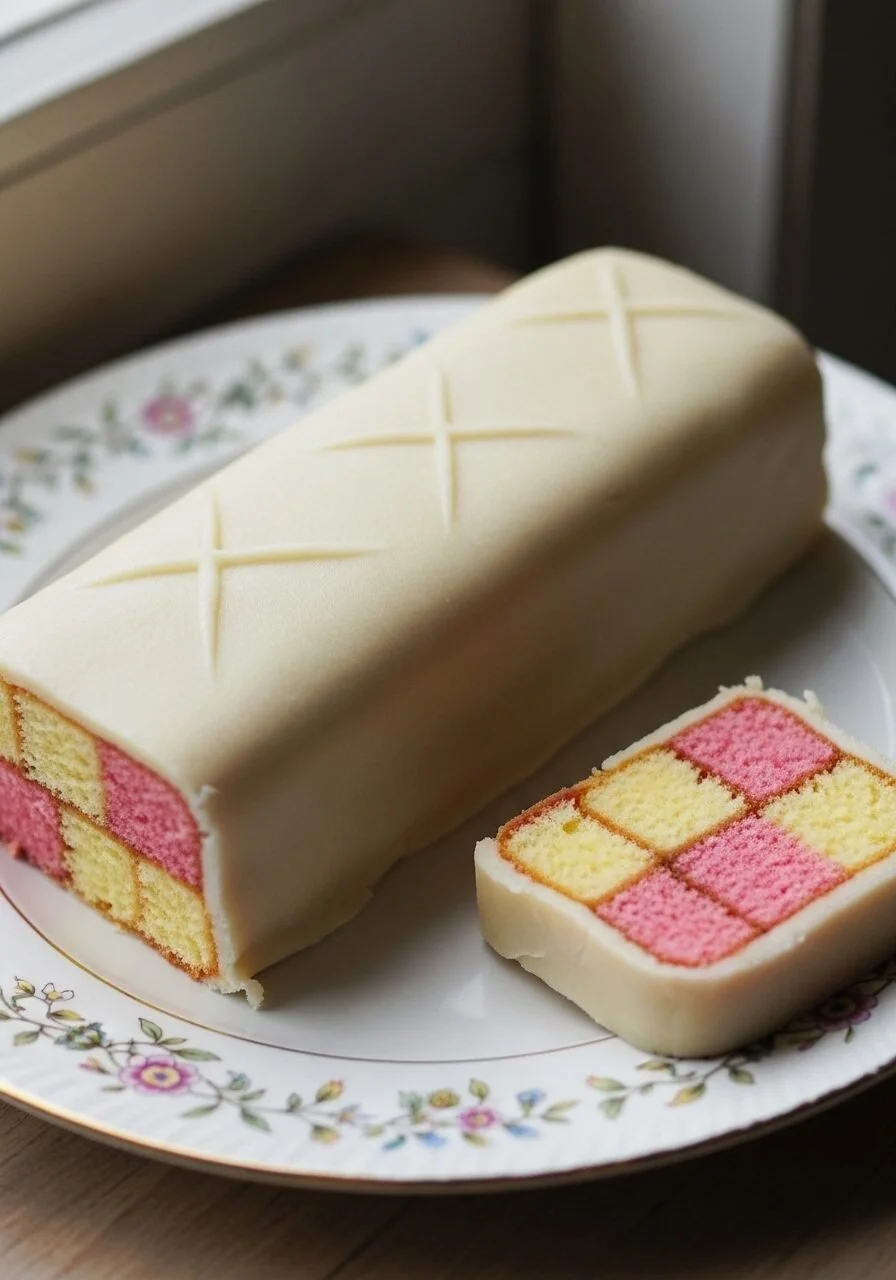
I still remember the first time I bit into a proper Battenburg cake—pink squares framed by pale sponge and wrapped in a sweet almond paste, the apricot jam giving it that glossy, slightly tart lift. It felt like an old-fashioned afternoon tea, and ever since I have kept a version of that recipe in my head and in a battered notebook. If you want to compare ingredients or see another take on this pattern, this classic Battenburg Cake page has a useful layout. My version is simple and forgiving, and I always tell friends how straightforward it is once you get the rhythm of making the sponge, the marzipan, and then assembling the checkerboard.
To make it you need a pretty specific set of pantry staples: 1 cup butter, softened, 1 cup white sugar, 3 eggs, 1/4 tsp vanilla extract, 2 cups all-purpose flour, 1 tsp baking powder, 1/8 tsp salt, and just 2 drops red food coloring for that gentle blush. You’ll also need 1 cup apricot preserves and, for the marzipan, 2 cups ground almonds, 3 cups confectioners’ sugar, 1 egg (room temperature), 1 1/2 tsp lemon juice, and 1/4 tsp almond extract. Saying it out loud like that makes it sound elaborate, but each element is quick to do and worth the small effort.
The Batter and Red Ribbon
Start by preheating your oven to 350°F (175°C). Grease two 7-inch square pans—I use a thin smear of butter and a light dust of flour so the edges come away clean. Cream the 1 cup butter and 1 cup sugar together until light and fluffy; it should turn paler and make a soft swoosh when you pull the beater through it. Beat in the 3 eggs one at a time, making sure each is incorporated before the next goes in, and then mix in the 1/4 tsp vanilla extract.
Gently stir in the 2 cups all-purpose flour, 1 tsp baking powder, and 1/8 tsp salt until just combined; don’t overwork it or you’ll lose that tender crumb. Divide the batter into two bowls; add the 2 drops red food coloring to one and leave the other plain. I like to test the color intensity on a spoon so it stays delicate, not neon.
Spread the batters into the prepared pans and bake for 25-30 minutes. You’ll know they are done when the top is lightly golden and springs back when pressed, and a skewer comes out clean or with a few moist crumbs. Let cool for 5 minutes before transferring to wire racks; that short pause helps the cake settle so it doesn’t break when you flip it out. A tip I always share is to cool the cakes fully before trimming, but leave them slightly warm when slicing the strips—this makes cleaner cuts.
Marzipan, Jam and the Assembly Dance
While the cakes bake and the kitchen fills with that sugary, buttery aroma, I make the marzipan. Mix the 2 cups ground almonds, 3 cups confectioners’ sugar, 1 egg (room temperature), 1 1/2 tsp lemon juice, and 1/4 tsp almond extract until smooth. It will feel sticky at first; knead it on a surface dusted with sugar until pliable. Divide into two equal parts so you can wrap two cakes later. A practical trick: chilling the marzipan briefly makes it less sticky and easier to roll, but don’t let it go rock-hard.
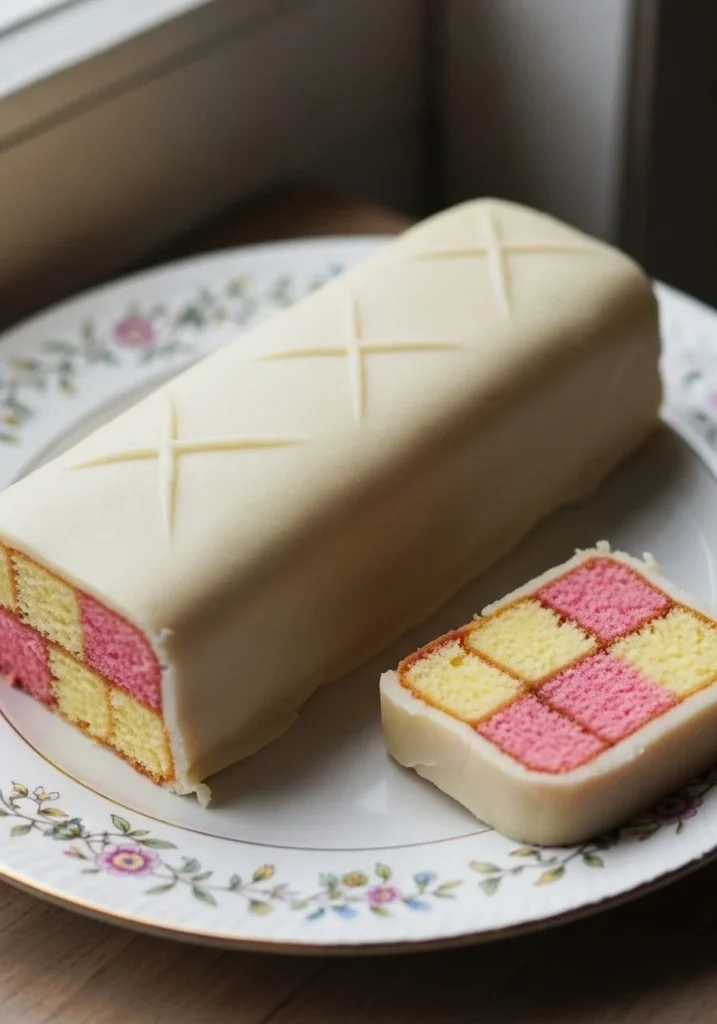
Once the cakes are cool, trim the edges so you have neat rectangles and cut each into four equal strips. If your knife drags, run it under hot water and dry it first for cleaner lines. Heat the 1 cup apricot preserves gently until spreadable—microwaving in short bursts or warming in a small pan works—then sieve if you want it perfectly smooth. Use the warmed jam to glue the strips together in alternating colors to form a checkerboard. The jam is the invisible hero here; it holds everything together and gives the marzipan something to stick to.
Spread more apricot jam on the assembled checkerboard cake and wrap it in one half of the marzipan. I press gently to make sure the marzipan adheres and trim the excess with a sharp knife. Repeat for the second cake with the remaining marzipan, then chill before slicing so the structure is firm and the marzipan sets. Chilling also helps the flavor meld; a good hour in the fridge makes for cleaner slices.
A Few Things I’ve Learned About Getting It Right
I always say there are a few small habits that make the difference between a cake that looks homemade and one that looks like it belongs in a bakery. First, use room temperature eggs and butter for a smooth emulsion; this gives you an even rise. Second, do not be tempted to overmix after adding the flour; folding until just combined is enough. Third, when colouring the pink square, two drops of food coloring is usually enough—more makes it too intense for the classic look.
If you are wondering how to tell when it is done right, trust both the toothpick test and how the top feels. The sponge should be springy, not sticky to the touch, and the jam should not be runny once the cake has chilled. For serving, this is one of those cakes I pair with a pot of strong black tea or a cup of coffee; the almond flavor in the marzipan and the apricot’s brightness cut through the sweetness nicely. If you prefer something lighter, try it with a spoonful of clotted cream or a mild lemon curd.
If you want snack-sized ideas to pair with tea or use leftover marzipan, this collection of 10 healthy rice cake toppings has some surprising inspirations that work nicely with thin slices of marzipan or jam.
What to Serve, Store, and Make Different
Leftovers store really well. If you make this ahead for a party, wrap the chilled cake tightly in plastic wrap and keep it in the refrigerator for up to four days. You can also freeze slices wrapped in parchment and foil for up to a month; thaw in the fridge overnight. I often make the cake a day ahead so the flavors bind and the marzipan mellows.
If you feel like experimenting there are a few variations that work beautifully. Swap the red-colored square for a cocoa-enhanced chocolate sponge for a chocolate-pink contrast. Replace the apricot preserves with raspberry jam for extra tartness, or add a teaspoon of orange zest to the sponge for a citrus lift. For a boozy adult twist, brush the sponge with a little almond liqueur before assembling.
I have a handful of small tricks I always pass on: use a warm knife to slice for cleaner edges, sieve jam for smooth glue, chill assembled cakes before cutting, and keep extra confectioners’ sugar on hand when kneading marzipan. Those tiny moves save you from frustration and give you the neat checkerboard that people admire.
Conclusion
If you want a tidy reference for another variation of this pattern, the article on Battenberg Cake – Food52 offers useful context and inspiration. Making Battenburg is a little ritual: the creaming, the blush of color, the almond scent from the marzipan, and the satisfying clack of a knife through chilled cake. It feels special without being fussy, and for me it is the kind of recipe friends always ask for after tasting.
Battenburg Cake
Ingredients
Method
- Preheat oven to 350°F (175°C). Grease and flour two 7-inch square pans.
- Cream butter and sugar together until light and fluffy.
- Beat in each egg one at a time, followed by the vanilla extract.
- Gently fold in flour, baking powder, and salt until just combined.
- Divide the batter into two bowls; add food coloring to one and leave the other plain.
- Spread the batters into the prepared pans and bake for 25-30 minutes until golden and a skewer comes out clean.
- Let cakes cool for 5 minutes before transferring to wire racks.
- Mix ground almonds, confectioners' sugar, egg, lemon juice, and almond extract until smooth.
- Knead the marzipan on a sugared surface until pliable, then divide into two parts.
- Trim cooled cakes into neat rectangles; cut each into four strips.
- Heat apricot preserves until spreadable, then use to glue the strips together to form a checkerboard.
- Spread more jam on the assembled cake and wrap in marzipan, pressing gently. Trim excess.
- Chill before slicing to firm up the structure.
- Serve with strong tea or coffee, or with clotted cream or lemon curd.
- Store leftovers wrapped in plastic in the refrigerator for up to 4 days or freeze for up to a month.
- For variations, consider using chocolate sponge or different jams.