Crispy Feta Fried Eggs
Bite one and you get a crackle, then creamy amber yolk, then salty tang that keeps you chewing. That was my first thought the morning I improvised this: I had leftover feta, two eggs, and not enough patience to make anything fussy. What followed was a small kitchen epiphany—feta makes an impeccable frying surface and…
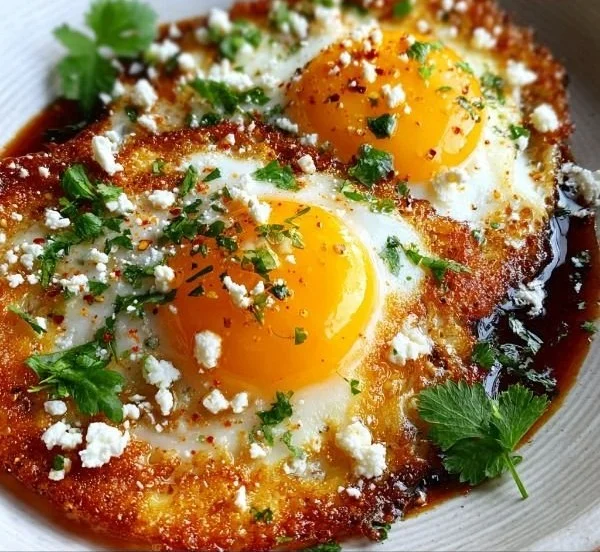
Bite one and you get a crackle, then creamy amber yolk, then salty tang that keeps you chewing. That was my first thought the morning I improvised this: I had leftover feta, two eggs, and not enough patience to make anything fussy. What followed was a small kitchen epiphany—feta makes an impeccable frying surface and a crunchy, salty frame for a soft egg. If you like simple tricks that feel a little bit clever, this is one to keep on repeat. If you want a crunchy companion on the side, try pairing it with a crisp latke like the one in this Christmas Eggs Benedict on Crispy Latkes for a brunch that looks like you tried harder than you did.
Ingredients
- 2 large eggs
- 1/2 cup crumbled feta cheese
- 2 tablespoons olive oil
- Salt and black pepper, to taste
- 1 tablespoon fresh parsley, chopped (optional)
- 1/2 teaspoon red pepper flakes (optional)
A discovery recipe is part method and part curiosity. I’ll tell how I arrived at the version I now make without thinking, why each ingredient matters, and a handful of variations that keep things interesting.
Why cheese first? I used to spoon feta onto everything, but frying it turned the cheese into a nearly caramelized, savory lace that holds eggs like a bowl. The technique is simple and counterintuitive: heat the oil, lay down the cheese, then crack the eggs onto the melting bed.
The full method in plain steps that worked for me:
Heat the olive oil in a non-stick skillet over medium-high heat until shimmering. Sprinkle the crumbled feta cheese evenly in the skillet, making sure it covers the bottom. Allow the feta to cook for about 1-2 minutes until it starts to melt slightly and the edges begin to crisp. Carefully crack the eggs over the feta, spacing them apart so they’re not too close together. Season the eggs with salt and black pepper to taste. Let the eggs cook for about 3-4 minutes, or until the whites are set, and the yolks are still runny. For firmer yolks, cook a bit longer according to your preference. Optional: Sprinkle chopped parsley and red pepper flakes over the eggs for added freshness and heat. Once cooked, gently slide the eggs and crispy feta out of the pan onto a plate. Serve immediately while hot, allowing everyone to enjoy the contrast of creamy yolks, crispy feta, and savory flavors.
What each ingredient brings
- Eggs: you want large eggs because the ratio of white to yolk matters here; a generous yolk gives you that molten center against the crisp feta.
- Feta: crumbled feta melts unevenly and crisps at the edges, giving pockets of salt and texture. Use a block you crumble yourself if possible.
- Olive oil: gives a clean frying flavor and keeps the feta from sticking while encouraging browning.
- Salt and black pepper: season lightly—feta is already salty. Taste before piling on more.
- Parsley and red pepper flakes (optional): parsley brightens; red pepper flakes add the tiniest kick that contrasts with the creamy yolk.
When the edges go gold
The visual cue that makes this worth repeating is the feta turning from soft white to small golden islands and lacy edges. Watch the edges: once they start to brown and pull away from the pan, they become crisp and almost wafer-like. At that point, you can crack the eggs right on top. How do you know the eggs are done? The whites should be opaque and set around the yolk. If the whites are still glossy or runny, give them another minute. For a perfectly runny yolk with set whites, aim for 3 to 4 minutes after cracking.
Three practical tips I learned the hard way
- Use a non-stick pan and medium-high heat to encourage the feta to crisp without sticking.
- Spread the feta thin and even; thick lumps melt into one sticky mass and won’t crisp nicely.
- Don’t over-salt after the feta is in the pan—taste first because feta carries a lot of salt already.
Two sensible swaps and one playful variant
- Swap: If you’re short on feta, try a tangy goat cheese crumbled thinly—the texture will be softer and the crisp less pronounced, but the flavor is still excellent.
- Swap: Use avocado oil if you want a neutral frying flavor or if olive oil smoke point worries you.
- Variant: For a Mediterranean spin, add a sliced tomato under the feta before the eggs; the tomato steams gently and adds acidity. If you want a more substantial vegetarian plate, a side of crispy air-fried tofu nuggets brings protein and crunch without stealing the show.
How I serve it (and what to avoid)
Serve these eggs immediately on warm plates so the feta doesn’t soften too much. They are brilliant on thick slices of toasted sourdough, folded into a pita with greens, or set atop pan-fried zucchini for a lighter meal; if you like a vegetable side, try this crispy fried zucchini recipe alongside. I avoid saucing the top heavily—too much olive oil or a wet sauce softens the crisp too quickly.
Leftovers and storage
These are best eaten right away, but if you have leftovers, let them cool and store in an airtight container for up to 24 hours. Reheat gently in a non-stick skillet over low heat to revive the crisp edges, or warm briefly under a broiler for a minute. The texture won’t be exactly the same, but the flavors remain delightful.
A couple of presentation notes
- Sprinkle the parsley and red pepper flakes at the last second so the herbs stay bright and the flakes don’t burn.
- Use a thin, flexible spatula to slide the eggs and feta from the pan so the fragile crisp doesn’t tear.
A short story: why this recipe stuck
The morning I invented this I had teenagers running late and a friend showing up for coffee. I wanted something that felt thoughtful without the fuss. The feta trick produced something that looked restaurant-level and took less than ten minutes. My friend asked for the recipe immediately, then asked if I’d teach her kitchen tricks next weekend. That small exchange—food as a tiny bit of generosity—keeps me making this when I need an uncomplicated, impressive breakfast.
A slightly more filling option
If you want to turn this into dinner, add a scoop of garlicky fried rice and roast vegetables; it matches beautifully and stretches the meal. For a heartier, comfort-oriented plate, serve with a quick pan stir of leftover rice and greens like in this crispy garlic chicken fried rice idea, minus the chicken if you’re keeping it vegetarian.
Final checks before you cook
- Pan shimmering? Oil hot enough? Feta spread thin? Eggs at room temperature for quicker, even cooking? If yes, you’re ready.
Conclusion
If you’re interested in where this idea came from on the web, the viral version that helped popularize the technique is well documented in this Crispy Feta Fried Eggs (Viral Recipe) write-up, and the original feta-fried-egg inspiration traces back to this early adaptation by Grace Elkus at the original feta fried egg.
Crispy Feta Fried Eggs
Ingredients
Method
- Heat the olive oil in a non-stick skillet over medium-high heat until shimmering.
- Sprinkle the crumbled feta cheese evenly in the skillet, covering the bottom.
- Allow the feta to cook for about 1-2 minutes until it starts to melt slightly and the edges begin to crisp.
- Carefully crack the eggs over the feta, spacing them apart.
- Season the eggs with salt and black pepper to taste.
- Let the eggs cook for about 3-4 minutes, until the whites are set and the yolks are still runny.
- For firmer yolks, cook a bit longer according to your preference.
- Optional: Sprinkle chopped parsley and red pepper flakes over the eggs.
- Gently slide the eggs and crispy feta onto a plate and serve immediately.