Crispy Fried Goat Cheese with Pretzel Crust
The First Time I Made Crispy Fried Goat Cheese with Pretzel Crust I owe this recipe to a tiny, noisy tapas bar where someone ordered something that smelled like heaven and tasted even better. I came home and decided to recreate it, but with what I had in the pantry: 2 cups pretzels, 1/2 cup…
The First Time I Made Crispy Fried Goat Cheese with Pretzel Crust
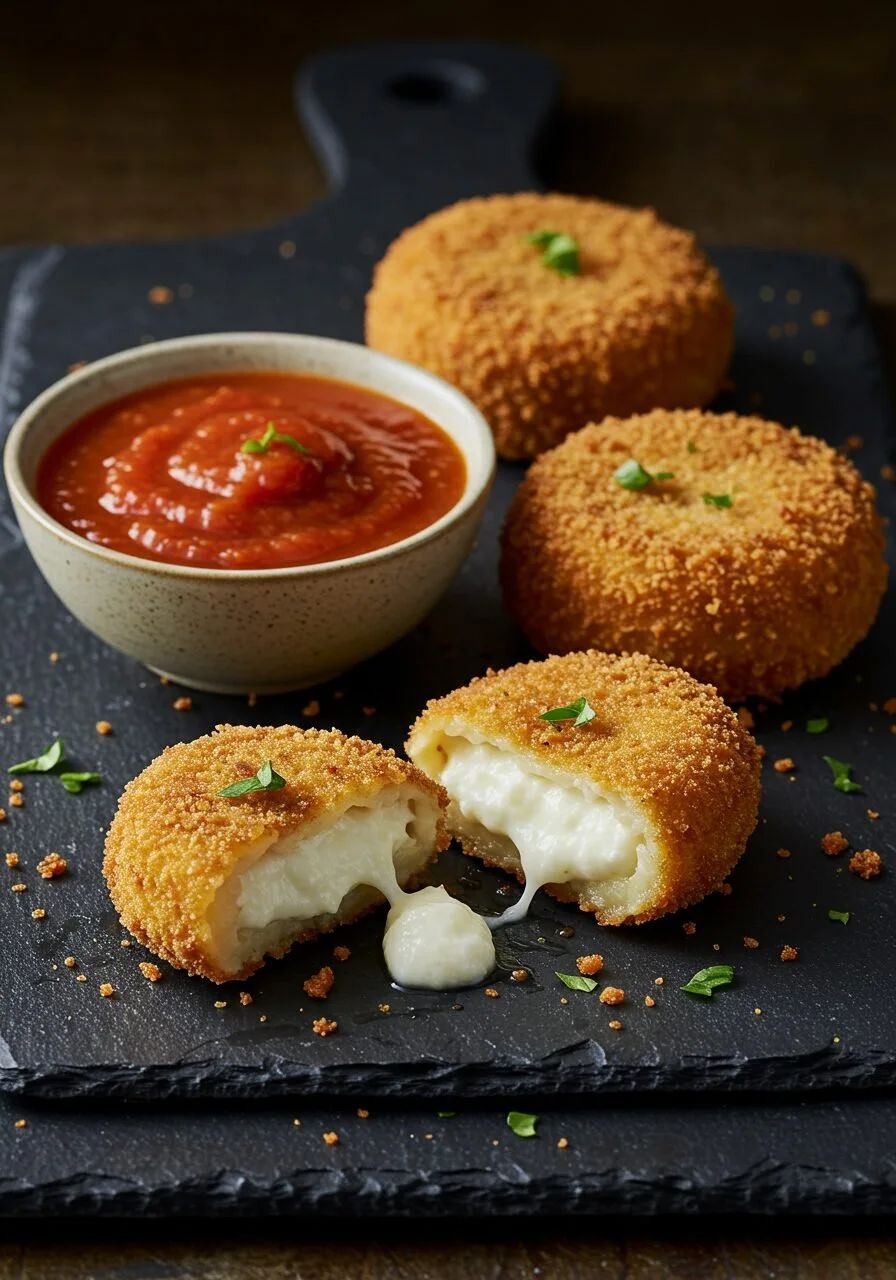
I owe this recipe to a tiny, noisy tapas bar where someone ordered something that smelled like heaven and tasted even better. I came home and decided to recreate it, but with what I had in the pantry: 2 cups pretzels, 1/2 cup all-purpose flour, 2 whole eggs, and two little 4-ounce logs of goat cheese (chèvre). I also grabbed olive oil for frying, a jar of marinara for dipping, and minced parsley to finish. If you like a crisp exterior with a warm, slightly tangy interior, this will become a dangerous habit.
When I started experimenting I read a few different takes, including a great primer on fried goat cheese, which helped me think about coating techniques and frying time. That early reading nudged me toward crushing the pretzels super fine so they’d cling and brown nicely.
The Secret Behind Perfect Crispy Fried Goat Cheese with Pretzel Crust
The step that changes everything is simple: in a food processor, grind the pretzels to a very fine crumb. It should look almost like coarse sand, not big salt flakes. Then set up a proper breading station with three shallow bowls: one with those pretzel crumbs, one with the 1/2 cup of all-purpose flour, and one with the eggs whisked with 2 tablespoons of water so the wash is loose and silky. I can’t overstate how much easier the coating is when you do this. I usually slice the two logs of goat cheese into 8 thick medallions total; a quick tip, and something I learned the hard way: freeze the cheese for 20 minutes first for cleaner slices. It firms up just enough so the knife doesn’t squish it.
Working with one slice at a time, I dredge it in flour, dip it in the egg wash, and then press it firmly into the pretzel crumbs until it’s coated completely. I press a little more crumb onto the sides so nothing peeks through. If you rush, the coating will slip off in the pan, so I treat each piece like a small craft project.
Getting the Texture Just Right
There’s a sound I love when these hit the oil: a steady, confident sizzle. I heat about 1/2 inch of olive oil in a skillet over medium heat. Test with a single breadcrumb first so you know the oil is ready; it should bubble quickly but not roar. I work in batches so the skillet doesn’t cool down, frying four slices on the first side for about 45 seconds, until they’re a warm golden brown. Gently flip them and fry on the other side for 30 to 45 seconds, until the crust is uniformly golden and crisp. Transfer the finished rounds to a paper towel-lined plate so they don’t sit in oil.
How do you know they’re done right? The outside should be crunchy and deeply golden, while the middle stays warm and slightly oozy, not hot and running. Overcook them and the goat cheese loses its creaminess; undercook them and the crust doesn’t develop enough color. My rule is short, precise frying at an even medium temperature. If the oil smokes or the crust burns in spots you’re too hot. If nothing browns, you’re too cool.
A Few Things I’ve Learned
One of my favorite tricks is to freeze the breaded medallions for about 10 minutes if I’m prepping a party platter; they hold together better in the pan and are less likely to burst. Another small thing that helped me: use a fork or tongs with a gentle touch. I flip with the back of a spoon when the pieces seem fragile. Third, if you hate waste, press any extra pretzel crumbs back into the next piece rather than sweeping them away.
These little ones are best served immediately while still warm, with a side of marinara sauce for dipping and a sprinkle of fresh minced parsley. The bright tomato and herbs cut the richness perfectly. For a composed plate I sometimes pair them with a simple beet salad; the earthy sweetness of beets is a favorite contrast and I often refer to a beet salad with goat cheese I love when I’m thinking about flavors to pair them with. If you’re serving a crowd, they also play beautifully on a cheese board next to cured meats and fruit.
If you have leftovers, store them in an airtight container in the refrigerator for up to two days. To re-crisp, I pop them back into a 375 degree oven for 6 to 8 minutes until heated through and crunchy again. Microwaving makes them melty and sad—avoid that unless you just want the cheese warmed.
A Few Variations and Why I Love This
I adore this base recipe because it’s so forgiving. You can swap the pretzels for panko for a lighter crunch, or use crushed spicy chips if you want heat and salt in every bite. Another variation I love is rolling the crumbs with a handful of finely grated Parmesan for an extra savory note, or using an herbed goat cheese for a floral lift. For a sweet-savory party trick, drizzle a little honey over the finished rounds and finish with a pinch of flaky sea salt. Each variation feels different but familiar, and that’s what keeps me making these again and again.
Why do I love this recipe? The contrast is irresistible: the snap of the pretzel crust, the creamy tang of chèvre, the warmth that hits the roof of your mouth. It’s quick enough for a weeknight indulgence but elegant enough to serve when friends drop by. And it’s a recipe that lets you play, whether you’re experimenting with coatings, dipping sauces, or accompaniments.
Conclusion
If you want another perspective or a slightly different technique, I sometimes compare methods with a favorite online version and find inspiration in how others tweak the coating and frying times. For an alternate take and more ideas, take a look at Evolving Table’s fried goat cheese recipe. Give it a try the next time you need a small showstopper that comes together fast and makes everyone at the table smile.