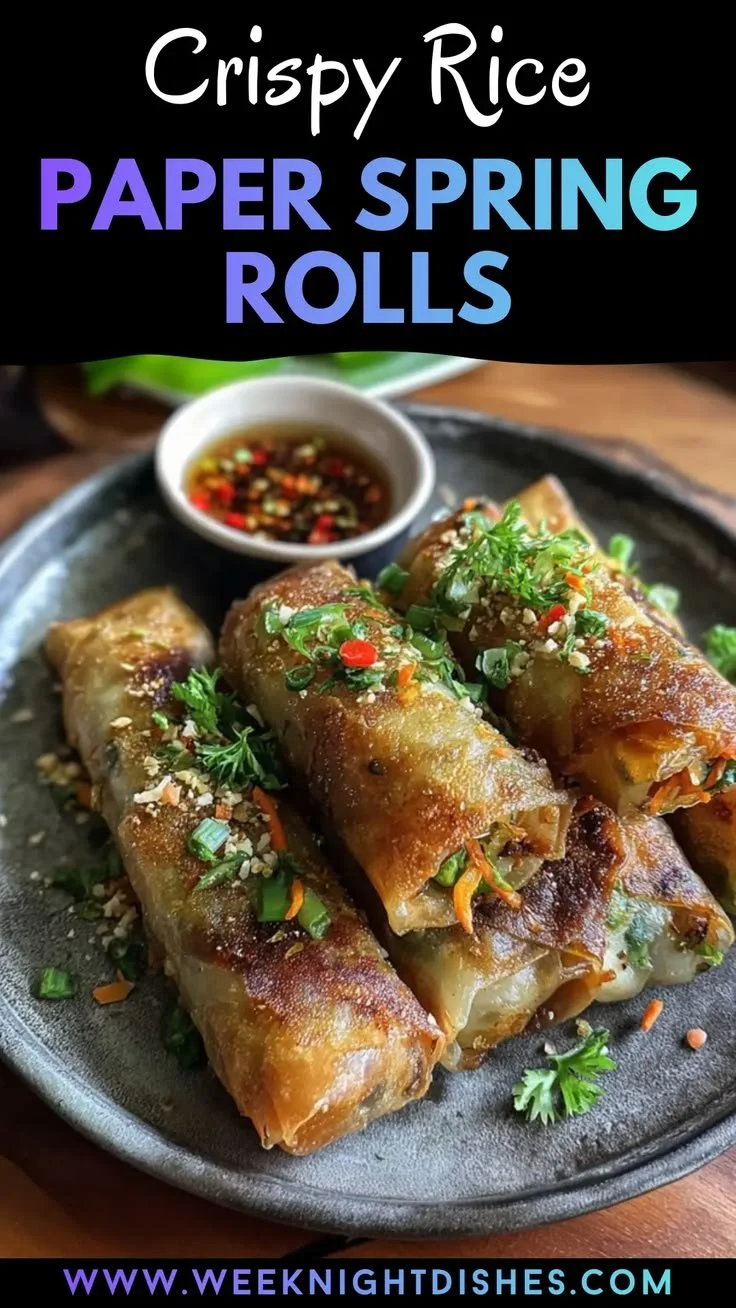
Crispy Rice Paper Spring Rolls
Have you ever watched a rice paper wrapper do a somersault? I ask because that is where my experiments always begin: a limp, translucent circle hitting warm water and suddenly draping itself like silk. As an experimental cook I love pushing tiny changes—a quicker dunk, a thinner slice of cucumber, a herb tucked in the…
Have you ever watched a rice paper wrapper do a somersault?
I ask because that is where my experiments always begin: a limp, translucent circle hitting warm water and suddenly draping itself like silk. As an experimental cook I love pushing tiny changes—a quicker dunk, a thinner slice of cucumber, a herb tucked in the fold—and watching how the texture, sound, and bite change. If you want a spring roll that snaps in the pan and still gives that fresh, herbaceous lift, you’re in the right place. The inspiration for this particular riff came after bouncing ideas off an old favorite, crispy rice paper spring rolls, but this version is more about technique than imitation.
What I collect before I improvise
You can approach this as a strict checklist or as a palette. Either way, these are the elements you need: rice paper wrappers; fresh vegetables such as lettuce, carrots, cucumbers, and bell peppers; fresh herbs like mint, cilantro, and basil; a protein of your choice—shrimp, chicken, or tofu work beautifully; and a dipping sauce such as hoisin, peanut sauce, or soy sauce. I often assemble little bowls of each thing so the rolling becomes a flow instead of a chore.
Practical tip 1: Keep everything prepped in the same thin, bite-sized shapes. Long thin strips of cucumber and carrot make the roll clean and easy to crisp.
The moment that changed my rolling rhythm
I used to think rice paper needed a long bath, but the discovery that a rapid, 10-second dip yields a taut, pliable sheet was a revelation. Here is the method I follow—simple and repeatable:
- Prepare all the filling ingredients by slicing the vegetables and herbs. If using protein, ensure it’s cooked and sliced appropriately.
- Fill a shallow dish with warm water. Quickly dip each rice paper wrapper in the water until soft, about 10 seconds.
- Lay the softened rice paper on a clean surface.
- Place a small amount of each filling ingredient in the center, leaving space around the edges.
- Fold the sides of the wrapper over the filling, then roll tightly from the bottom up.
- Repeat until all wrappers are filled.
- Serve with your choice of dipping sauce.
Practical tip 2: Use a shallow dish just big enough for your wrapper. Too deep and the paper gets floppy; too hot water and it tears.
I weave a little personal ritual into step two: a quick wrist flick to remove excess water so the wrapper goes into the pan crisp instead of soggy.
Small experiments that changed texture and flavor
When you first pan-sear or air-fry the rolls, texture is everything. I experimented with three main variations: pan-searing briefly in a tablespoon of oil for a golden, blistered exterior; air-frying at 400 F for 6 to 8 minutes for a lighter crisp; and baking on a high rack for a slightly softer, evenly colored finish. Practical tip 3: If pan-searing, press gently with a spatula to get even contact and small blistered spots rather than full browning.
Substitutions to try:
- Swap the protein for tofu and marinate it in soy-lime for a vegan-friendly punch.
- Use thin rice vermicelli with shrimp for a classic textural contrast.
- If basil is scarce, double up on mint and cilantro—surprisingly bright.
I also experimented with folding: a tighter roll gives a more satisfying snap; a looser roll tastes fresher but can unravel when crisped. Lesson learned: roll tight, but leave a small air pocket so steam can escape while cooking.
How to know when the roll is done right
You want a paradox: inside bright and crisp-tender, outside prismatic and crunchy. The telltale signs are visual and tactile. When pan-searing, look for tiny brown bubbles and a light, even color. When air-frying, the wrapper should lift off the tray with a clean crack rather than tear. When you bite in, the vegetables should still produce a small, wet crunch; the herbs should perfume the mouth without being overwhelmed. If the wrapper tears or becomes gummy, it was over-soaked.
A small sensory trick: Rub a cooked roll between your fingers—if it flakes like a chip, you are in the right territory. If it bends like leather, it needs a few more seconds.
Little experiments to serve and pair
What to serve them with depends on mood. For an appetizer I like hoisin-peanut dipping sauce with sliced scallions. For a more substantial plate, pair the rolls with a crisp salad and a bowl of jasmine rice or a cold noodle salad. A single internal link I keep for a spicy twist is this riff on bang bang chicken rice paper rolls—it gave me the idea to try a chili-mayo drizzle.
Variation ideas:
- Make mini rolls for cocktail parties—smaller rice papers, less filling, quicker crisping.
- Turn them into a salad by chopping cooked rolls and tossing with vinaigrette; I once riffed this into a shawarma-flavored bowl inspired by a shawarma crispy rice salad.
Practical tip 4: Serve dipping sauces in shallow bowls so you can get a clean dip without the roll diving in.
Storage, leftovers, and reheating
Leftovers are a mixed blessing. Uncooked, properly wrapped rolls keep in the fridge wrapped tightly in plastic for up to a day. Cooked rolls are best eaten the same day; they will soften as they sit. To store cooked rolls, cool completely on a rack, then refrigerate in a single layer separated by parchment. Reheat in an air-fryer or oven at 350 F for 3 to 5 minutes to restore crispness.
Practical tip 5: If you plan to prepare ahead, assemble the fillings and keep them chilled, but only moisten and roll the wrappers 20 to 30 minutes before serving to keep the crisp finish.
A small story and why I still make them
Years ago I made these for a friend who preferred bland takeout. She took one bite and said, quietly, "I didn’t know vegetables could sing." That sentence has guided every experiment since: how do I let the vegetables sing while giving them a chorus of crunch and a backing of savory protein? This recipe is less about strict measurements and more about balance and technique—control the water, shape the roll, and choose a finishing method that preserves contrast.
Conclusion
If you want another way to use rice paper and explore pan-searing or air-frying techniques, this rice paper dumplings recipe is a great companion to the ideas here.
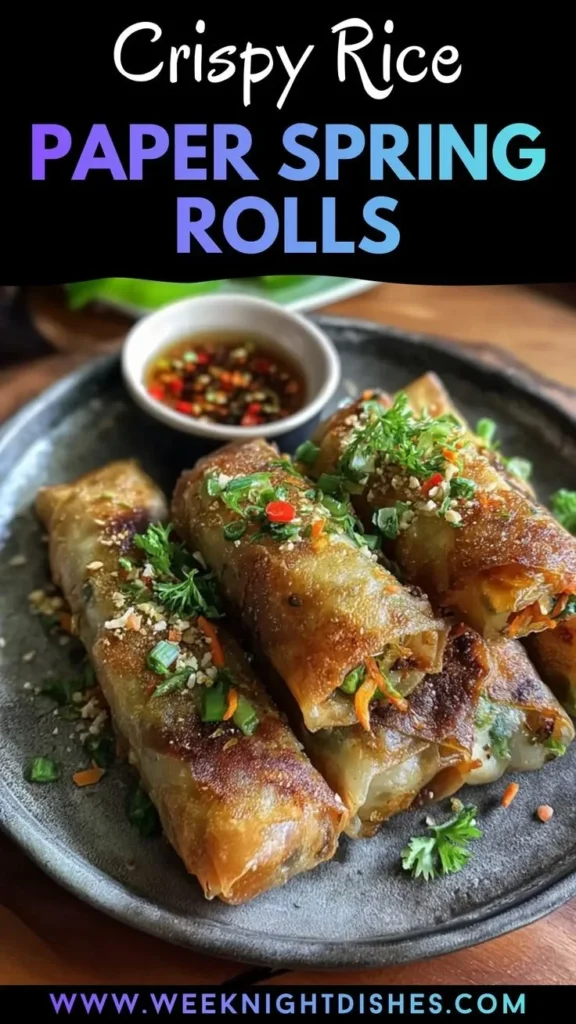
Crispy Rice Paper Spring Rolls
Ingredients
Method
- Prepare all the filling ingredients by slicing the vegetables and herbs. If using protein, ensure it’s cooked and sliced appropriately.
- Fill a shallow dish with warm water. Quickly dip each rice paper wrapper in the water until soft, about 10 seconds.
- Lay the softened rice paper on a clean surface.
- Place a small amount of each filling ingredient in the center, leaving space around the edges.
- Fold the sides of the wrapper over the filling, then roll tightly from the bottom up.
- Repeat until all wrappers are filled.
- Pan-sear briefly in a tablespoon of oil for a golden, blistered exterior or air-fry at 400 F for 6 to 8 minutes for a lighter crisp.
- Serve with your choice of dipping sauce.