Crispy Rice Paper Spring Rolls
I used to think spring rolls were delicate and fussy, the kind of thing best left to restaurant chefs with deep woks and nimble hands. Then one rainy evening I pan-fried a stack of rice-paper rolls until their edges sang with brittle crackle, and my whole idea of what a spring roll can be changed….
I used to think spring rolls were delicate and fussy, the kind of thing best left to restaurant chefs with deep woks and nimble hands. Then one rainy evening I pan-fried a stack of rice-paper rolls until their edges sang with brittle crackle, and my whole idea of what a spring roll can be changed. This is the story of that discovery and the recipe I developed after a few happy experiments.
Early on in my tinkering I bookmarked a method that taught me to think of rice paper almost like pastry. If you want to compare techniques, a clear primer helped me visualize how rice paper behaves differently when crisped rather than steamed: a practical crunchy-roll guide. That nudge led to the crunchy, herb-filled rolls I now make when I need something bright, fast, and impressively textural.
Preparation: The Quiet Work
I measure and mise en place like an engineer who secretly loves color. For this recipe you’ll need: 100 g rice noodles (you can substitute with vermicelli or quinoa for a gluten-free option), 2 carrots julienned, 1 cucumber julienned, 1 bell pepper thinly sliced, 1 cup fresh herbs such as mint or cilantro, 4 large lettuce leaves, 1 tablespoon soy sauce for dipping, and 1 tablespoon fresh lime juice for drizzling. Having the vegetables cut into long thin strips makes the difference between a sloppy roll and something that snaps when you bite it.
Prep the rice noodles according to the packet (usually soak in hot water until tender, then drain and toss with a touch of oil). Dry your herbs and lettuce on a clean towel so excess water doesn’t make the rice paper soggy. These are small acts that pay off; when I don’t dry the leaves first, I regret it midroll.
What Belongs Inside the Crunch
I learned to think of this filling like a French sandwich: textural contrast first, flavor second. The carrots and cucumber give fresh crunch, bell pepper adds sweet snap, herbs add aromatic lift, and the lettuce acts as a moisture barrier and structural backbone. The rice noodles are mild and help the whole thing feel substantial without overpowering.
If you want a riff, try adding a thin layer of grilled chicken, shrimp, or a smear of almond butter for richness. Another variation I experimented with was swapping rice noodles for cooked quinoa, which gives a nutty bite and makes these rolls gluten-free in a way that still feels celebratory. For a more savory option, see how folks pair bang bang-style sauces with rice-paper rolls in a spicy variation: a bold bang bang inspiration.
Rolling and Frying: When to Stop
The first time I pan-fried rice-paper rolls I overfilled them and they split open like a bad experiment. Lesson learned. Lay a sheet of rice paper in warm water for just 8 to 12 seconds until pliable but not limp. On a damp board, place one softened sheet, then arrange one lettuce leaf near the center, add a small handful of rice noodles, two or three pepper strips, a few carrot and cucumber sticks, and a sprinkle of herbs. Fold the bottom up over the filling, fold the sides in snugly, then roll away from you into a tidy cylinder.
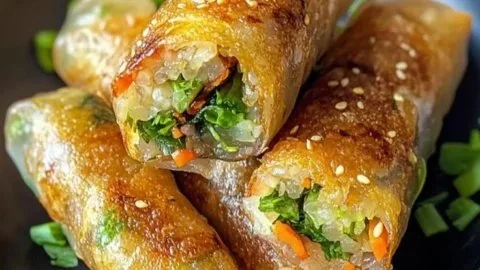
Heat a thin pool of neutral oil in a nonstick skillet over medium heat. When the oil shimmers, lay the rolls seam side down. Fry them evenly, turning every minute or so, until all sides are golden brown and glassy-crisp. This is the moment you’ll know it’s done right: a clear, even golden exterior with no pale, floppy patches and a satisfying crunch when you tap it with a fork. Overcrowding the pan cools the oil and produces soggy patches, so cook in batches.
A small tip I learned: press a spatula gently onto each roll for the first 20 seconds to ensure the seam seals and you get a uniform crust. Another tip: keep the heat medium rather than high; too hot and the rice paper will darken before the filling warms through. A third practical tip: keep a tray on low oven heat to rest finished rolls while you finish the batch so they stay crisp.
Serving: Little Rituals
Serve these immediately with a simple dip of soy sauce and lime juice, or whisk the soy and lime together and add a pinch of sugar, a splash of water, and chili flakes for a quick bright sauce. I like a tiny bowl of soy-lime at each place and a second platter of fresh herbs for people to tuck inside as desired. If you want to pair with something more substantial, these are excellent alongside a chilled noodle salad or a hearty soup — one of my favorite pairings turned out to be a warm, spiced shawarma-style salad that contrasts beautifully with the cool herbs and crisp exterior: a savory shawarma pairing.
How to know when it’s done right
There are three signals: color, sound, and structure. Color should be uniformly golden; sound is a faint, brittle crack when you tap it; structure means the roll holds its shape when lifted and the seam remains sealed. If halves collapse or you see translucent, undercooked rice paper, return them to the pan for another 30 seconds per side.
Variations and substitutions
- Gluten-free swap: use quinoa instead of rice noodles and tamari instead of soy sauce.
- Protein add-ins: thin strips of cooked chicken, shrimp, or tofu tossed in a little lime juice and soy before rolling.
- Vegetarian richness: a thin smear of peanut or almond butter inside adds creamy depth and pairs nicely with lime.
Storage and leftovers
These rolls are best eaten hot and fresh for maximum crunch. If you must store leftovers, cool completely on a rack to avoid trapping steam, then refrigerate in a single layer separated by parchment for up to 24 hours. Reheat in a low oven or an air fryer at 180 C for 5 to 7 minutes until crisp again. Avoid microwaving; it turns crisp rice paper leathery.
Three small ideas I keep returning to: keep fillings lean and textural, maintain consistent rice-paper hydration time, and fry at steady medium heat. These keep the results repeatable. The first time I brought these to a neighborhood potluck, a friend who swore off fried food said they tasted impossibly light. I still laugh thinking about that—crispy doesn’t have to mean heavy.
If you enjoy experimenting, try pan-searing rice-paper dumplings or air-frying them for a slightly different mouthfeel and less oil. That option was a surprising detour in my experiments and led to a lighter, equally satisfying snack.
Conclusion
If you want to explore another way to get that satisfying crunch, this rice paper dumplings recipe shows alternative pan-sear and air-fry techniques that inspired some of the variations I tested.
Crispy Rice Paper Spring Rolls
Ingredients
Method
- Soak the rice noodles in hot water until tender, then drain and toss with a touch of oil.
- Julienne the carrots, cucumber, and slice the bell pepper into thin strips.
- Dry the herbs and lettuce on a clean towel to ensure excess water doesn't make the rice paper soggy.
- Soak a sheet of rice paper in warm water for 8 to 12 seconds until pliable.
- Place the softened sheet on a damp board. Arrange one lettuce leaf near the center, then add a small handful of rice noodles, followed by pepper strips, carrot and cucumber sticks, and a sprinkle of herbs.
- Fold the bottom up over the filling, fold the sides in snugly, and roll away from you into a cylinder.
- Heat a thin layer of neutral oil in a nonstick skillet over medium heat.
- When the oil shimmers, lay the rolls seam side down and fry evenly, turning every minute, until all sides are golden brown and crispy.
- Gently press a spatula onto each roll for the first 20 seconds to ensure they seal properly.
- Avoid overcrowding the pan to prevent soggy patches; cook in batches if necessary.
- Serve the spring rolls immediately with a dip of soy sauce and lime juice, or whisk the soy and lime with a pinch of sugar and chili flakes for a bright sauce.
- Add additional fresh herbs for people to tuck inside the rolls as desired.