Crispy Rice Paper Spring Rolls
Crispy Rice Paper Spring Rolls have been my go-to comfort food for years — something I bring out when friends drop by unexpectedly or when I want a crunchy, herbaceous snack that feels light but satisfying. The very name tells you what you’re getting: rice paper transformed from delicate to crackly, wrapped around bright vegetables…
Crispy Rice Paper Spring Rolls have been my go-to comfort food for years — something I bring out when friends drop by unexpectedly or when I want a crunchy, herbaceous snack that feels light but satisfying. The very name tells you what you’re getting: rice paper transformed from delicate to crackly, wrapped around bright vegetables and slippery rice noodles. If you like the idea of a fresh bite with a hot, savory contrast, this recipe will quickly become one of your favorites.
A little backstory that explains the crunch
I first learned to make these on a rainy Saturday at my sister’s apartment. We had 100 g of rice noodles cooked and fluffed, a couple of vegetables sitting in the fridge, and a stubborn packet of rice papers doing nothing. The smell of frying oil, the sound of the first crackle when a roll hit the pan, and that lime-bright soy dip somehow made the whole afternoon. If you want a longer read about variations other people swear by, I once bookmarked a helpful guide to the best crispy rice paper spring rolls and it nudged me to experiment further.
When I say what goes into my rolls, I mean it simply: 100 g Rice noodles for body, 2 medium Carrots, julienned for sweetness and color, 1 medium Cucumber, julienned for a cool crisp, 1 medium Bell pepper thinly sliced for a pop of red or yellow, and about 1/4 cup Fresh herbs — I usually use mint but cilantro works beautifully too. I tuck in 8 leaves of Lettuce leaves for extra crunch. For dipping I keep 1/4 cup Soy sauce at the ready and squeeze in 1 tbsp Fresh lime juice right before serving so the flavor sings.
How I actually make them (no rigid steps, promise)
I always start the same way: gather all vegetables and herbs. Cut them into thin strips for easy rolling. There’s a rhythm to it — the chopping, the cooling of noodles, the handfuls of herbs — that makes the process pleasant instead of a chore. Once everything is ready, I fill a large bowl with warm water. Soak rice papers for 10-15 seconds until pliable. It is tempting to leave them longer, but I find they become too floppy and tear; soaking for just 10 to 15 seconds keeps them workable.
Lay the rice paper flat on a clean surface. Add about two tablespoons of filling (the noodles, veggies, and herbs) near one edge. Fold in the sides and roll tightly, just like a burrito. A little trick I’ve learned: place a lettuce leaf on the rice paper first, then pile the noodles and veg on it — that lettuce leaf acts like a cushion and keeps the rice paper from getting soggy where it touches the filling.
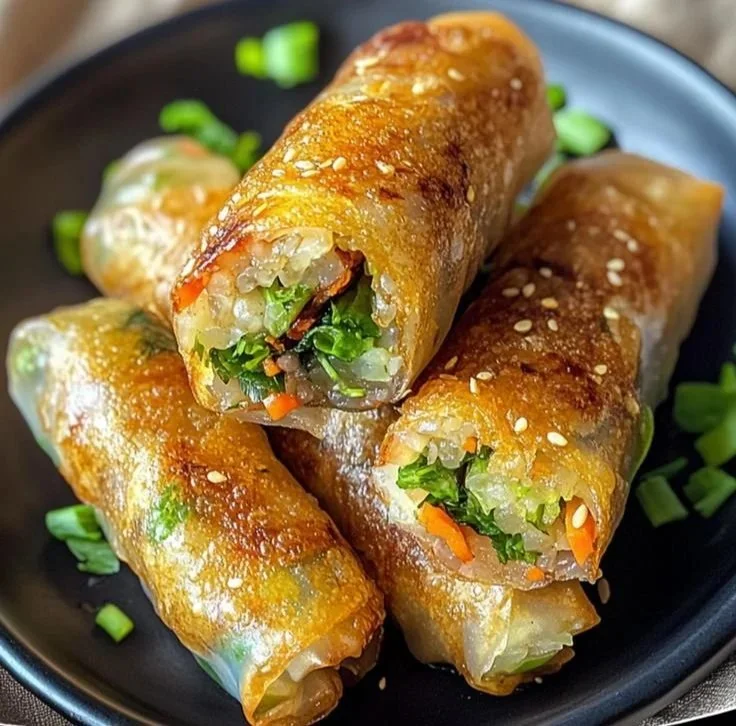
When you’re ready to cook, heat oil in a skillet over medium heat. Fry the spring rolls seam side down until golden brown on all sides, about 2-3 minutes per side. Press gently with a spatula for the first minute to help the seam seal and to make sure the roll cooks evenly. You’ll know they’re done when the surface is a deep, even golden brown and the rolls sound crisp when you tap them lightly. The oil should shimmer but not smoke; medium heat gives you that lovely color without burning.
If you’re curious about different pan techniques or want inspiration for crisping methods, I once referenced another version I liked and it changed how I handled the oil: a pan-fried take I tried that focused on timing and heat.
Getting the texture just right
Texture is everything here. You want the outer rice paper to shatter gently when you bite into it, revealing cool, herbaceous interior. To hit that sweet spot, don’t overfill; about two tablespoons per roll keeps them neat and crisply fried. Letting the rolls rest on a wire rack for a minute after frying keeps them crunchy instead of steaming into limpness. A quick tip: if the rice paper browns unevenly, your pan was probably too hot in one spot; try moving the rolls and lowering the heat slightly next time.
I also like to precook my rice noodles according to the packet, rinse them under cold water, then toss them in a tablespoon of neutral oil so they don’t clump. Little touches like that matter when you’re aiming for a satisfying mouthfeel.
Small changes I make depending on the occasion
Sometimes I want these to be an appetizer, other times they’re a main with a big salad. If I’m serving them as a snack, I keep the fillings strictly vegetable-forward. For a heartier plate, I’ll add cooked shrimp or shredded chicken; tofu is my go-to when I want something plant-based and filling. In fact, one of my favorite variations is stuffing the rolls with pan-seared tofu and a touch of hoisin for a sweet contrast. If you like experimenting with textures, try baking or air frying instead of pan frying for a lighter finish — I read an amusing riff on dumpling-style rice paper that inspired an air-fry attempt and it worked surprisingly well: a baked and air-fried adaptation I noted offered helpful ideas.
Another variation is changing the dipping sauce. The classic soy with lime is unbeatable: I serve 1/4 cup Soy sauce with 1 tbsp Fresh lime juice mixed in right before dipping so it doesn’t go watery. But sometimes I add a spoon of honey or a crush of garlic for a different profile.
Quick notes on leftovers and when plans change
If you want to make these ahead, fry them and cool completely on a rack, then store in a single layer in an airtight container lined with paper towels to absorb moisture. Refrigerate and re-crisp in a skillet over medium heat for a few minutes or pop them into a preheated oven at 180°C (350°F) for 6 to 8 minutes. I find they keep well for a day or two, though nothing beats eating them fresh. For a deeper dive into make-ahead timing and other practical tricks, there’s a neat write-up I keep returning to: a practical time-saving guide.
When things don’t go as planned — say a rice paper tears — rescue it by layering a fresh sheet over the tear and continuing to roll. It’s not pretty but it works and the frying hides imperfections.
Why I love this recipe is simple: it’s versatile, forgiving, and produces that incredible contrast between hot and crisp shell and cool, herb-laden interior. It’s the kind of thing that fills a kitchen with good smells, makes friends smile, and transforms humble ingredients into something unexpectedly celebratory.
Conclusion
If you want an alternate technique that riffs on the same idea, this rice paper dumplings recipe offers a creative pan-sear or air-fry approach that inspired one of my trial runs. For a classic, easy guide to Vietnamese fried spring rolls that informed some of my seasoning choices, this Easy Vietnamese Fried Spring Rolls resource is a great reference. Happy rolling — and listen for that first satisfying crack when the roll hits the pan; it’s the sound that tells you dinner is ready.
Crispy Rice Paper Spring Rolls
Ingredients
Method
- Gather all vegetables and herbs. Cut them into thin strips for easy rolling.
- Fill a large bowl with warm water. Soak rice papers for 10-15 seconds until pliable.
- Lay the rice paper flat on a clean surface. Add about two tablespoons of filling (the noodles, veggies, and herbs) near one edge.
- Fold in the sides and roll tightly, just like a burrito.
- Place a lettuce leaf on the rice paper first to prevent sogginess and keep filling neat.
- Heat oil in a skillet over medium heat.
- Fry the spring rolls seam side down until golden brown on all sides, about 2-3 minutes per side.
- Press gently with a spatula for the first minute to help the seam seal and cook evenly.
- Serve with a mixture of soy sauce and lime juice for dipping.