Crusty French Bread Rolls
How I Found These Crusty French Bread Rolls The first time I baked what I now call Crusty French Bread Rolls, my kitchen smelled like a tiny French bakery for the whole afternoon. I was experimenting with a simple dough—nothing fancy, just the basics: 4 cups all-purpose flour, 1 ½ cups warm water, 2 teaspoons…
How I Found These Crusty French Bread Rolls
The first time I baked what I now call Crusty French Bread Rolls, my kitchen smelled like a tiny French bakery for the whole afternoon. I was experimenting with a simple dough—nothing fancy, just the basics: 4 cups all-purpose flour, 1 ½ cups warm water, 2 teaspoons salt, 1 teaspoon sugar, and 2 ¼ teaspoons active dry yeast. If you want to see a similar starting point I learned from online, I sometimes compare notes with the version over at this recipe, but what I’m sharing is the way I make them on repeat when I want that perfect crackly exterior and pillowy interior.
The Ingredient Lineup and What Each Does
I like to talk through ingredients as I measure them because it keeps me present. The 4 cups of all-purpose flour give structure but aren’t so heavy that the rolls feel dense. The 1 ½ cups warm water wakes up the yeast—temperature matters here; lukewarm to the touch is what I aim for. The 1 teaspoon sugar is just enough to jump-start the yeast without sweetening the bread, and the 2 teaspoons salt balance flavor and strengthen the dough. The 2 ¼ teaspoons active dry yeast is the magic for rise and lift.
If you’re curious how this compares to other no-knead or simplified doughs, there’s an interesting take on a 5-ingredient panini bread that I looked at while tweaking hydration ratios: that version gives some useful perspective on how water and flour interact.
Making the Dough, the Way I Describe It
I’ll walk you through the steps I follow, but I don’t like rigid lists, so imagine us baking together. First I proof the yeast: 1. In a small bowl, dissolve the yeast and sugar in warm water. Let it sit until frothy, about 5-10 minutes. When it bubbles up, you know the yeast is alive and the dough will have personality.
Then I mix the dry: 2. Combine the flour and salt in a mixing bowl. I stir them so the salt is evenly distributed—salt too close to the yeast can be rude to it. Once the yeast mixture is frothy, add it to the flour and salt mixture. Stir until a rough dough forms. This is the point where the dough looks shaggy and you might think it needs more coaxing.
Next comes the knead: 4. Knead the dough on a floured surface for about 10 minutes until it is smooth and elastic. I used to skimp on kneading and then wonder why the crumb was uneven; after a solid ten minutes the dough feels silky and springs back when poked.
I grease a bowl lightly for the first rise: 5. Place the dough into a greased bowl, cover it, and let it rise in a warm spot for about 1 hour or until it has doubled in size. My favorite warm spot is the oven with the light on for a gentle, consistent warmth.
When it’s puffed up, I gently deflate it: 6. Punch down the dough gently to release some air. Divide it into equal portions and shape them into rolls. I shape them by tucking edges to the bottom and rolling until they have that smooth top.
Right before the oven: 7. Preheat your oven to 450°F (230°C). Arrange the rolls on a baking sheet lined with parchment paper and let them rise for another 30 minutes. Give them a final flourish: 9. Make slashes on the top of each roll to allow steam to escape. The slashes mean the crust expands where you want it to.
Finally the best part: 10. Bake for about 20-25 minutes until golden brown. 11. Let them cool slightly before serving. That first crack as you slice into a still-warm roll and the tug of soft crumb against crisp crust is the whole reason I bake them.
A Few Tricks and What I’ve Learned
I’ll slip a few personal tips in as we go because they save time and heartbreak. Tip one: proof your yeast in warm water that’s not hot; if it’s too warm you’ll kill the yeast and all your hopes. Tip two: when kneading, use a bench scraper if the dough gets sticky; it saves your hands and keeps the counter tidy. Tip three: steam in the oven during the first few minutes of baking makes the crust glossy and crisp—place a shallow pan of boiling water on the bottom rack or spray the oven walls carefully with water right after you slide the tray in.
You’ll know they’re done when the tops are deep golden and the loaves sound hollow when you tap the bottom; I also check the color along the sides because sometimes ovens brown unevenly. If you have a thermometer, 200°F internal is a good target, but the hollow sound is practical and satisfying.
When things don’t go perfectly—say your rolls are dense—double-check your yeast freshness and make sure the dough had enough rise time. I once rushed the second rise because guests arrived early; the rolls looked fine but lacked that airy lift. Patience pays off.
For more on achieving a crackly crust and rustic crumb, I often revisit techniques in other crusty bread tutorials like the ideas found here: further crust tips.
Small Ways to Make Them Your Own
I love this dough because it adapts. For a seeded version, press sesame or poppy seeds into the tops before the final rise. For herb rolls, fold chopped rosemary or thyme into the dough at the kneading stage. If you want garlic butter rolls, brush melted garlic butter over the tops right after they come out of the oven so it soaks into tiny cracks.
If you’re entertaining or want to prepare ahead, these rolls freeze beautifully. Let them cool completely, then pop them in a zip-top bag and freeze for up to a month. To refresh, thaw and warm at 350°F for 8-10 minutes or toast them cut-side down. Leftovers keep well in an airtight container for a day or two; reheat to restore crispness.
What to serve them with? I reach for butter and flaky salt, but they shine with soups, stews, or alongside a bright salad. My favorite is a bowl of tomato basil soup on a rainy evening; dunking a warm roll into it is almost a ritual.
A few variations to try: add whole wheat flour for a nuttier crumb, fold in olives and oregano for a savory Mediterranean twist, or make mini slider-sized rolls for parties—same dough, different joy.
Conclusion
If you want another perspective on the same idea, I like to compare notes with Crusty French Bread Rolls – Dinner, then Dessert for a slightly different shaping technique, and sometimes I look at French Bread Dinner Rolls – The Salted Pepper for ideas on buttery finishes. Try baking these on a quiet afternoon, and I promise the smell alone will make the effort feel worth it.
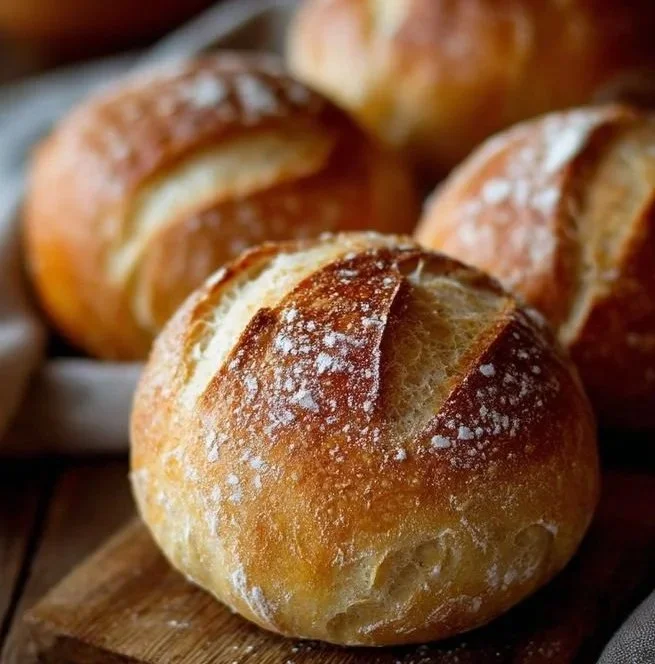
Crusty French Bread Rolls
Ingredients
Method
- In a small bowl, dissolve the yeast and sugar in warm water. Let it sit until frothy, about 5-10 minutes.
- Combine the flour and salt in a mixing bowl.
- Once the yeast mixture is frothy, add it to the flour and salt mixture. Stir until a rough dough forms.
- Knead the dough on a floured surface for about 10 minutes until it is smooth and elastic.
- Place the dough into a greased bowl, cover it, and let it rise in a warm spot for about 1 hour or until it has doubled in size.
- Punch down the dough gently to release some air. Divide it into equal portions and shape them into rolls.
- Preheat your oven to 450°F (230°C) and arrange the rolls on a baking sheet lined with parchment paper.
- Let the rolls rise for another 30 minutes, then make slashes on the top of each roll to allow steam to escape.
- Bake for about 20-25 minutes until golden brown.
- Let them cool slightly before serving.