Crusty Mini Baguettes
I don’t remember the exact moment I fell in love with baking bread, only that it started with the sound: a tiny, impatient crackle as the crust cooled, the way steam fogs the kitchen window, and the smell that somehow makes a house feel like home. One rainy afternoon I was trying a no-fuss sandwich…
I don’t remember the exact moment I fell in love with baking bread, only that it started with the sound: a tiny, impatient crackle as the crust cooled, the way steam fogs the kitchen window, and the smell that somehow makes a house feel like home. One rainy afternoon I was trying a no-fuss sandwich bread and ended up riffing on it until I had these Crusty Mini Baguettes—little loaves that brown quickly, have a crackly shell, and a tender inner crumb. If you like the idea of handheld baguettes for soup nights or picnic sandwiches, this is my go-to. I actually tested the dough the same week I was playing with a no-knead panini bread recipe, which taught me how gentle handling shapes crust and crumb no-knead panini bread.
The Secret Behind Perfect Crusty Mini Baguettes
What gives these mini baguettes their personality is a short ingredient list and a few confident moves. For a single small batch I use 2 1/4 cups all-purpose flour, 1 teaspoon salt, 1 teaspoon sugar, 1 packet active dry yeast (2 1/4 teaspoons), 3/4 cup warm water (about 110°F/43°C), 1 tablespoon olive oil, and 1 egg (optional, for egg wash). If you want a slightly chewier texture, use bread flour instead of all-purpose. If you prefer a richer flavor, replace the olive oil with melted butter. And if you do not want to use an egg for the wash, brush the tops with milk or melted coconut oil. Those small swaps change the loaf in delightful ways, and I often experiment depending on who I’m baking for.
When I start, I always begin with what I think of as Step 1: Activate the Yeast. This is crucial and easy: sprinkle the yeast and sugar into the warm water and let it sit until it gets foamy, about five to ten minutes. If it barely bubbles, the yeast might be tired; start over because a sluggish rise makes dense loaves. A little tip: water a few degrees cooler feels safer but aim for that 110°F/43°C if you can.
A Few Things I’ve Learned
Step 2: Make the Dough happens right after the yeast is alive. I mix the flour and salt, then add the foamy yeast water and the tablespoon of olive oil. It comes together quickly into a shaggy mass. Step 3: Knead the Dough is short with this recipe. Knead for about eight to ten minutes by hand until the dough is smooth and slightly tacky. I learned to avoid adding too much extra flour; the dough should spring back when you poke it. If you want a shortcut, using a stand mixer saves your shoulders, but the hands-on route helps you feel the texture changes. A personal trick: fold the dough over itself in the bowl rather than dragging in flour; it yields an airier crumb.
Once kneaded, I let the dough rest and rise. Step 4: First Rise is where patience pays off. Lightly oil the bowl (I use the tablespoon of olive oil), cover the dough, and leave it in a warm, draft-free spot until doubled, usually about an hour. My oven with the light on makes a nice cozy nook for the bowl on cold days. If you’re in a hurry, a proofing box works, but I find the slow rise gives more flavor.
Getting the Texture Just Right
Shaping is fun and a little meditative. For Step 5: Shape the Baguettes I divide the dough into 4 to 6 equal pieces, depending on how big you want your minis. Gently press each piece into a rectangle, fold it into itself, and roll into tight little batons about 6 to 8 inches long. You want tension on the surface so they hold shape. Then bring them over to a baking sheet lined with parchment.
Step 6: Second Rise needs less time than the first. Let the shaped loaves puff for 30 to 45 minutes until slightly puffy. I often cover them with a damp towel to prevent drying. Right before they go into the oven I do Step 7: Add Egg Wash and Score. If you’re using the optional egg, whisk it and brush sparingly for a glossy, golden finish. For egg-free, brushing with milk or melted coconut oil gives nice color. Use a sharp knife or lame to make two or three diagonal slashes across each baguette—this helps controlled expansion. Another tip I rely on is to score at a shallow angle so the crust lifts prettily instead of tearing.
Heat the oven to 450°F (230°C) and prepare for steam because that crisp crust comes from a steamy start. Step 8: Bake involves placing a small pan of hot water in the bottom of the oven or spraying water onto the oven walls quickly as you slide in the tray. Bake the minis for about 15 to 20 minutes until they’re deep golden brown and you hear that satisfying crusty sound as they cool. I always check color rather than exact time because ovens vary.
Step 9: Cool and Serve is my favorite. Transfer the loaves to a rack and let them cool for at least 15 minutes so the crumb sets. If you cut too soon, the interior can gum up. When done right, the crust crackles as you tear a piece off, and the interior is soft, slightly chewy, and fragrant, with subtle notes from the slow rise. To know it’s truly finished, tap the bottom of a loaf; you should hear a hollow sound, and the color should be evenly golden.
When Things Don’t Go As Planned
Not every batch is flawless, and I like to share those moments so you do not panic. If your dough feels dense after rising, the yeast may have been past its prime or the water too hot; remember that yeast is living, and heat kills it. If the crust is pale, it probably needed more baking time or a hotter oven; try moving the rack higher next time. If the crumb is gummy, you likely sliced too soon. If the tops are splitting in weird places, your scoring needs adjusting; a sharper blade and a quicker motion help.
I once brought a tray of warm mini baguettes to a potluck where someone asked if they were from a bakery. That blush-worthy compliment came because I had been careful with proofing and steam. For serving, these are perfect with a silky tomato soup or transformed into small sandwiches with ham and gruyere. They also pair beautifully with a cheese board, olives, and a simple herb butter. If you want ideas for small bites to go with them, I often make stuffed mini peppers and little cheesecakes for dessert; they pair nicely on a casual spread air-fryer stuffed mini peppers and blueberry lavender cheesecake minis are a crowd-pleaser.
For storage, I keep fresh baguettes at room temperature in a paper bag for up to two days, which preserves the crust best. To keep longer, wrap tightly and freeze for up to a month. Reheat frozen loaves in a 350°F oven for 10 minutes wrapped in foil, then unwrap for a few minutes to revive the crust. Making these ahead is easy: shape, freeze on a tray, then transfer to a bag; bake from frozen with an extra few minutes in the oven.
I love this recipe because it is forgiving, quick for a homemade loaf, and endlessly adaptable. You can add herbs into the dough or sprinkle sesame seeds on top, swap olive oil for melted butter for a richer crumb, or fold in shredded cheese before shaping for something indulgent. My personal tips: keep the yeast warm but not hot, avoid overflouring during kneading, and always score with confidence.
Conclusion
If you want a classic crusty finish, this method is a keeper and easy to tweak for size and flavor; for a deep dive into traditional techniques that inspired my approach, see this detailed guide on Classic Crusty French Baguettes from a trusted blog Classic Crusty French Baguettes – Aberdeen’s Kitchen. If you prefer a recipe written specifically for small batches, this Small Batch Mini Baguette Bread write-up helped me refine proportions and timing Small Batch Mini Baguette Bread – The Practical Kitchen. Give these little loaves a try on a slow afternoon, and tell me what you stuffed them with.
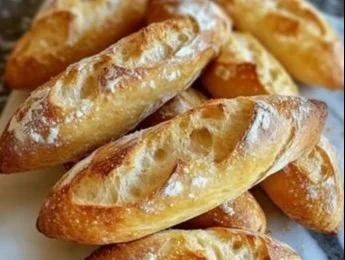
Crusty Mini Baguettes
Ingredients
Method
- Sprinkle the yeast and sugar into warm water and let sit until foamy, about 5-10 minutes.
- Mix flour and salt together, then add the foamy yeast water and olive oil to create a shaggy dough.
- Knead the dough by hand for 8-10 minutes until smooth and slightly tacky, avoiding too much extra flour.
- Oil a bowl lightly, place the dough in, cover, and let it rise in a warm spot until doubled, about 1 hour.
- Divide the dough into 4 to 6 pieces, press each piece into a rectangle, fold into itself, and roll into batons about 6-8 inches long.
- Let the shaped loaves puff for 30-45 minutes, covered with a damp towel.
- If using egg, whisk and brush it over the loaves; score the tops with diagonal slashes.
- Preheat the oven to 450°F (230°C), place a small pan of hot water in the oven, and bake the baguettes for 15-20 minutes until golden brown.
- Transfer the loaves to a rack to cool for at least 15 minutes before serving.