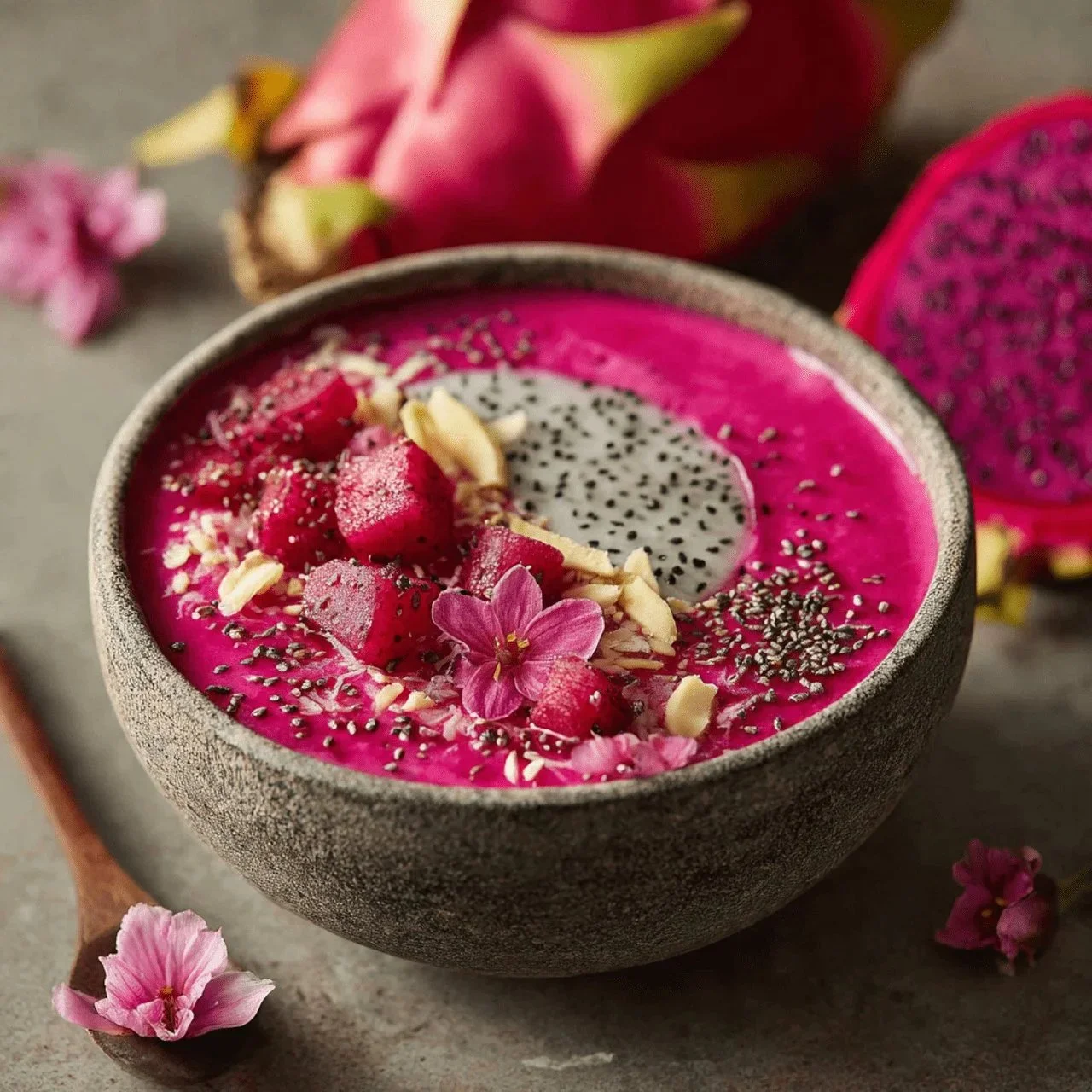
Dragon Fruit Smoothie Bowl
I fell in love with this magenta bowl on an unusually gray morning when I needed something that looked like a party in a single spoon. I had played with a few approaches before; if you’re curious about a slightly different formulation I experimented with, I wrote up a different version I tried that leans…
I fell in love with this magenta bowl on an unusually gray morning when I needed something that looked like a party in a single spoon. I had played with a few approaches before; if you’re curious about a slightly different formulation I experimented with, I wrote up a different version I tried that leans more toward thick, scoopable texture. The color alone made me slow down and notice the small things: the way seeds scatter in the light, how a drizzle can shift flavors from sweet to savory.
Small note on ingredients before we get hands-on: I used one whole pitaya as the base, paired with a frozen banana to give body and creaminess, a fresh kiwi for tang, and a handful of strawberries for brightness. A few tablespoons of water help me coax the blender to give just the right, spoonable thickness; I almost always err on the side of thicker so my toppings sit proud instead of sinking.
Toppings are where I let the bowl express personality. Thin slices of a fresh banana, a scatter of strawberry wedges, bright kiwi rounds for contrast, a spoonful of pepita seeds for crunch, a light drizzle of warmed peanut butter, and a whisper of black sesame feel like a complete story on top of the pink base. For a note on arranging toppings so they photograph (and taste) better, see my layout thoughts in this other write-up: how I layer fruit and seeds.
The technique, as I approached it, wasn’t complicated but it benefits from small rituals. I slice the banana before freezing to make it blend evenly; the pitaya gets scooped from its skin and drops into the blender whole; the kiwi is peeled and halved so one half blends while the other is reserved for slices. Short pulses break down the frozen pieces before I add water, and then I tap the blender jar and scrape down the sides maybe twice. When it’s thick and glossy, I stop—if it looks like soft-serve rather than a drink, I’m at the right point.
A quick, flexible step-by-step (the way I actually did it)
- Scoop pitaya flesh into the blender with the frozen banana slices and the fresh kiwi half plus a few hulled strawberries.
- Add about 2 tablespoons of water and pulse; add another tablespoon only if needed to reach a spoonable consistency.
- Transfer to a bowl and artfully arrange sliced banana, strawberries, and kiwi on top.
- Sprinkle pepita seeds and black sesame, then warm 1–2 tablespoons of peanut butter and drizzle lightly.
I saved the best part—the tasting—for last. The pitaya gives that mild, honeyed fruit base, the frozen banana carries the creamy mouthfeel, and the small tang from the fresh kiwi and strawberries keeps the whole thing lively. The pepitas add a pop; the melted peanut butter pulls everything toward a more indulgent, slightly savory corner. If I wanted to change it next time I’d try swapping the peanut butter for almond butter or adding a squeeze of lime to brighten the top.
Storage and timing: I ate mine immediately because I prefer the texture of freshly blended bowls, but if you must store it, keep the base in an airtight container in the freezer for a day or two and let it thaw briefly before stirring. Once topped, it’s best consumed within an hour.
Another small tip: when melting the peanut butter, use very low heat or a short microwave burst so it doesn’t seize and become oily; a thinner drizzle is easier to distribute and photographs better.
Conclusion
If you’d like a reference that inspired my proportions, this take on a dragon fruit smoothie bowl helped me calibrate the scoop-to-topping ratio: Plating and Pairings dragon fruit bowl recipe. For alternative topping ideas and a slightly different assembly, I also found the tutorial at Sunkissed Kitchen pitaya bowl useful. One limitation I noticed while preparing this: the bowl is very forgiving on flavor but far less forgiving on timing—if you wait too long the texture loses that perfect spoonable density I was chasing.
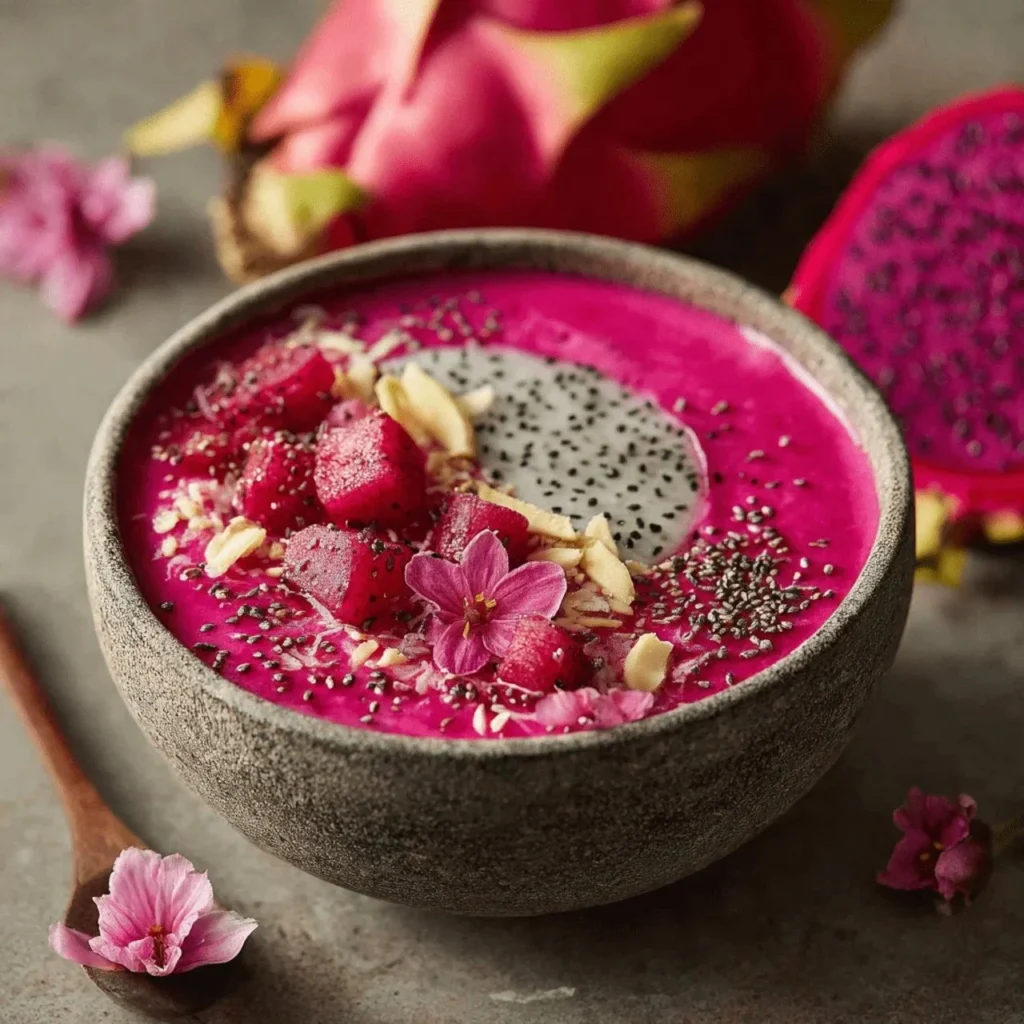
Pitaya Smoothie Bowl
Ingredients
Method
- Scoop the pitaya flesh into a blender along with the frozen banana slices, half a fresh kiwi, and hulled strawberries.
- Add about 2 tablespoons of water and pulse until blended. Only add more water if needed to achieve a spoonable consistency.
- Transfer the smoothie base into a bowl.
- Artfully arrange sliced banana, strawberries, and kiwi on top of the smoothie base.
- Sprinkle pepita seeds and black sesame on top.
- Warm the peanut butter gently, then drizzle it lightly over the toppings.