Easy Sugar Cookie Frosting (Vanilla Buttercream)
A Little Story Before the Frosting I still remember the first time I made this Easy Sugar Cookie Frosting (Vanilla Buttercream) for a holiday cookie swap. I was juggling a tray of slightly overbaked sugar cookies, a toddler who announced at the worst possible moment that she hated frosting, and a neighbor who dropped by…
A Little Story Before the Frosting
I still remember the first time I made this Easy Sugar Cookie Frosting (Vanilla Buttercream) for a holiday cookie swap. I was juggling a tray of slightly overbaked sugar cookies, a toddler who announced at the worst possible moment that she hated frosting, and a neighbor who dropped by with a casserole. Somehow, between the chaos and the kitchen radio playing old Motown, I ended up with a bowl of buttercream that turned the whole batch into something people whispered about. If you like cookie swaps, you might also enjoy the strawberry-topped twist in cream cheese sugar cookies with strawberry buttercream frosting, but for today let me tell you about my go-to vanilla buttercream.
The Ingredient Lineup (and why each one matters)
I keep this frosting recipe in my mental back pocket because the ingredients are basic but everything has its job. You’ll need 1/2 cup unsalted butter, softened so it mixes smooth and airy. The sweetness comes from 2 1/2 to 3 1/2 cups powdered sugar, so start low and work up until the mouthfeel is right. A teaspoon of vanilla extract gives it that classic scent, and a 1/4 teaspoon of almond extract is optional but adds a warm, bakery-like note that I secretly love. For silkiness you’ll use 2 to 4 tablespoons heavy whipping cream; I usually begin with 2 tablespoons and add more if the frosting seems too stiff. A pinch of salt is essential to offset the sweetness. If you want color, a few drops of food coloring do the trick, and if you like a little sparkle on top, raw sugar for sprinkling finishes things beautifully.
If you’re thinking of richer or tangy versions, take a look at red velvet cookies with easy cream cheese frosting for inspiration on swapping flavors, but for these sugar cookies the vanilla-forward approach wins every time.
Step-by-step while I stir
There is a rhythm to making buttercream that feels almost meditative once you tune into it. With a standing mixer or hand mixer, beat butter until light and fluffy (about 2 minutes–it seems like a long time, but it’s worth it!). I always do this in a clear bowl because watching the butter change from dense to pale and billowy makes me smile. Then I add in powdered sugar, 1/2 cup at a time (beginning with only 2 1/2 cups of powdered sugar), beating well after each addition. This keeps the sugar from exploding all over the kitchen and helps you judge consistency.
Next I add in vanilla extract, almond extract, and 2 Tbsp of heavy whipping cream, beating well. At this point taste a tiny bit on the back of your finger—there’s a sweet, creamy hit and the aroma of vanilla that tells you you’re close. If the frosting seems too thin, add in the remaining powdered sugar. If it’s too thick, add in the remaining heavy whipping cream. Those choices are the little nudges that let you tweak the frosting to spreadable or pipeable perfection. Add in a pinch of salt to offset the sweetness of the frosting. If desired, add food coloring. Spread or pipe onto cookie. If desired, add a sprinkle of raw sugar on top. It makes the frosting shimmer a bit, but it’s completely optional. Enjoy!
Getting the Texture Just Right
Texture is everything here. You’ll know it’s done when the frosting holds soft peaks and doesn’t puddle off a spatula but still yields easily when you swipe it across a cookie. If it snaps when you push it with a spoon, it’s too stiff; if it slides off, it needs more powdered sugar. My trick is to stop and check after every change: because I began with only 2 1/2 cups powdered sugar, I can always add more in small amounts instead of trying to rescue a one-way-too-thin batch. A tip I swear by is to let the butter come to room temperature for at least an hour; it beats trying to force cold butter into a smooth emulsion. Another small trick is to pulse the mixer on low for the last 10 seconds to knock out any leftover air bubbles so piped decorations don’t collapse later. Finally, for the prettiest sheen, give the frosting a last quick whip on medium-high and then immediately start piping or spreading.
The Small Tweaks I Make and What I Serve It With
I use this frosting on everything from thick, cakey sugar cookies to thinner pressed ones. It pairs beautifully with buttery cutouts and with chewy thumbprints. If you want to change things up, you can stir in a tablespoon of lemon zest for a bright twist, fold in 2 tablespoons unsweetened cocoa powder for a chocolate variation, or swap 2 tablespoons of butter for cream cheese to make a tangier version. I’ll often top a tray with a few color variations and then sprinkle some with raw sugar for sparkle and others with tiny nonpareils for a party look. If you want a fun mash-up, try it on brown-sugar-style cookies — I used it on a batch once and it was heavenly; that riff reminds me of the playful spin in brown sugar pop tart cookies a delicious twist on a classic treat.
When serving, I like to put a plate of frosted cookies next to a pot of strong coffee or a kettle of warming tea. The contrast between the rich buttercream and something slightly bitter is exactly the balance that makes people keep reaching for one more.
Making Ahead, Leftovers, and a Few Final Tricks
If you’re prepping for a party or cookie exchange, this frosting stores well. If making ahead of time, keep frosting in the fridge, and then let the frosting come to room temperature before spreading onto cookies. When I refrigerate it I cover the bowl tightly; when I bring it back to room temperature I re-whip for 20 to 30 seconds with the mixer to restore the lightness. Leftover frosted cookies keep in an airtight container at room temperature for a couple of days, or you can refrigerate them for up to a week—if you do chill them, let them sit out for 20 to 30 minutes before serving so the buttercream softens.
A few more tips from experience: use clear, gel-based food coloring to avoid thinning the frosting, warm your piping tip slightly with hot water for smoother lines, and taste as you go because a pinch more salt can transform a too-sweet batch into something balanced and bakery-like.
Conclusion
If you want another take on sugar cookie buttercream for inspiration, check out a similar sugar cookie buttercream recipe for ideas on flavor and finishing touches.
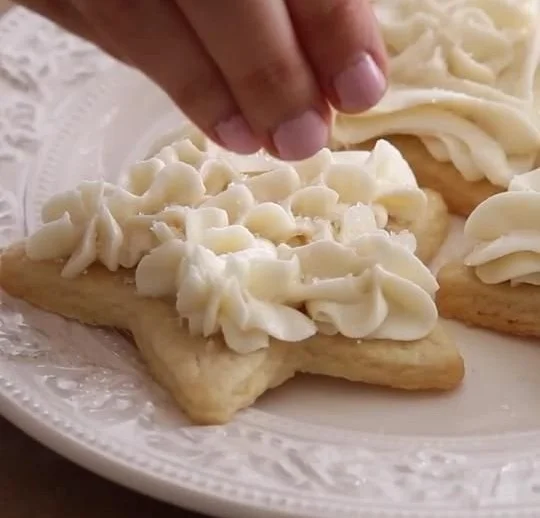
Vanilla Buttercream Frosting
Ingredients
Method
- In a mixing bowl, beat the softened butter until light and fluffy, about 2 minutes.
- Gradually add powdered sugar, 1/2 cup at a time, beating well after each addition to avoid sugar explosion.
- Mix in vanilla extract, almond extract, and 2 tablespoons of heavy whipping cream.
- Taste the frosting; if it's too thin, add more powdered sugar. If too thick, add more heavy whipping cream.
- Add a pinch of salt to balance the sweetness. If desired, mix in food coloring.
- Spread or pipe the frosting onto cooled cookies. Optionally sprinkle raw sugar or nonpareils on top for decoration.