Fluffy Yogurt Cloud Cake
I remember the first time I bit into what I later called my Fluffy Yogurt Cloud Cake: it was the kind of thing that made me pause mid-chew and close my eyes because the texture felt impossibly light, like a cloud that somehow held a quiet tang of yogurt and just enough sweetness. I made…
I remember the first time I bit into what I later called my Fluffy Yogurt Cloud Cake: it was the kind of thing that made me pause mid-chew and close my eyes because the texture felt impossibly light, like a cloud that somehow held a quiet tang of yogurt and just enough sweetness. I made it on a rainy Saturday with a single mug of coffee for company, and the whole apartment smelled warm and comforting for hours. If you like breakfasts that feel a little indulgent but still honest, this one will become a favorite. If you’re the kind of person who also loves a soft morning treat, you might appreciate it the same way I do — after all, I’ve been known to slice a piece and pair it with the same berries I use on my fluffy pancakes with maple apples when friends drop by.
The recipe reads ridiculously simple on paper. All you need is 1 cup all-purpose flour, 1 cup full-fat Greek yogurt, 3/4 cup granulated sugar, 2 tsp baking powder, 3 large eggs, 1 tsp vanilla extract, 1/4 tsp salt. I like that list because it doesn’t ask for anything exotic—just good yogurt and pantry staples. There’s something reassuring about recipes that ask for one cup at a time; the rhythm of measuring and mixing always calms me down.
I’ll tell you how I make it and slip in a few little tricks I’ve picked up. To make it, preheat your oven to 350°F (175°C) and grease an 8-inch round cake pan. In a mixing bowl, whisk together the flour, baking powder, and salt. In another bowl, beat the Greek yogurt, sugar, eggs, and vanilla until smooth. Gently combine the dry ingredients with the wet mixture without overmixing. Pour the batter into the prepared pan and bake for 30-35 minutes or until a toothpick inserted comes out clean. Cool in the pan for 10 minutes before transferring to a wire rack. Those steps are straightforward, but the way you treat the batter at each stage changes everything.
A few things I’ve learned: always bring the eggs and yogurt to room temperature before you start. It helps them incorporate more smoothly so you don’t have streaks of yogurt in the batter. When you beat the yogurt, sugar, eggs, and vanilla until smooth, I usually do it with a whisk or a hand mixer on low for just a minute; you don’t need fluffy peaks, you just want a glossy, homogenous mixture. When it’s time to fold in the dry ingredients, do that gently. Overmixing makes the crumb denser, and this cake’s whole charm is how featherlight it is. If you see the batter get elastic and resist folding, stop. A few streaks of flour are okay; they’ll disappear in the oven.
Getting the texture just right is a little like tuning an instrument. The oven temperature and pan size matter: that 8-inch round pan concentrates the batter so the cake bakes tall and tender instead of sprawling thin and dry. I check doneness with a toothpick, but I also look for a top that’s pale golden and springs back slightly when touched. If the center jiggles like liquid, it needs more time. If the top is browning too fast but the center is still underdone, tent the cake loosely with foil for the last 10 minutes; that trick saves a lot of culinary crises. Also, using full-fat Greek yogurt gives a subtle tang and keeps the crumb moist; try to avoid low-fat yogurts unless you like a drier result.
This is also where little personal habits help: I sometimes add a teaspoon of lemon zest when I’m in the mood for brightness, or a small handful of chocolate chips folded in for a weeknight treat. For a lighter twist, I’ve experimented with sour cream instead of yogurt and liked the extra richness. Those are easy variations that don’t change the method. If you want something more dramatic, you could try a version with poppy seeds and lemon (my favorite on sunny mornings) or stir in cinnamon and sliced apples for a cozy fall feel.
When things don’t go as planned, here are a couple of quick fixes I keep in my back pocket. If the cake comes out a little dense, it’s usually because I overworked the batter or packed the flour too tightly when measuring; next time I spoon the flour into the cup and level it instead of scooping. If the top cracks more than I’d like, I remind myself that tiny cracks aren’t a flaw—they’re rustic and honest. If you invite people over, you can hide imperfections by topping the cake with a dusting of powdered sugar and a scattering of berries.
The smell while it bakes is my favorite part: a warm, yeasty vanilla with that faint tang of yogurt that promises tenderness. Serving it is flexible. I love it simply with a spoonful of whipped cream and fresh strawberries, or with honey drizzled and a sprinkle of lemon zest. For an afternoon tea, a delicate smear of mascarpone keeps things decadent without being heavy. If you like breakfast mashups, try a slice next to a stack of fluffy chocolate protein pancakes for a brunch that looks like you planned something elaborate when you really just made two easy batters.
Leftovers behave well. Once cooled completely, I wrap the cake in plastic or keep it in an airtight container in the refrigerator where it lasts nicely for 3 to 4 days. I’ve frozen slices between layers of parchment and pulled one out to thaw in the morning when unexpected company arrived; it warmed up in ten minutes and tasted nearly fresh. If you plan to make it ahead, slice and store with a piece of parchment between slices so they don’t stick.
The recipe lends itself to little adjustments. For a more delicate, soufflé-like version, some people swap a portion of the flour for cornstarch—my cousin swears by that trick and it gives an almost cloud-like lift. For a gluten-free take, you could try a blend of gluten-free flour, though I’d expect a slightly different crumb. I’ve also made it with a touch of almond extract in place of vanilla for a nutty perfume that pairs well with poached pears.
I’ve told this recipe to friends so many times that it’s almost become part of my routine storytelling. My grandmother used to make a yogurt-sweetened cake that tasted similar, and every time I bake this I think of her kitchen: the small radio playing, a towel draped over a jar of utensils, and a countertop dusted with flour. That memory is why I keep the steps simple and the ingredient list honest.
If you want to experiment, try folding in a handful of berries right before you pour the batter into the pan; they sink a bit and make pretty pockets of fruit. Or, for a breakfast-ready spin, halve the sugar and drizzle maple syrup over each slice. The basic method holds even if you make these changes, and that consistency is a comfort.
A Few Things I’ve Learned
Baking this teaches patience more than anything. The cooling step is small but crucial: timing matters, so cool in the pan for 10 minutes before transferring to a wire rack. That pause helps the cake set so it doesn’t fall apart when you lift it out. If you rush it, you’ll be sad; if you wait, you’ll be rewarded.
Getting the Texture Just Right
Texture comes from restraint. Whisk the dry ingredients—flour, baking powder, and salt—so they’re evenly distributed, but be gentle when combining them with the beaten Greek yogurt, sugar, eggs, and vanilla. Gently combine the dry ingredients with the wet mixture without overmixing, and your cake will keep that airy, melt-in-your-mouth feel that makes it a cloud.
When Things Don’t Go As Planned
Sometimes the center needs a few more minutes. If a toothpick inserted comes out with a few moist crumbs, give it 3 to 5 more minutes and check again. If I’m testing different inspirations from around the web, I’ll compare notes with other recipes like the light takes on flourless yogurt cakes that have influenced my tweaks over time, such as the delicate texture in recipes celebrating yogurt’s tang.
The Best Part About This Dish
The best part is how versatile and forgiving it is. It’s my go-to when I want something special without the fuss. If you love tiny, impressive desserts, try pairing it with a delicate custard or a scoop of gelato. For something heartier, a smear of ricotta and a drizzle of honey are all you need.
Conclusion
If you want to see how others have leaned into yogurt-only versions, this three-ingredient fluffy yogurt cake is an inspiring minimalist take that plays with the same ideas. For a flourless perspective on tangy, airy yogurt cakes, I found the flourless yogurt cake from Kitchen Frau useful when experimenting with different textures and ingredient swaps.
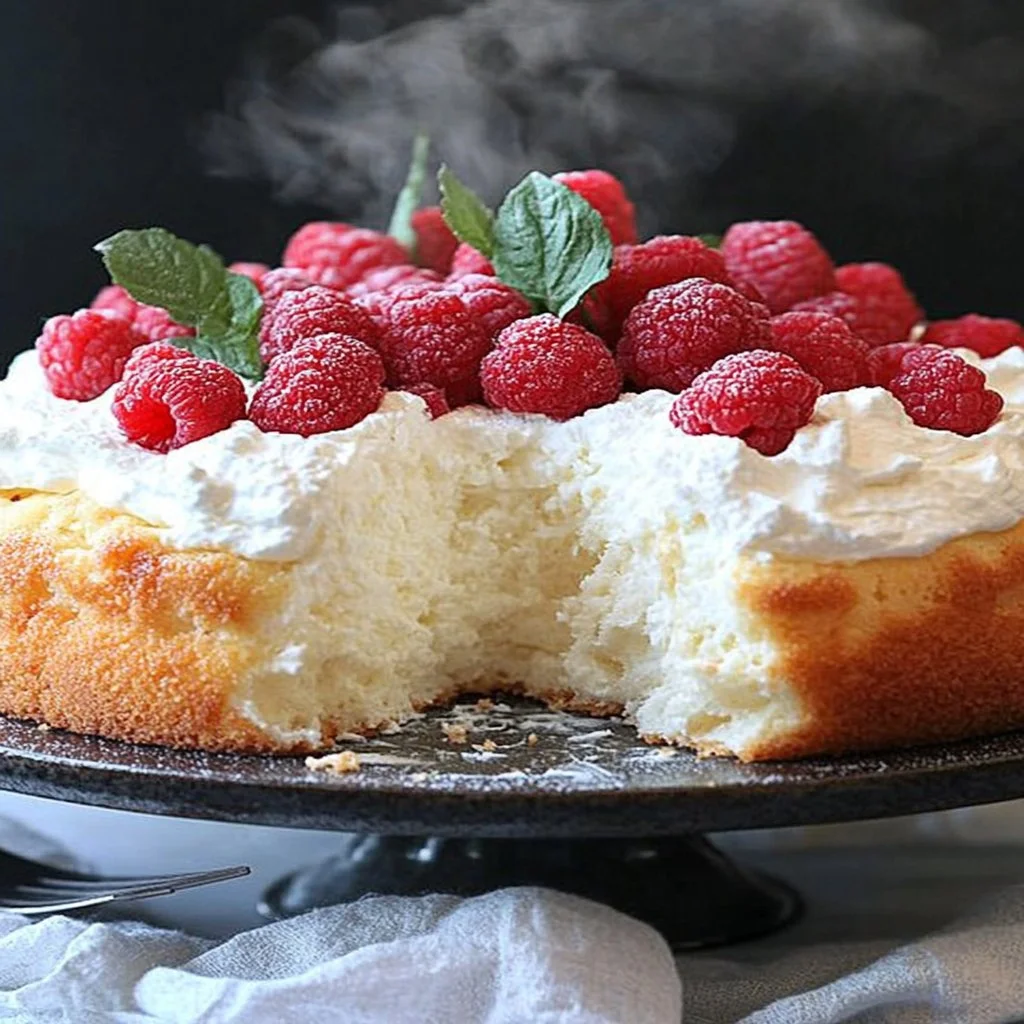
Fluffy Yogurt Cloud Cake
Ingredients
Method
- Preheat your oven to 350°F (175°C) and grease an 8-inch round cake pan.
- In a mixing bowl, whisk together the flour, baking powder, and salt.
- In another bowl, beat the Greek yogurt, sugar, eggs, and vanilla until smooth.
- Gently combine the dry ingredients with the wet mixture without overmixing.
- Pour the batter into the prepared pan and bake for 30-35 minutes or until a toothpick inserted comes out clean.
- Cool in the pan for 10 minutes before transferring to a wire rack.