Fresh Green Goddess Salad
Why I Make This on Repeat I have a habit of falling in love with salads more than once. This Fresh Green Goddess Salad is one of those recipes that sneaks into my weekly rotation because it manages to feel both indulgent and light at the same time. The first time I made something like…
Why I Make This on Repeat
I have a habit of falling in love with salads more than once. This Fresh Green Goddess Salad is one of those recipes that sneaks into my weekly rotation because it manages to feel both indulgent and light at the same time. The first time I made something like this I compared it to a bowl of sunshine—bright green, creamy, and impossibly fresh—and I still smile every time the house fills with the sharp scent of lemon and basil. If you want a version that first convinced me to swap heavy dressings for green ones, take a look at the refreshing Green Goddess version I first tried, which nudged me into experimenting with my own twists.
The Green Lineup That Does All the Work
There’s a short, very specific cast of ingredients that give this salad its signature flavor and texture. You’ll need 2 cups loosely packed baby spinach, 1/2 cup fresh basil leaves, 1/2 cup fresh parsley leaves, 1/4 cup grated parmesan cheese, 1 1/2 tsp. kosher salt, 1 tsp. ground black pepper, 2 garlic cloves, 1 avocado, 1 shallot, quartered, 5 Tbsp. fresh lemon juice, 1/4 cup olive oil, 8 oz. sugar snap peas, sliced on the diagonal, 4 green onions, thinly sliced, 1 English cucumber, finely chopped, and 1/2 head green cabbage, finely chopped, plus 1/2 tsp. kosher salt. Saying the list out loud feels a bit like reciting a spell—spinach, herbs, parmesan, lemon—except it’s a spell that gives you crunchy, herb-forward happiness in a bowl.
I often keep a jar of parmesan in the fridge and a bag of baby spinach in the crisper so the only fresh things I have to grab are basil, parsley, a few sugar snap peas, and an avocado. When guests drop by and I have to throw something together quickly, I’ll lean on the pantry items and then dress the raw vegetables the second I’m ready to serve. It’s a small rush to watch the colors pop when you toss everything together.
Blending the Dressing Like You Mean It
The dressing is the heart of this salad and it’s worth treating like the main event. For the dressing, add spinach, basil, parsley, parmesan, salt, pepper, garlic, avocado, and shallot to a blender. Pour in lemon juice and olive oil. Blend on high until smooth, about 1 to 2 minutes. Adjust consistency with water if needed. The texture should be thick and velvety without being gloopy; if it seems too heavy, a tablespoon or two of water loosens it without diluting the flavor. One tip I always share is to let the lemon sit out for a few minutes after juicing if it feels a little cool from the fridge—room-temperature citrus blends into the oil and avocado more harmoniously.
When I’m feeling playful, I’ll pull inspiration from other green-dressed favorites and add a whisper more herb or a squeeze more lemon; there’s a whole family of recipes related to this idea, and sometimes I peek at a recipe for a party dip as a reminder of how garlicky I like things: a green goddess chicken salad dip that I make for parties gave me one of those small “aha” moments about texture.
Crunch, Color, and the Finish
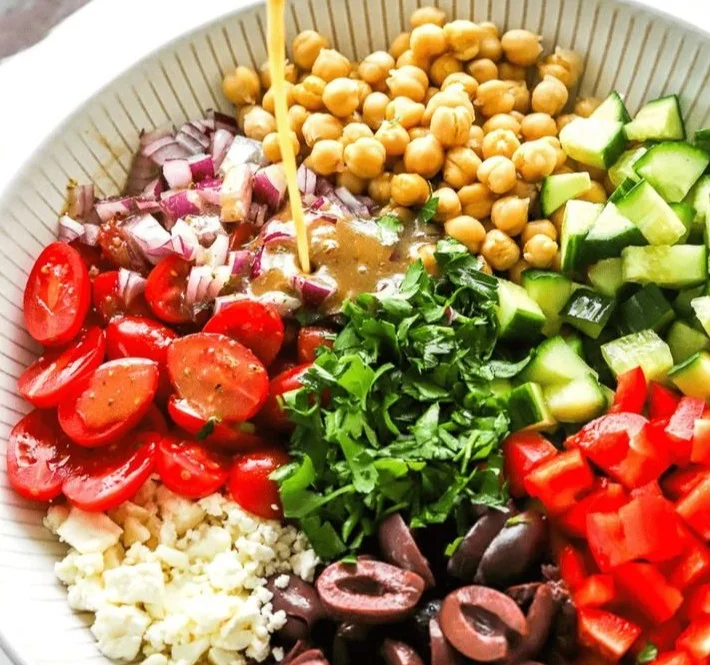
Texture is what keeps you coming back to this salad. In a large bowl, combine sugar snap peas, green onions, cucumber, cabbage, and 1/2 tsp salt. I like the snap peas sliced on the diagonal so every forkful has a little curve of sweet crunch. The cabbage is thinly shredded so it breathes with the dressing but still provides that satisfying chew.
Add the prepared dressing and toss until well coated. Serve immediately. I mean it—this salad is at its best right after you dress it. The cabbage and cucumbers will release water over time and the dressing will thin out. If I need to make the salad ahead of time for a potluck, I keep the dressing in a jar and the veggies in a large bowl separate; only when I arrive do I toss them together. If you want a tossed version to transport, keep in mind you might need to add a tablespoon of lemon or a splash of oil at the last minute to freshen it up.
You might be curious about variations; once I made a version with grilled shrimp and it balanced beautifully because the creamy avocado dressing played nicely with smoky, charred seafood. For a vegetarian heartier option I sometimes stir in toasted quinoa or swap sugar snap peas for blanched asparagus. These little changes keep the template fresh and fun.
A Few Things I’ve Learned
I have a handful of small tricks that make this salad sing. First, don’t overblend—stop when the dressing is smooth but still vibrant. Second, taste for salt after you blend; the parmesan adds umami but the vegetables sometimes need a little more brightness. Third, if your avocado is borderline, add an extra teaspoon of lemon to brighten and disguise any past-its-prime flavor.
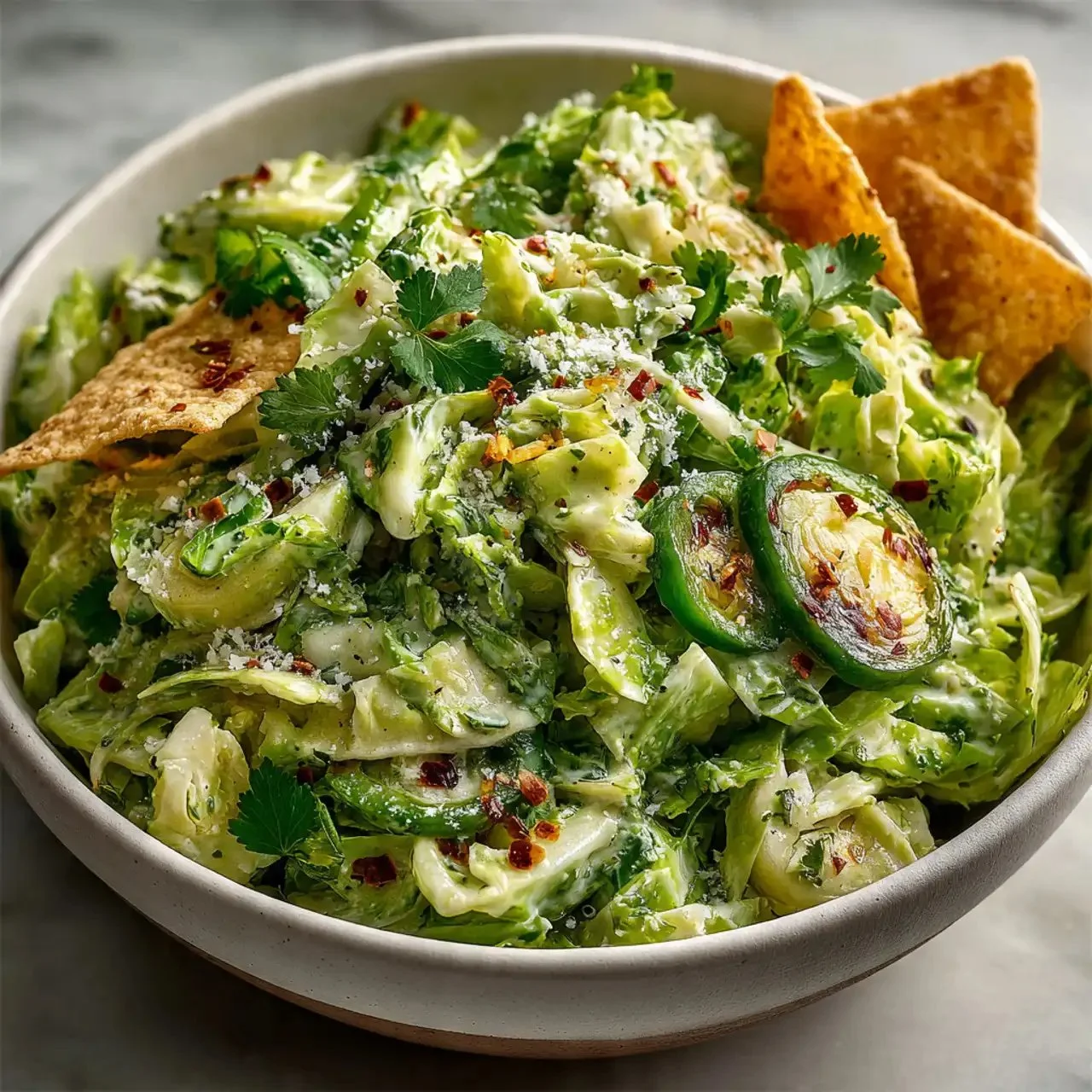
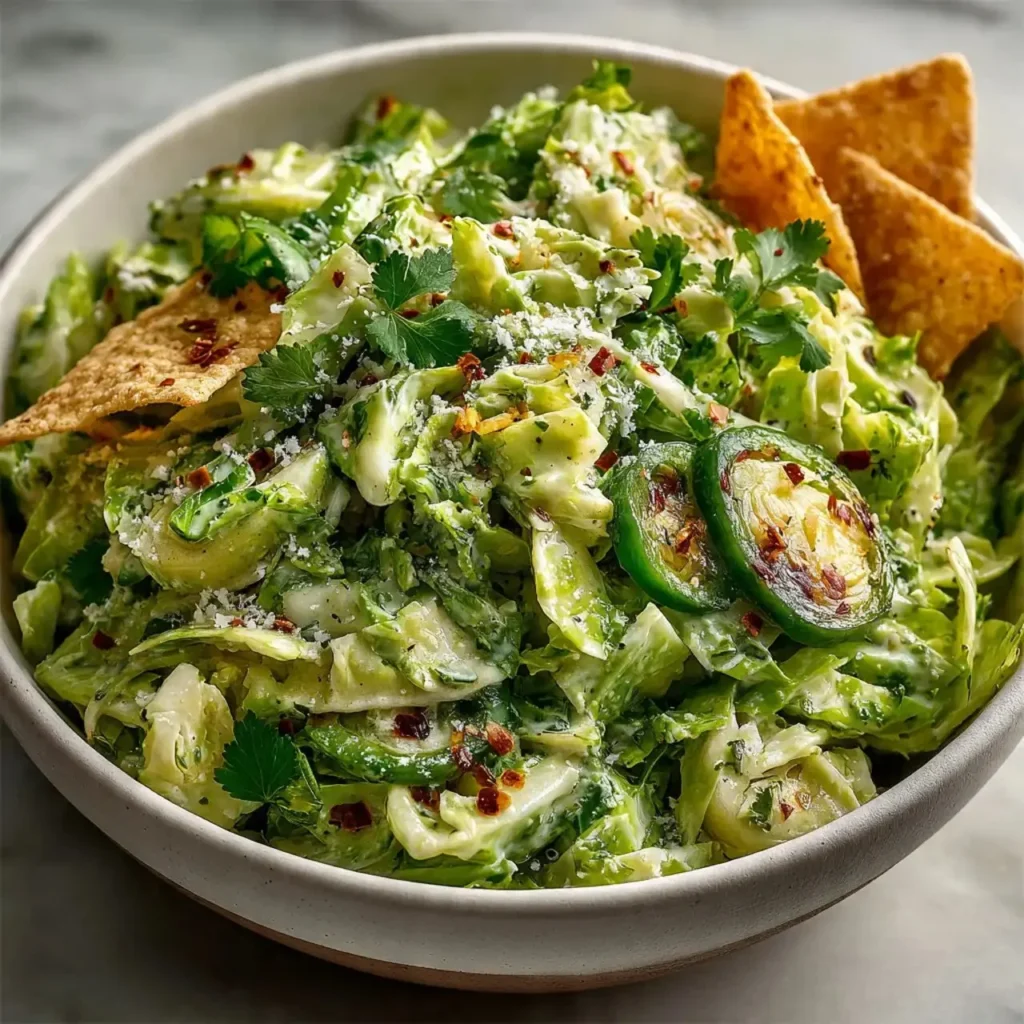
How do you know when it’s done right? The dressing should coat without puddling, the cabbage should still offer a crisp bite, and the salad should smell like basil and lemon with a whisper of garlic. The colors are a giveaway too: you want that glossy green dressing clinging to the pale cabbage and the dark flecks of pepper and parsley giving depth.
If you’re looking for inspiration on how others stretch this concept—into pasta, for example—I sometimes compare notes with a green goddess pasta adaptation I bookmarked and love for picnics: a green goddess pasta salad that proves the dressing is wildly versatile.
Little Celebrations, Leftovers, and Pairings
This salad pairs like a dream. I often serve it with simply grilled chicken, crusty bread, or alongside a lemony fish. For casual dinners, I’ve spooned it next to bowlfuls of roasted potatoes; for fancier evenings, seared scallops play off the herbal brightness beautifully. It’s forgiving with proteins and treats almost any white fish or grilled tofu with respect.
Leftovers keep well for a day if you store them right. Put any extra dressed salad in an airtight container and eat it within 24 hours for best texture. If you know you’ll have leftovers, don’t dress the whole batch; keep the dressing separate in a jar tucked into the fridge and combine just what you’ll eat the next day—this simple habit makes weekday lunches feel a little more civilized. For a make-ahead party strategy, I’ll blend the dressing in the morning and refrigerate, then toss everything the moment guests arrive so the salad reads fresh.
A small indulgence: sometimes I shave extra parmesan on top just before serving and watch it melt ever so slightly into the warm bite-sized veggies—that’s my grandmother’s trick for making simple things feel special. When I want to riff, I’ll add toasted almonds for crunch or swap basil for mint for an unexpected lift.
Conclusion
If you want to see a different take on a Green Goddess Salad with a helpful video walkthrough, I often refer friends to Green Goddess Salad (with Video) – Natasha’s Kitchen to visualize the technique. For another tested home-cook version that emphasizes crisp vegetables and herb-forward dressing, this recipe is a nice companion: Green Goddess Salad – Two Peas & Their Pod.
Fresh Green Goddess Salad
Ingredients
Method
- Add spinach, basil, parsley, parmesan, salt, pepper, garlic, avocado, and shallot to a blender.
- Pour in lemon juice and olive oil.
- Blend on high until smooth, about 1 to 2 minutes. Adjust consistency with water if needed.
- Let the lemon sit out for a few minutes after juicing if it feels cool from the fridge.
- In a large bowl, combine sugar snap peas, green onions, cucumber, cabbage, and 1/2 tsp salt.
- Add the prepared dressing and toss until well coated.
- Serve immediately for best freshness.