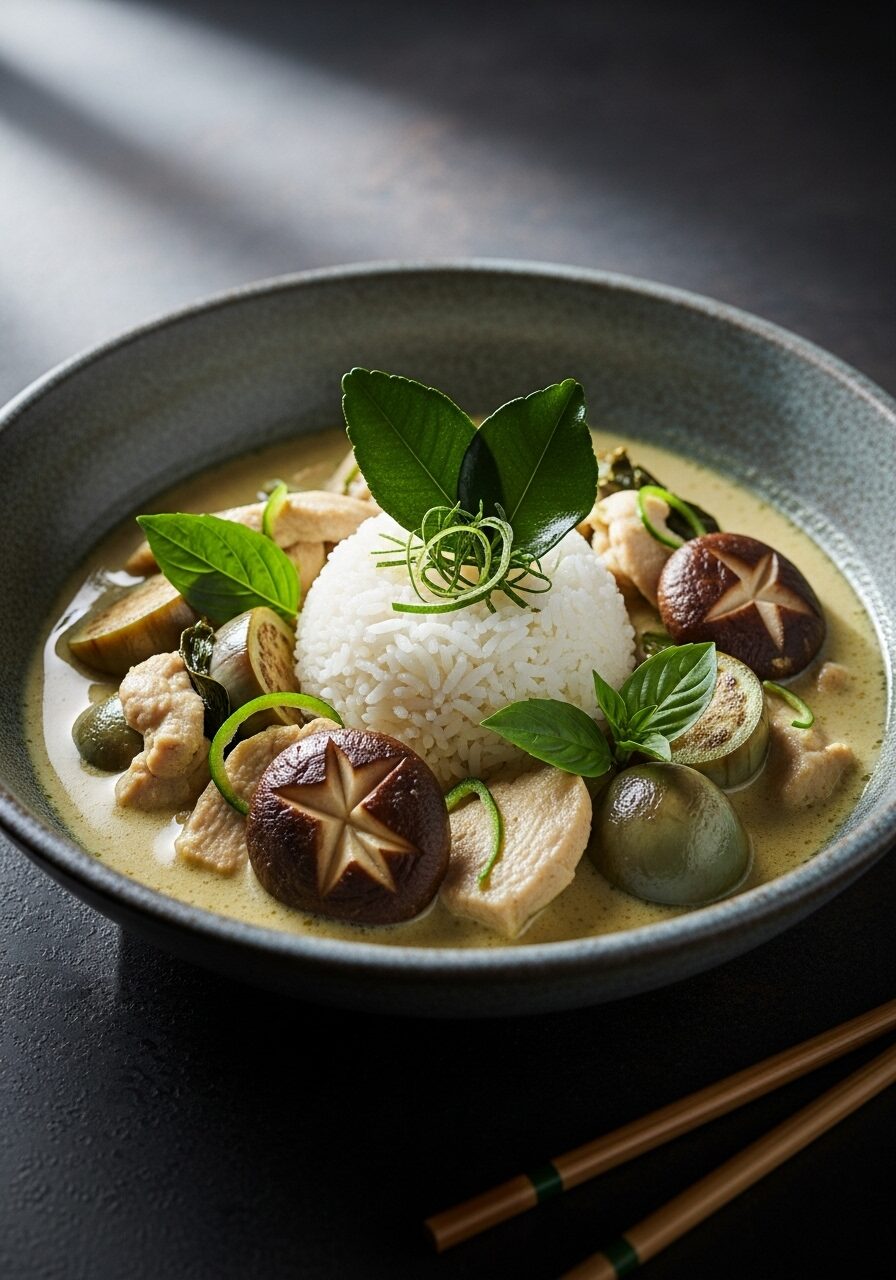
The Ultimate Thai Green Curry with Chicken (Authentic & Easy!)
Imagine a bowl of the most fragrant, vibrant, and deeply flavorful curry you’ve ever tasted. Picture tender, juicy pieces of chicken and unique Thai eggplants swimming in a rich, slightly sweet, and perfectly spicy coconut milk broth that’s bursting with the aromas of lime, basil, and ginger. This, my friends, is not your average takeout;…
Imagine a bowl of the most fragrant, vibrant, and deeply flavorful curry you’ve ever tasted. Picture tender, juicy pieces of chicken and unique Thai eggplants swimming in a rich, slightly sweet, and perfectly spicy coconut milk broth that’s bursting with the aromas of lime, basil, and ginger. This, my friends, is not your average takeout; this is authentic, restaurant-quality Thai Green Curry, and you are about to make it in your own kitchen.
Here’s the thing: for years, I was chasing the ghost of a perfect green curry I had on a trip to Thailand. My homemade versions were always good, but they were missing that special something. Then I learned the secret, a classic Thai technique called “breaking” the coconut milk. It’s the process of frying the curry paste in the thick coconut cream until the oil separates, and it is the absolute key to unlocking the deepest, most aromatic flavor possible.
I promise you, this recipe is your foolproof guide to that authentic, show-stopping flavor. It’s a complete, one-pan meal that comes together in about 40 minutes and tastes infinitely better than any pre-made sauce from a jar. It’s a beautiful dance of spicy, sweet, salty, and savory that is utterly addictive.
Get ready to master a simple, professional technique and create a bowl of pure, aromatic happiness that will transport you straight to the streets of Bangkok.
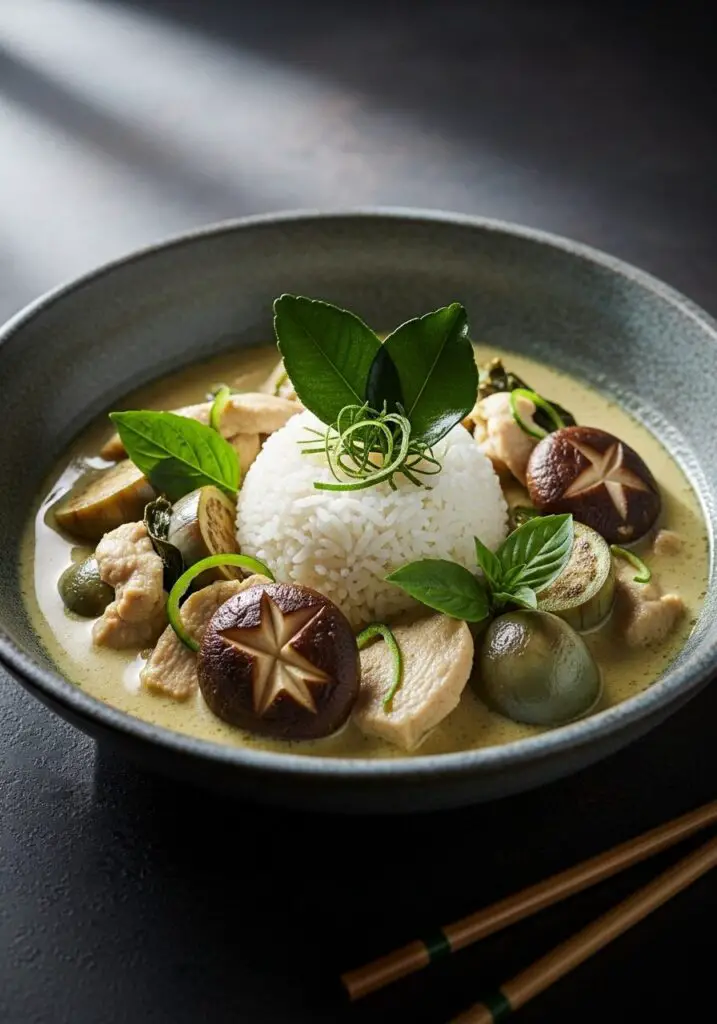
Why This Is the Only Green Curry Recipe You’ll Ever Need!
You are going to be so proud of the incredible, complex flavor you create with this recipe. It’s a true taste of Thailand! Here’s why it’s so special:
- Authentic Restaurant-Quality Flavor: This recipe uses classic Thai techniques and ingredients like makrut lime leaves and palm sugar to build a deep, aromatic flavor that you just can’t get from a jar.
- The Secret is in the “Break”: We’ll teach you the simple but crucial technique of “breaking” the coconut milk by frying the curry paste, which unlocks an incredible depth of flavor.
- A Fast, One-Pan Wonder: From start to finish, you can have this spectacular, complete meal on the table in about 40 minutes, with minimal cleanup.
- Incredibly Tender Chicken: Using juicy chicken thighs and simmering them in the rich coconut broth ensures they are fall-apart tender and packed with flavor.
- Perfectly Balanced & Aromatic: This curry is the perfect symphony of flavors—spicy from the paste, sweet from the palm sugar, salty from the fish sauce, and incredibly aromatic from the fresh herbs.
Recipe Snapshot
| Prep Time | 10 minutes |
| Cook Time | 30 minutes |
| Total Time | 40 minutes |
| Servings | 4 servings |
| Calories | 551 kcal per serving |
| Course | Main Course, Dinner |
| Cuisine | Thai |
| Difficulty/Method | Intermediate / Stovetop |
Your Shopping List for an Authentic Thai Feast
This recipe uses a handful of key authentic ingredients that are worth seeking out at your local Asian market or online. They make all the difference!
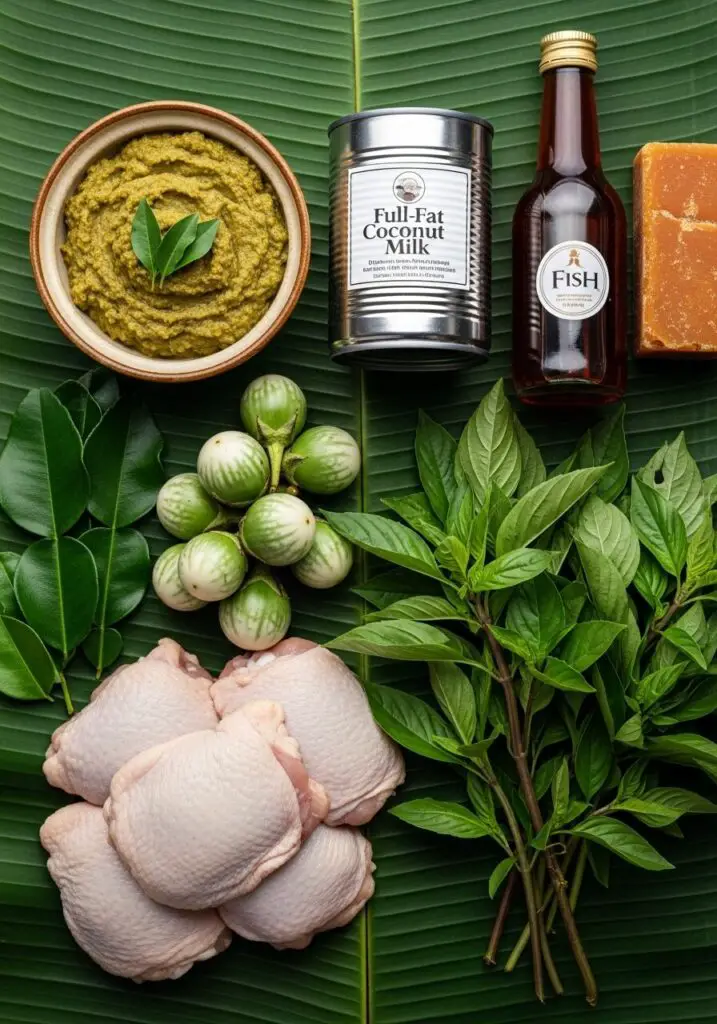
→ For the Curry
- 1 1/2 cups full-fat coconut milk → Non-negotiable! Look for a brand like Aroy-D that is 100% coconut milk, not coconut extract and water.
- 10 fresh or frozen makrut lime leaves → These add an incredible, bright, citrusy aroma that is essential to Thai curry.
- 2 tablespoons virgin coconut oil → For frying our curry paste.
- 4 ounces (1/2 cup) green curry paste → A high-quality, store-bought paste is a fantastic shortcut.
- 1 pound boneless skinless chicken thighs, cut into 2-inch pieces → The key to juicy, tender chicken.
- 5 Thai eggplants → These small, round, green and white eggplants are classic! See notes for substitutions.
- 1 packed cup fresh sweet basil leaves → This is also known as Thai Basil, and its slightly anise-like flavor is crucial.
- Cooked jasmine rice → For serving and soaking up all that glorious sauce.
→ For the Seasoning
- 1 tablespoon plus 2 teaspoons palm sugar → Adds a unique, caramel-like sweetness that balances the spice.
- Kosher salt → To season the chicken perfectly.
Let’s Get Cooking! Your Step-by-Step Guide
Ready to create some serious flavor magic? This process is all about building aromatic layers, and it’s so much fun.
Part 1: The Flavor Base (The “Breaking” of the Coconut Milk)
- Prep Your Ingredients: Whisk together 1/2 cup of the coconut milk with 1/2 cup of water and set it aside. Remove the tough middle rib from all your makrut lime leaves. Set 8 whole leaves aside, and thinly slice the remaining 2 for garnish.
- Start the “Break”: In a 3-quart saucepan over medium heat, combine the coconut oil and 1/2 cup of the thick, full-fat coconut milk. Bring it to a simmer and cook, stirring, for about a minute until it thickens slightly.
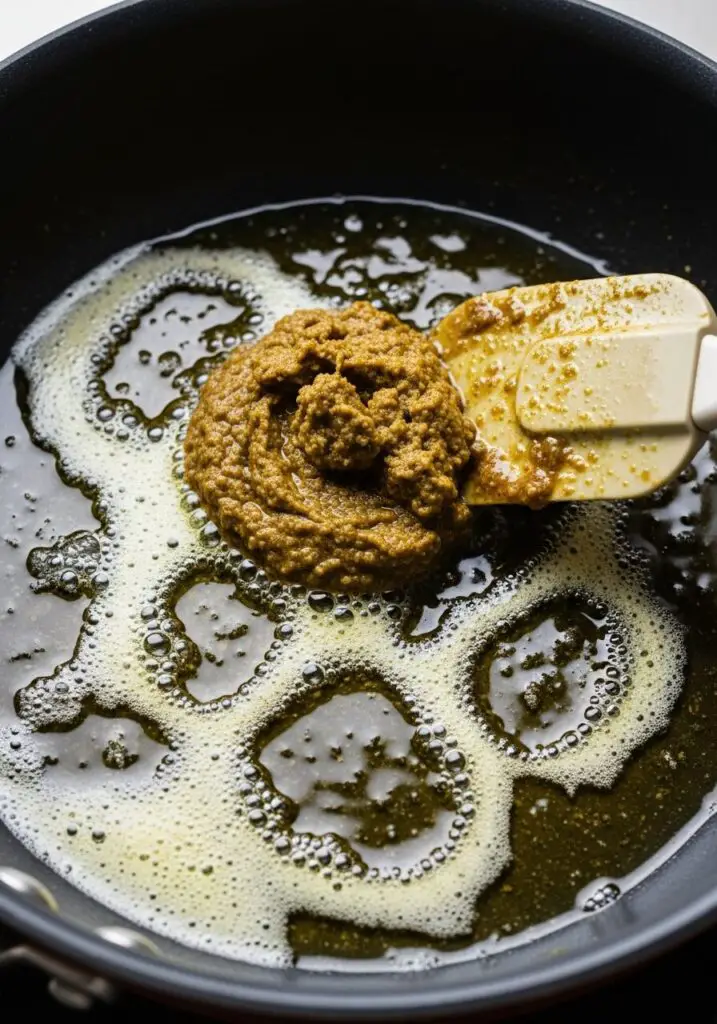
- Fry the Curry Paste: Add the green curry paste and stir it vigorously into the coconut milk. Turn the heat up to medium-high and cook, stirring constantly, for about a minute until the mixture starts to sizzle and “spit.” This is the water cooking off!
- Finish the “Break”: Lower the heat back to medium. Now, add the remaining 1/2 cup of thick coconut milk, just 2 tablespoons at a time, stirring well after each addition. Continue this for 5-6 minutes. You’ll see the paste darken and the coconut fat will start to separate, creating little pools of fragrant, green-tinted oil. This is the secret to maximum flavor!
Part 2: Simmer, Finish, and Serve!
- Season and Add Chicken: Stir in the fish sauce and the palm sugar until the sugar is completely dissolved. Lightly season your chicken pieces with salt, then add them to the pot along with the 8 whole makrut lime leaves. Stir to coat everything in the fragrant paste.
- Simmer the Curry: Pour in your reserved thinned coconut milk mixture and bring it all to a simmer. Let it cook, stirring occasionally, for about 10 minutes, until the chicken is tender and cooked through.
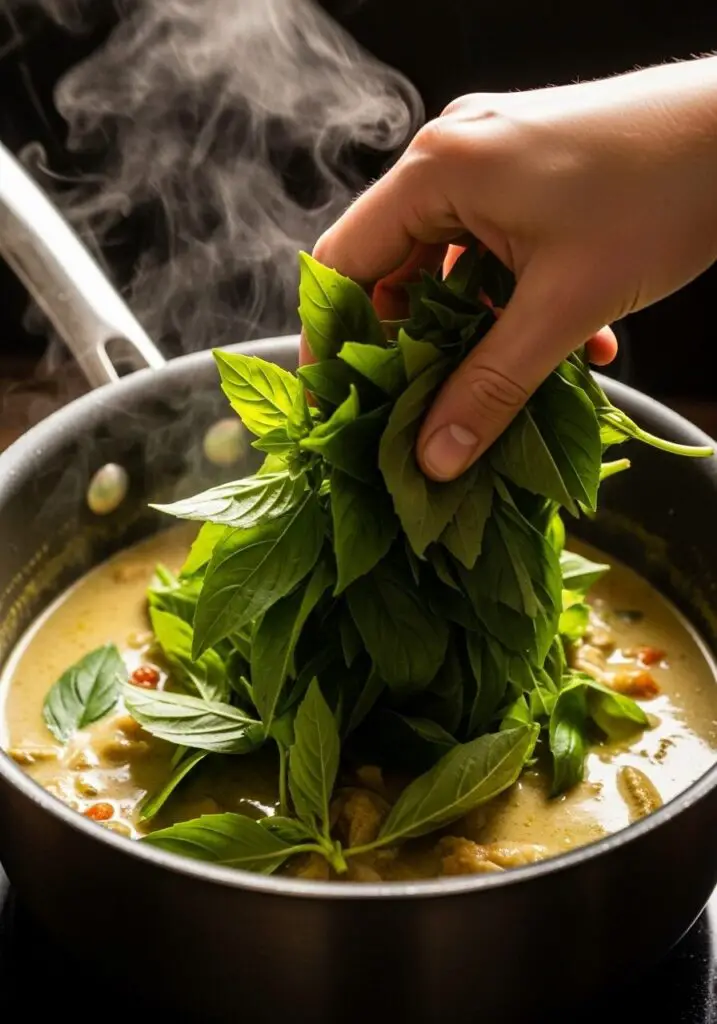
- Add the Veggies and Basil: Add the quartered Thai eggplants and continue to simmer for about 3 more minutes, until they’re just tender but still have a slight bite. Remove the pot from the heat and stir in the fresh Thai basil leaves until they’re just wilted.
- Serve Your Masterpiece: Ladle the hot, fragrant curry into bowls over fluffy jasmine rice. Garnish with your thinly sliced makrut lime leaves and enjoy the incredible flavors!
WiseRecipes’ Top Tips for Authentic Thai Curry
These are the simple secrets that will make your homemade curry taste like it came from a top Thai restaurant.
- Don’t Skip “Breaking” the Coconut Milk. I know it seems like a fussy step, but frying the curry paste in the thick coconut cream until the oil separates is the single most important technique for unlocking the full, deep, and complex aroma of the spices. It’s a non-negotiable for authentic flavor.
- Use FULL-FAT, High-Quality Coconut Milk. Do not use “light” coconut milk! The fat content is essential for the “breaking” process and for a rich, creamy, and flavorful sauce. Look for brands where the only ingredient is coconut.
- Seek Out the Authentic Ingredients. Makrut lime leaves, Thai basil, fish sauce, and palm sugar are the flavor pillars of this dish. They are absolutely worth finding at an Asian market or online, and they will elevate your curry from “good” to “unforgettable.”
- Don’t Overcook the Eggplant. Thai eggplants are meant to be cooked until they are just tender but still retain a slight, pleasant bite and crunch. Overcooking them will make them mushy.
- Add Fresh Basil OFF the Heat. Thai basil is delicate. To preserve its incredible, fresh, anise-like aroma, always stir it in at the very end, after you’ve removed the curry from the heat.
Creative Twists: Delicious Ways to Customize Your Curry
This classic recipe is a wonderful base for your own creations! Here are some fun ideas:
- Add More Veggies: Bamboo shoots, baby corn, or sliced red bell peppers would be fantastic additions. Add them along with the eggplant.
- Make it with Shrimp: Swap the chicken for large, peeled shrimp. Add them during the last 3-4 minutes of cooking, just until they turn pink and opaque.
- Make it Vegetarian/Vegan: Use firm, pressed tofu (cubed and pan-fried first) instead of chicken. Use a vegan green curry paste and substitute the fish sauce with a vegan fish sauce or extra soy sauce.
- Add a Squeeze of Lime: A fresh squeeze of lime juice over the top of each bowl just before serving will brighten up all the rich flavors beautifully.
- Make it Spicier: Add a few sliced fresh Thai bird’s eye chiles to the curry along with the chicken for a serious kick of heat.
- Use a Different Protein: Thinly sliced beef or pork would also be delicious. Sear it quickly at the beginning and add it back in at the end.
- Add Some Crunch: Top the finished curry with a sprinkle of toasted, chopped peanuts or cashews.
- Change the Curry Paste: This same technique works beautifully with red or yellow Thai curry paste for a completely different but equally delicious meal.
Gaeng Khiao Waan Gai (Thai Green Curry with Chicken)
Ingredients
Method
- In a small bowl, whisk 1/2 cup coconut milk with 1/2 cup water; set aside. Remove mid-ribs from lime leaves; set 8 whole leaves aside and thinly slice the other 2 for garnish.
- In a 3-quart saucepan over medium heat, simmer coconut oil and 1/2 cup thick coconut milk for 1 minute. Add curry paste, raise heat to medium-high, and stir constantly until the mixture spits, about 1 minute.
- Lower heat to medium. Gradually add the remaining 1/2 cup thick coconut milk in 2-tablespoon increments, stirring until the paste darkens and the fat separates, 5 to 6 minutes.
- Stir in fish sauce and palm sugar until the sugar dissolves. Lightly season the chicken with salt, add it to the saucepan with the 8 whole makrut lime leaves, and stir to coat.
- Add the thinned coconut milk mixture and bring to a simmer. Cook, stirring occasionally, until chicken is cooked through, about 10 minutes.
- Add the quartered Thai eggplants and simmer until just tender, about 3 minutes.
- Remove the pot from the heat. Stir in the fresh Thai basil until just wilted.
- Serve immediately over jasmine rice, garnished with the thinly sliced makrut lime leaves.
Notes
Keep It Fresh! Storing Your Thai Green Curry
The leftovers of this curry are absolutely fantastic as the flavors continue to meld!
- Make-Ahead Tip: For the best, freshest flavor, if you’re making this a day in advance, follow the recipe all the way through but do not add the fresh Thai basil. Store the curry in the fridge, and then stir in the fresh basil as you’re reheating it just before serving.
- Refrigerator: Let the curry cool completely, then store it in an airtight container in the fridge for up to 3 days. Store it separately from the rice.
- Reheating: Gently reheat the curry in a saucepan over low heat, stirring occasionally, until it’s warmed through. Be careful not to let it boil vigorously.
FAQs: Your Thai Green Curry Questions, Answered!
What if I can’t find Thai eggplants?
No problem! While Thai eggplants have a unique texture, a great substitute is Japanese eggplant or even a regular globe eggplant. Just chop it into similar-sized, 2-inch pieces. You could also use sliced zucchini, but add it during the last 2-3 minutes of cooking as it cooks very quickly.
What if I can’t find makrut lime leaves?
This is a tough one, as their flavor is so unique and iconic. If you absolutely cannot find them fresh or frozen, the next best thing is to add a generous amount of finely grated lime zest (from about 2 limes) to the curry during the last few minutes of cooking. It won’t be the same, but it will provide a nice citrusy brightness.
My coconut milk didn’t “break” and separate. What did I do wrong?
This usually happens for one of two reasons. Either you used a “light” coconut milk (which doesn’t have enough fat to separate), or you used a brand that contains a lot of stabilizers and emulsifiers that are specifically designed to prevent separation. Look for a high-quality brand like Aroy-D where the only ingredient is coconut milk. A good trick is to not shake the can and to use the thick, solid cream that has risen to the top for the initial frying step.
Is this curry very spicy?
The heat level will depend entirely on the brand of green curry paste you use, as they can vary dramatically in spiciness. In general, green curry is considered one of the hotter Thai curries. If you’re sensitive to heat, start with a little less curry paste, and you can always add more at the end!
My Final Thoughts: A True Taste of Thailand at Home
This Thai Green Curry is more than just a recipe; it’s a journey into the heart of authentic Thai flavor. It’s a vibrant, aromatic, and deeply satisfying dish that proves you can create truly spectacular, restaurant-quality meals in your own kitchen. I hope this recipe brings a little bit of that exciting, delicious magic to your dinner table!