Garlic and Herb Bread
How I Found My Favorite Garlic and Herb Bread The first time I tried to make this Garlic and Herb Bread, my kitchen smelled like a tiny Italian bakery and my partner thought I had spent the afternoon at a nearby cafe. I wasn’t following anyone’s rigid rules, just fiddling with simple things that I…
How I Found My Favorite Garlic and Herb Bread
The first time I tried to make this Garlic and Herb Bread, my kitchen smelled like a tiny Italian bakery and my partner thought I had spent the afternoon at a nearby cafe. I wasn’t following anyone’s rigid rules, just fiddling with simple things that I always have on hand: 4 cups plain all-purpose flour, 1.5 cups warm water (100-110°F), 1 packet active dry yeast (approximately 2¼ teaspoons), 1 small spoon salt, 2 tablespoons olive oil, 4 cloves garlic, minced, 0.5 cups mixed fresh herbs, chopped (mostly parsley with a little thyme), and 1 cup shredded cheese (split between mozzarella and sharp cheddar). It felt like magic that day when a few humble ingredients turned into a loaf that pulled apart with strings of melted cheese and a crunch that made a satisfying sound when you tapped it.
If you like bread that is a little showy but very forgiving, this recipe fits. I once adapted a swirl from another favorite and it reminded me of a version I had seen online; for a different take on layered swirls, I sometimes glance at a swirled garlic herb and cheese bread guide just to steal a shaping idea or two.
The Ingredient That Changes Everything
People always ask which ingredient does the most work. For me it is the herbs and garlic together. You want 4 cloves garlic, minced, and about 0.5 cups mixed fresh herbs, chopped, mostly parsley with a little thyme. Freshness matters here because it gives a bright green flecked crumb and a burst of flavor under the cheese. I sometimes substitute or add more thyme for a woodier note, or throw in a bit of rosemary if I’m feeling bold. If you want a different texture with similar flavor, take a look at another cheddar-centered loaf for inspiration like this cheddar and herb soda bread, which is great when you want something faster.
The method is simple and friendly: proof the yeast in warm water for 5-10 minutes until tiny bubbles rise. I pour my 1.5 cups warm water into a bowl, sprinkle in the packet of active dry yeast, and wait until it gets a foamy whisper of bubbles. That little froth tells you the yeast is awake. While it proofs, I mix the 4 cups plain all-purpose flour with 1 small spoon salt in a bowl, then pour in the bloomed yeast and 2 tablespoons olive oil. Fold it together and turn it out to knead.
Rolling, Twisting, and Baking — The Hands-on Part
Kneading feels therapeutic to me; I spend about 8-10 minutes working the dough until it becomes smooth and springy. That is the texture you want: soft, slightly tacky, but pushing back when you poke it. After kneading, I put the dough in a lightly oiled bowl and leave it somewhere warm until it has doubled, which usually takes about 1 hour. If your kitchen is cool I warm the oven for a minute and turn it off, then set the bowl nearby to help it along.
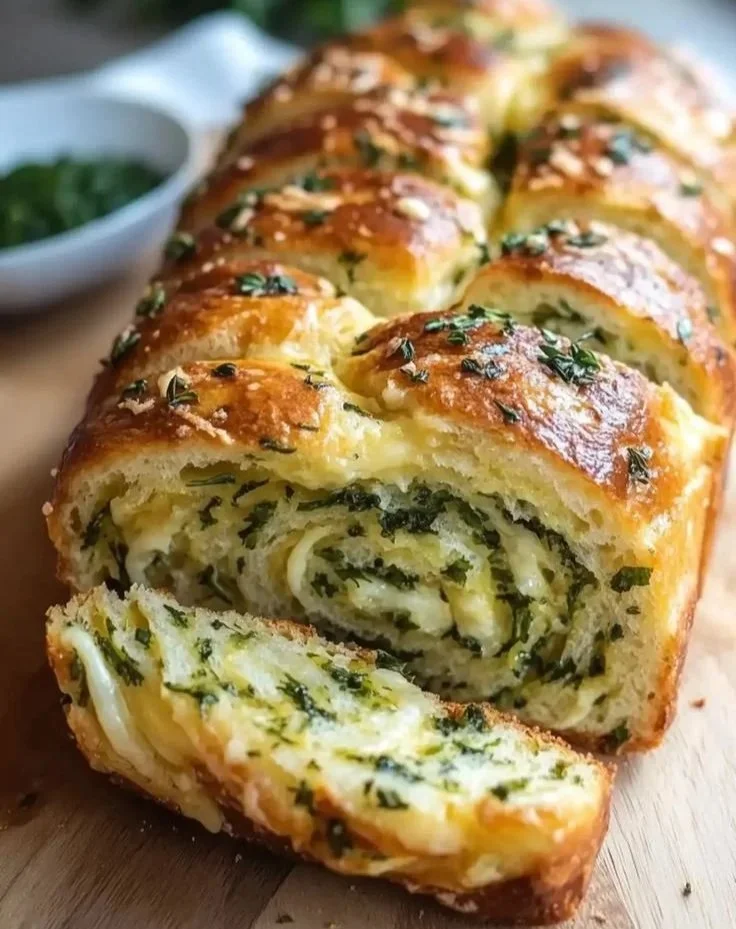
When the dough has risen, flatten it into a rectangle on a floured board. This is where the good stuff happens. Spread the minced garlic across the dough, then scatter the herbs and the 1 cup shredded cheese, remembering mine is split between mozzarella and sharp cheddar so you get gooey stretch and sharp flavor at the same time. Press the filling in gently so it adheres, roll tightly from one long edge into a neat log, and then slice the roll lengthwise. You will see a beautiful cross-section of herbs and cheese. Twist the two halves together into a loose braid, trying not to squish all the air out. It is perfectly fine if it looks rustic; in fact I prefer it.
Before the braid goes into the oven, preheat to 425°F. I brush the surface of the dough with a little olive oil; it helps the crust blister and take on that glossy golden color. Bake for 20-30 minutes, or until the crust is blistered and golden. The smell by the 15 minute mark is intoxicating: garlicky, herby, with molten cheese peeking out. To know it is done right, I tip the loaf out and tap the bottom for a hollow sound. If it rings hollow, you are in business.
A Few Things I’ve Learned
There are small tricks that make this loaf better. One tip is to be patient with the yeast — proofing for the full 5-10 minutes until tiny bubbles rise makes a huge difference. Another tip is to avoid overfilling; too much cheese will ooze out and make the bottom soggy, so I stick to about a cup split between a softer melting cheese and something with bite. A third trick is to not braid too tightly. Leave some open spaces so steam can escape and the interior stays tender. If something goes wrong and the loaf seems underdone in the middle after the initial bake, I reduce the oven to 375°F and give it another 5-10 minutes, keeping a close eye on the color.
I often make this when people come for a casual dinner and it pairs with so many things. I love serving it alongside a bright tomato soup, or with roasted vegetables and a sharp green salad. It also gets invited to pizza nights as a side that almost doubles as an appetizer because everyone grabs a piece while the main is still cooking.
For a rustic variation, try folding in caramelized onions along with the herbs, or swap some of the mozzarella for a crumbled blue cheese if you want a bold twist. If you are avoiding yeast that day, there are fast alternatives like soda breads, but the chew and airiness from proofed yeast is hard to beat. If you want inspiration from another slow-baked method, I once followed a Dutch oven version and found the crust surprisingly crisp; it reminded me of a garlic herb dutch oven bread recipe you’ll love today when I wanted that deep oven-spring.
When it comes to leftovers, I have a habit of slicing the loaf, wrapping it tightly, and keeping it in the fridge for up to three days. If I know I will have leftovers, I sometimes bake the loaf a little less than usual and finish it under the broiler when I plan to serve it again so the crust crisps up freshly. For longer storage I freeze slices between sheets of parchment so I can pull one or two out to reheat quickly.
The Best Part About This Dish
What I love most is how this bread is both simple and dramatic. It is forgiving if you are a novice, and it rewards the careful home baker with layers of garlic, herbs, and melting cheese. The crust should be blistered and golden, giving a crisp outer shell that yields to a tender, cheesy interior. The sound it makes when you hollow-tap the bottom and the smell that greets you as you slice into it are the little victories of any weeknight. Whether you keep it for yourself with a bowl of soup or bring it to a friend’s house, it shows up like a warm, flavorful handshake.
Conclusion
If you want a pretty, impressive loaf that is honestly easy to make, this Garlic and Herb Bread is a keeper. For another beautiful idea with dramatic swirls, I sometimes look at the take on Swirled Garlic Herb Bread from Half Baked Harvest for plating inspiration. And if you like following different bloggers to see flavor combinations, I also enjoy the straightforward spin on Garlic Herb Bread | Woman Scribbles when I want a slightly different herb mix or shaping trick.
Garlic and Herb Bread
Ingredients
Method
- Proof the yeast in warm water for 5-10 minutes until tiny bubbles rise.
- Mix the flour and salt in a bowl, then pour in the bloomed yeast and olive oil. Fold together and turn out to knead.
- Knead the dough for 8-10 minutes until smooth and springy.
- Place the dough in a lightly oiled bowl and leave it to rise in a warm place until doubled in size, about 1 hour.
- Flatten the risen dough into a rectangle on a floured board.
- Spread the minced garlic, mixed herbs, and shredded cheese across the dough.
- Roll the dough tightly from one long edge into a log and slice it lengthwise.
- Twist the two halves together into a loose braid.
- Preheat the oven to 425°F.
- Brush the surface of the dough with olive oil before baking.
- Bake for 20-30 minutes until the crust is blistered and golden.
- Check for doneness by tapping the bottom for a hollow sound.