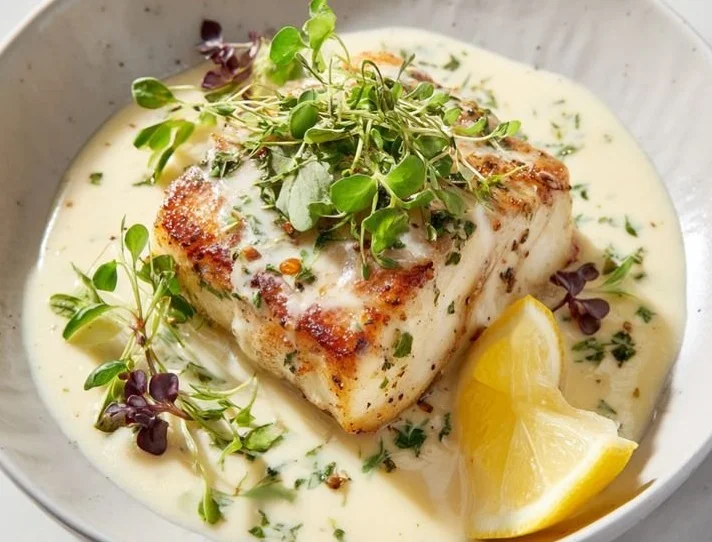
Gourmet Pan-Seared Halibut with Creamy Sauce
How I stumbled into Gourmet Pan-Seared Halibut with Creamy Sauce I have a habit of trying to rescue a sad dinner from the back of the fridge, and this recipe was one of those glorious accidents. One evening I found a thawed package of halibut and a leftover splash of cream, and before I knew…
How I stumbled into Gourmet Pan-Seared Halibut with Creamy Sauce
I have a habit of trying to rescue a sad dinner from the back of the fridge, and this recipe was one of those glorious accidents. One evening I found a thawed package of halibut and a leftover splash of cream, and before I knew it I was cooking something that tasted restaurant-worthy. If you like creamy seafood dishes, this sort of drift from the plan is how I often end up with a keeper, the same way I sometimes riff off a baked salmon recipe I love, like the one I bookmarked for creamier weekend dinners that baked Cajun salmon with creamy avocado-lime sauce.
The scent of butter, garlic, and lemon in the pan is one of my favorite kitchen smells. It signals comfort at the same time as it promises brightness, and halibut is perfectly mild and firm enough to hold its own in a rich sauce.
Ingredients I always have ready
When I say this is an easy weeknight dish, I mean it. For four people you need 4 fillets halibut (about 6 oz each), salt (to taste), black pepper (to taste), 2 tbsp olive oil, 2 tbsp unsalted butter, 3 cloves garlic (minced), 0.75 cup heavy cream, 0.25 cup chicken or seafood broth, 1 tbsp lemon juice (fresh), 1 tsp lemon zest, 1 tbsp fresh herbs (parsley or thyme, chopped). I keep those core things on hand so I can pull this together in under half an hour. If you want to play with bolder flavors on another night, I sometimes take inspiration from a spicy bowl I made once and saved for later, which is why I often glance at recipes like that chipotle chicken bowl with black beans, corn, and creamy sauce for ideas on swapping spices.
Pat halibut fillets dry and season with salt and pepper. Heat olive oil in a skillet over medium-high heat. Sear halibut for 3–4 minutes per side until golden and just cooked through. Remove and set aside. Reduce heat to medium and add butter to the pan. Add garlic and sauté briefly until fragrant. Pour in broth and simmer 1–2 minutes to deglaze. Stir in cream, lemon juice, and zest; simmer until slightly thickened. Return halibut to pan, spoon sauce over, and garnish with herbs before serving.
I like to keep the fillets room temperature for a few minutes before they hit the pan so they cook evenly. When the pan is hot enough, you will hear a satisfying sizzle as the fish hits the oil. That sound tells you the crust is forming.
The moment the pan sings
When the halibut sears, the edges go from translucent to chalky white and small golden crusts form. That golden color is where a lot of the flavor lives, so resist the urge to flip too early. Sear halibut for 3–4 minutes per side until golden and just cooked through is a guideline I follow, and I usually remove and set aside just before it feels completely firm. Residual heat will finish the cooking. Reduce heat to medium and add butter to the pan right after, which makes the next step sing. Add garlic and sauté briefly until fragrant, and you will smell the kitchen fill with that warm savory sweetness.
When you pour in the broth to deglaze, use a wooden spoon to scrape all those fond bits off the bottom. Pour in broth and simmer 1–2 minutes to deglaze; those little brown bits dissolve into a rich base. Stir in cream, lemon juice, and zest; simmer until slightly thickened, and you will watch the sauce transform from thin to silky. Return halibut to pan, spoon sauce over, and garnish with herbs before serving, which keeps the fish glossy and flavorful.
Little tricks that change everything
One trick I learned is to pat halibut fillets dry and season with salt and pepper well before they go into the pan. Dry fish sears better and gives you that caramelized surface that carries flavor. Another tip is to heat olive oil in a skillet over medium-high heat until it shimmers but is not smoking; that precise heat level creates the ideal crust without burning. A third tip: if your sauce threatens to break, add a splash more broth and simmer gently rather than turning the heat up. I also sometimes finish with a teaspoon of lemon zest for a bright pop that makes the cream feel alive.
How do you know when it is done right? The fish should flake easily when prodded with a fork and be opaque through the center. If you use an instant-read thermometer, aim for about 130 to 135 degrees Fahrenheit for a moist, tender fillet. It will firm up slightly while resting.
What I serve with it and a couple of variations
This dish pairs beautifully with something that soaks up sauce. I often serve it over creamy mashed potatoes or alongside lemony rice because the starch captures that creamy sauce. Steamed green beans or a simple arugula salad with vinaigrette keeps the plate bright. If you want something sweet at the end, try a tart lemon dessert I make sometimes, inspired by a recipe I saved for a creamy lemon tart with blueberry sauce that echoes the citrus notes.
For variations, you can swap the broth for a dry white wine for a slightly sharper sauce, or add a spoonful of Dijon mustard for a tangy lift. If herbs are different that night, thyme works wonderfully in place of parsley, and a few capers stirred into the sauce create a briny contrast that keeps the cream from feeling too heavy.
How I handle leftovers and a quick story
Leftovers reheat nicely if you are careful. Store the halibut and sauce in an airtight container in the refrigerator for up to two days. When reheating, warm gently in a skillet over low heat with a splash of broth to loosen the sauce and prevent separation. Freezing is not my go-to because the cream sauce can change texture, but if you must, freeze the fish without sauce and make fresh sauce when you thaw it.
I once made this for a small dinner party and served it over a bed of wilted spinach. One guest, who was notoriously picky about fish, asked for seconds, and later told me it was the simplest dish he had enjoyed in years. That memory is why I still make it when I want to impress without fuss.
Conclusion
If you want a variation that leans into nutty richness, take a look at Pan Seared Halibut in Brown Butter & Creamed Dijon Spinach for inspiration on browning butter and adding greens. For a brighter, herby alternative focused on lemon and dill, try this classic take from a trusted source, Pan Seared Halibut with Lemon Dill Sauce – Jessica Gavin.
Pan-Seared Halibut with Creamy Sauce
Ingredients
Method
- Pat halibut fillets dry and season with salt and pepper.
- Heat olive oil in a skillet over medium-high heat.
- Sear halibut for 3–4 minutes per side until golden and just cooked through. Remove and set aside.
- Reduce heat to medium and add butter to the pan.
- Add garlic and sauté briefly until fragrant.
- Pour in broth and simmer for 1–2 minutes to deglaze.
- Stir in cream, lemon juice, and zest; simmer until slightly thickened.
- Return halibut to pan, spoon sauce over, and garnish with herbs before serving.