Grapefruit Panna Cotta
How I Found Grapefruit Panna Cotta The first time I tasted this panna cotta was at a friend’s dinner party on a humid summer night, and it felt like a little cool, tangy sigh of relief. I can’t remember who made it but I do remember the way the ruby red grapefruit segments sparkled against…
How I Found Grapefruit Panna Cotta
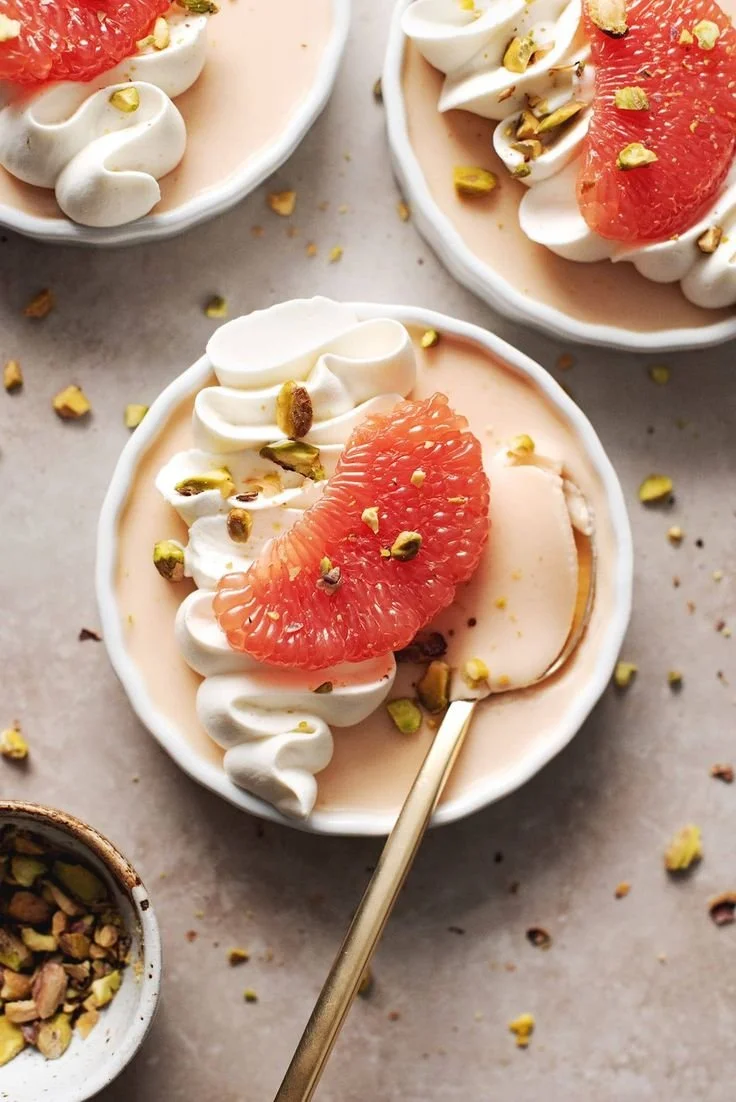
The first time I tasted this panna cotta was at a friend’s dinner party on a humid summer night, and it felt like a little cool, tangy sigh of relief. I can’t remember who made it but I do remember the way the ruby red grapefruit segments sparkled against the creamy white domes and how the pistachios added that salty, toasty crunch. That evening planted the idea in my head to try making one at home. If you like citrus panna cottas, you might also enjoy this lemon panna cotta I often make when I want something brighter and more tart.
The Secret Behind Perfect Grapefruit Panna Cotta
For me, panna cotta lives or dies in texture. It should wobble gently like a set custard, not quake like jelly, and never be grainy. The secret is simple: use full-fat cream and let the gelatin bloom properly. I always start with 2 cups heavy cream and 1/2 cup sugar in a saucepan because the fat carries the flavor and gives that silky mouthfeel. While the cream heats, I take a moment to sprinkle 1 packet gelatin over 1/4 cup water in a small bowl and let it sit for a few minutes to bloom. That little pause makes all the difference; if you skip blooming, the gelatin can clump or underperform and you’ll end up with a disappointing wobble.
When the cream is warm and the sugar has dissolved, I stir in the bloomed gelatin until it’s fully melted into the mixture. Once that’s combined, I remove the pan from the heat and stir in 1/2 cup grapefruit juice and 1 teaspoon vanilla extract. The citrus brightens the cream without curdling it because the gelatin and residual heat have already stabilized the mixture. Pour the mixture into molds and refrigerate for at least 4 hours, until set. I usually make these the day before company arrives so they have plenty of time to firm up.
How I Make It, in My Kitchen
There’s a rhythm to this recipe that I’ve grown fond of. I heat the cream and sugar slowly so it never scalds; you want steam rising and the sugar to dissolve, but not a rolling boil. While the cream is heating I check the grapefruit: use ruby red grapefruit segments if you can— their color and gentle sweetness complement the cream beautifully. After the gelatin has had its few minutes to bloom, I fold it into the warmed cream and watch it disappear, which is oddly satisfying. Then I take it off the heat and add the grapefruit juice and vanilla extract. Pour into individual molds or a single dish; I prefer small glass jars because they look pretty and are easy to unmold.
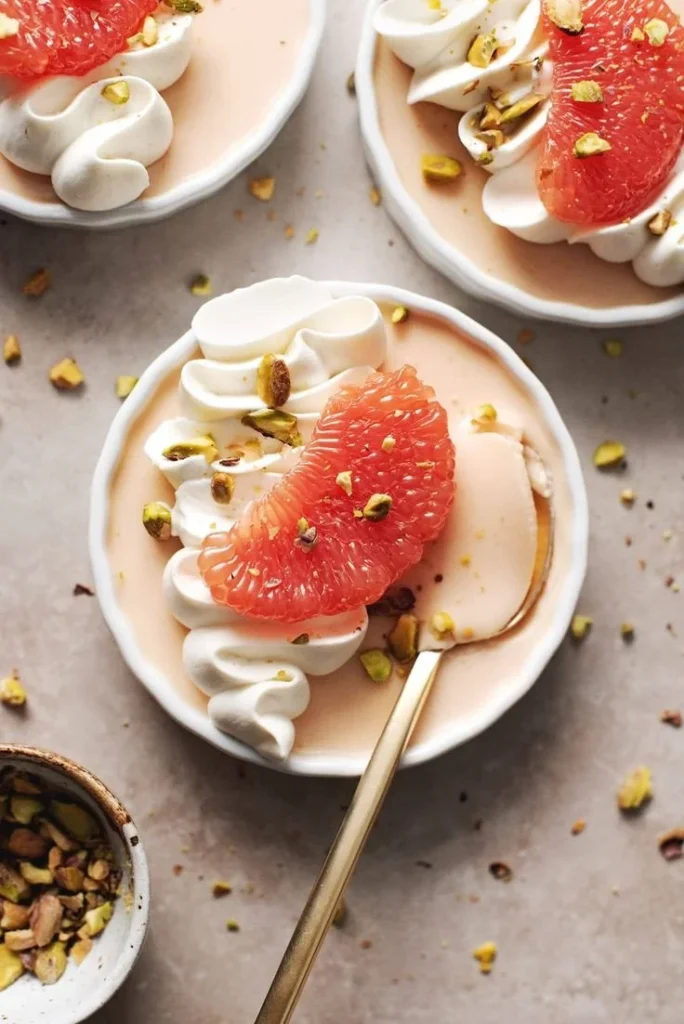
To serve, I run a knife around the edges of the molds to release the panna cotta and invert them onto plates. If I’m nervous about unmolding, I briefly dip the bottoms of the molds in warm water for a second to loosen the edges. The final touch is a dollop of whipped cream for contrast, an artful scatter of ruby red grapefruit segments, and a sprinkle of chopped pistachios for texture and color. It’s those last moments—sweet cream, citrus sharpness, crunchy nuts—that make the dish sing.
Small Tricks I Swear By
One tip I learned the hard way is to never rush cooling. Panna cotta needs at least 4 hours in the fridge to reach that perfect set; less time and it will be too soft, more time and it’s still fine, so you can make it ahead. Speaking of making ahead, leftover panna cotta stores best covered in the fridge for up to three days; if it’s in individual jars you can leave the toppings off and add them right before serving. If you want a cleaner unmold, run a thin knife around the edge, and if a mold sticks, a very quick dip in warm water loosens it without melting the set.
Another small trick: taste the grapefruit juice before you add it. Grapefruit can vary wildly in sweetness and acidity, so if yours is extremely tart I add a little extra sugar to the cream as it warms, or cut the juice with a touch of simple syrup. On the flip side, if you like a more delicate perfumed note, reduce the grapefruit juice to 1/3 cup and stir in a teaspoon of finely grated grapefruit zest for aroma. When I want a crunchy companion on the side, I reach for these 1-ingredient keto cottage cheese chips because their simplicity balances the panna cotta’s richness.
A Few Ways to Change It Up
I love how forgiving this dessert is. You can turn it into a more tropical version by swapping half of the heavy cream for coconut milk, or make it lighter by using a mix of cream and whole milk, though the texture will be slightly less luxurious. One variation I often try in winter is to macerate the grapefruit segments briefly with a teaspoon of sugar and a splash of Grand Marnier for a boozy touch that pairs well with the vanilla. If you’re thinking about brunch, this panna cotta plays nicely alongside savory items like a warm bagel; I sometimes serve it with 3-ingredient cottage cheese bagels as a counterpoint to its sweetness.
If you prefer a firmer set for plated desserts, use two packets of gelatin instead of one, but be mindful that too much will make it less silky. For color and contrast, add a thin layer of grapefruit gelee on top once the panna cotta is set; that extra glossy layer looks professional and adds a burst of citrus.
When It’s Done Right and What I Serve It With
You know the panna cotta is ready when a gentle shake of the mold shows a slight wobble but no liquid moves on top. The surface should be smooth and satiny, not bumpy or curdled. I serve this with simple things so it remains the star: a small spoonful of lightly sweetened whipped cream, a handful of ruby red grapefruit segments to echo the juice, and chopped pistachios for that green flash and crunchy contrast. For drinks, a dry prosecco or a floral tea pairs beautifully. If I’m hosting a small dinner, I make the panna cotta earlier in the day and let it rest in the fridge; then I pull it out last minute to add the toppings and the finishing touches.
Conclusion
If you want to explore another citrus-coconut twist on panna cotta, I found a lovely reference in this Coconut Panna Cotta with Grapefruit Gelee – The Kitchen McCabe recipe that inspired one of my variations.
Grapefruit Panna Cotta
Ingredients
Method
- In a saucepan, combine heavy cream and sugar, heating slowly until the sugar dissolves.
- In a small bowl, sprinkle gelatin over water and let it sit for 5 minutes to bloom.
- Stir bloomed gelatin into the warm cream until fully dissolved.
- Remove from heat and mix in grapefruit juice and vanilla extract.
- Pour the mixture into molds and refrigerate for at least 4 hours until set.
- To unmold, run a knife around the edges of the molds and invert onto plates.
- Serve with a dollop of whipped cream, grapefruit segments, and a sprinkle of pistachios.