Green Goddess Fettuccine With Creamy Spinach Sauce, Asparagus, and Peas
The first time I made Green Goddess Fettuccine With Creamy Spinach Sauce, Asparagus, and Peas I still remember the first night I made this after grabbing a grocery-store haul that felt like a spring market: a bunch of bright green asparagus, an enormous bag of spinach, and a box of fettuccine that made the kitchen…
The first time I made Green Goddess Fettuccine With Creamy Spinach Sauce, Asparagus, and Peas
I still remember the first night I made this after grabbing a grocery-store haul that felt like a spring market: a bunch of bright green asparagus, an enormous bag of spinach, and a box of fettuccine that made the kitchen smell like Sunday dinner as it boiled. If you want the full background on how this recipe evolved from a simple weeknight plan into something I make when friends are coming over, you can read the origin on my original Green Goddess recipe page. It’s the kind of dish that smells grassy and buttery before you even plate it, and people always ask for seconds.
The ingredients that make the sauce sing
When I tell friends what they need, I try not to sound like I’m reading from a grocery list, but here’s everything you should have ready: 12 oz fettuccine, Salt (for boiling water), 2 tbsp olive oil, 3 cloves garlic (minced), 4 cups fresh spinach (chopped), 1 cup heavy cream (or coconut milk for dairy-free), 1/2 cup Parmesan cheese (grated (or nutritional yeast for vegan option)), 1/2 tsp salt, 1/4 tsp black pepper, Pinch of nutmeg (optional), 1 tbsp lemon juice. For the Vegetables: 1 cup green peas (fresh or frozen), 1 bunch green asparagus (trimmed and cut into 2-inch pieces), 2 tbsp fresh basil (chopped), 2 tbsp pine nuts or slivered almonds (toasted), Extra Parmesan or lemon zest (optional). Those toasted pine nuts at the end are my small, crunchy rebellion against plain pasta; they echo the sweet peas and bring the plate alive.
How I actually cook it without making a mess
People always want to know the order, so I tell them the same way I walk through it in my head. Cook the Pasta: Bring a large pot of salted water to a boil. Add fettuccine and cook until al dente according to package instructions. Reserve 1/2 cup of pasta water before draining. Set pasta aside. While the water is coming to a boil, heat a large skillet and get your aromatics ready. Sauté the Garlic and Spinach: Heat olive oil in a large skillet over medium heat. Add minced garlic and sauté until fragrant, about 1 minute. Stir in chopped spinach and cook until wilted, about 2-3 minutes. The garlic should sound like a whisper in the pan and smell like warm cloves; if it starts to brown, reduce the heat. Then I blend the Creamy Spinach Sauce: Transfer the sautéed spinach and garlic mixture to a blender. Add heavy cream, Parmesan, salt, pepper, nutmeg (if using), and lemon juice. Blend until smooth and creamy. Return the sauce to the skillet and warm over low heat. Separately, I cook the vegetables: In a separate pan, bring water to a boil and blanch asparagus for 2 minutes. Add peas and cook for an additional minute. Drain and transfer to the skillet with the sauce. Finally, combine everything: Add the cooked fettuccine to the skillet with the sauce and vegetables. Toss gently to coat evenly. Garnish with fresh basil, toasted pine nuts, and extra Parmesan if desired.
A couple of quick in-line tips while you do this: reserve that half cup of pasta water and keep it nearby — it’s the secret thin, silky glue that makes the sauce cling to the noodles. If your sauce feels too thick after blending, stir in a splash until the texture looks glossy and coats the fettuccine like satin. And don’t skip the lemon juice; it brightens the whole bowl in a way that heavy cream alone can’t.
Little tricks I’ve picked up that actually help
I’ll give you three small tricks I use every time. First, salt the boiling water well so the pasta has flavor inside and out. Second, don’t over-blanch the asparagus; two minutes keeps it vibrant and slightly crisp—if it goes longer it loses that springy snap. Third, if you want a lighter version, swap heavy cream for coconut milk and use nutritional yeast instead of Parmesan for a dairy-free but still luscious result.
You’ll know it’s done right when the sauce clings to each strand and the peas pop with sweetness against the lush spinach flavor. The overall color should be a bright, appetizing green, not that dull gray some blended sauces turn into when they overcook. Texturally, the fettuccine should still have a little bite; that “al dente” resistance makes the dish feel homemade and satisfying.
How I serve it, store it, and change it up
I usually put out a bowl of extra grated Parmesan and a small plate of lemon wedges. The first time I brought this to a potluck, everyone asked what the green was — not just spinach but the fresh basil folded on at the end gives an herbaceous lift that makes the dish sing. It goes great with a simple grilled chicken or a crisp green salad; if you want to keep it vegetarian, a crisp garlic bread complements the creamy sauce without overwhelming it. For a contrasting partner at dinner, I sometimes serve this with a spicy protein like the chipotle chicken bowl with black beans if guests want more oomph.
Leftovers warm up beautifully. Store cooled portions in an airtight container for up to 3 days in the fridge. When reheating, add a tablespoon or two of water or milk and gently reheat on the stovetop to bring the sauce back to life; the microwave works in a pinch but the stovetop keeps the texture silkier. It also freezes okay if you skip the basil and nuts until after reheating. A tip I learned the hard way: add the toasted pine nuts only when serving, because they go soggy if stored with the pasta.
If you like variations, here are two of my favorites. For a protein boost, toss in pan-seared shrimp or shredded rotisserie chicken right at the end and let them warm through in the sauce. Or, go fully green and swap fettuccine for wide ribbons of zucchini noodles for a low-carb version; the sauce holds to them surprisingly well if you don’t overcook the zoodles. Another variation is to stir in a spoonful of pesto for a deeper herb flavor.
A few memories and why this one stuck
This recipe lives in my weeknight rotation because it’s fast, flexible, and looks like effort even when it wasn’t. I once made it for a friend’s birthday and watched people close their eyes while eating—there’s something about the silky texture and the little snap of asparagus that makes it feel celebratory. The smell of garlic and lemon hitting cream and spinach still makes me want to invite everyone I know over.
Conclusion
If you want a slightly different take on green pasta that uses bold breadcrumbs and spicy notes, I sometimes look at recipes like Saucy Green Pasta with Calabrian Breadcrumbs for inspiration and to steal one or two ideas for texture and heat.
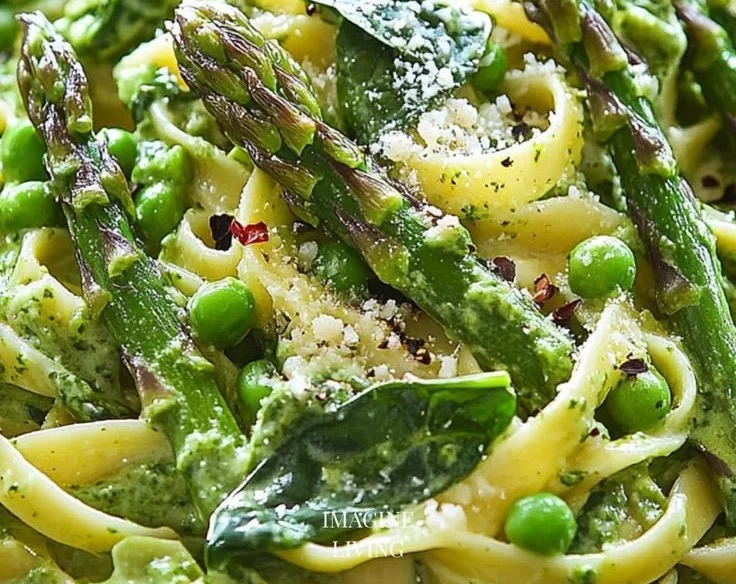
Green Goddess Fettuccine
Ingredients
Method
- Bring a large pot of salted water to a boil.
- Add fettuccine and cook until al dente according to package instructions.
- Reserve 1/2 cup of pasta water before draining and then set the pasta aside.
- Heat olive oil in a large skillet over medium heat.
- Add minced garlic and sauté until fragrant, about 1 minute.
- Stir in chopped spinach and cook until wilted, about 2-3 minutes.
- Transfer the sautéed spinach and garlic mixture to a blender.
- Add heavy cream, Parmesan, salt, pepper, nutmeg (if using), and lemon juice.
- Blend until smooth and creamy.
- Return the sauce to the skillet and warm over low heat.
- In a separate pan, bring water to a boil and blanch asparagus for 2 minutes.
- Add peas and cook for an additional minute.
- Drain the vegetables and transfer to the skillet with the sauce.
- Add the cooked fettuccine to the skillet with the sauce and vegetables.
- Toss gently to coat evenly.
- Garnish with fresh basil, toasted pine nuts, and extra Parmesan if desired.