Halloween Fruit Kabobs
The day I decided to make Halloween Fruit Kabobs The first time I made Halloween Fruit Kabobs I was trying to solve a problem that sounds ridiculous now: how to give my trick-or-treating neighbors something festive that did not involve sugar overload or sticky messes. I grabbed half a cantaloupe from the market, some glossy…
The day I decided to make Halloween Fruit Kabobs
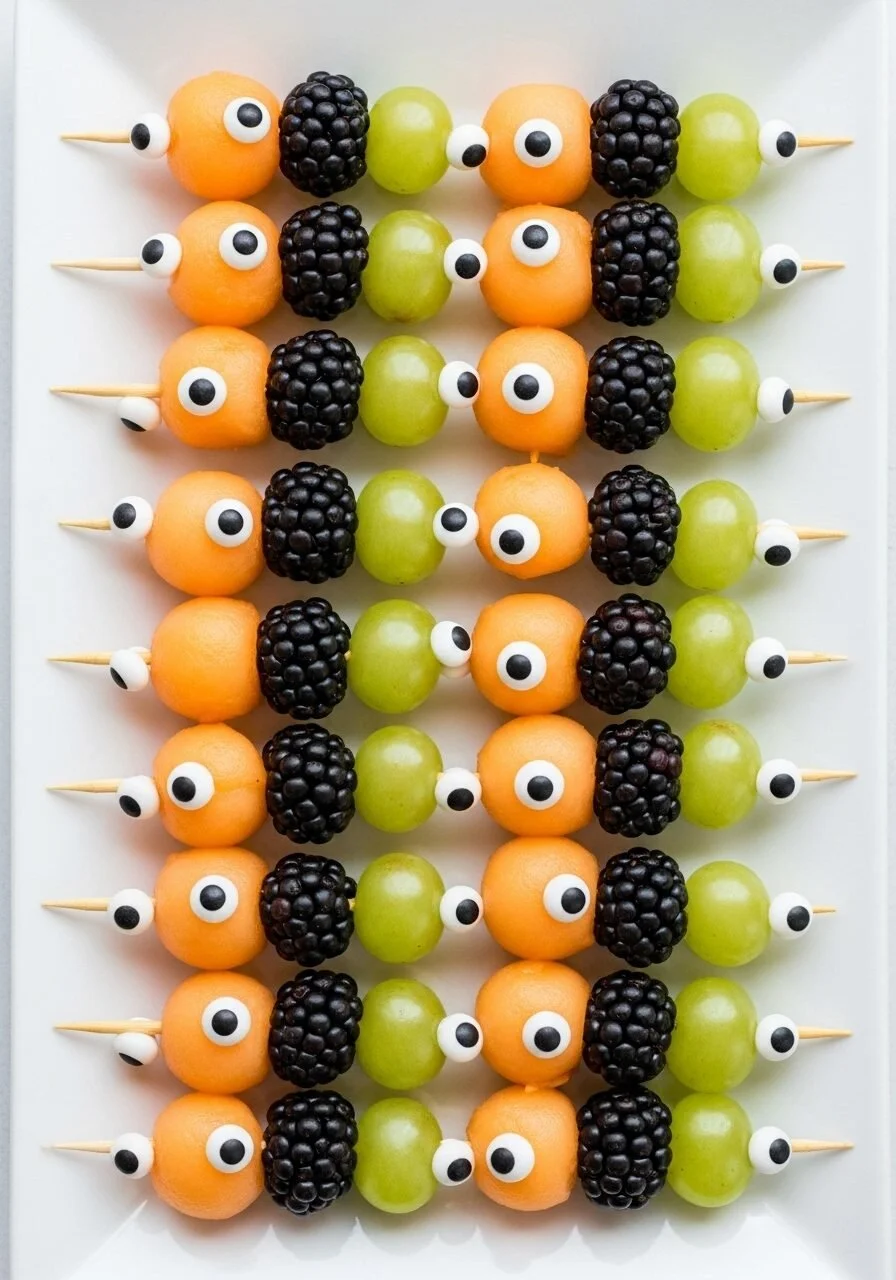
The first time I made Halloween Fruit Kabobs I was trying to solve a problem that sounds ridiculous now: how to give my trick-or-treating neighbors something festive that did not involve sugar overload or sticky messes. I grabbed half a cantaloupe from the market, some glossy green grapes, and a box of novelty candy eyes I had bought on impulse. It felt silly at first, but the colors—the orange of the cantaloupe, the deep purple of the blackberries, the eerie green of the grapes—looked like a tiny costume party on a stick. If you want a different take on this, I once compared notes with a similar Halloween fruit kabobs recipe and picked up one or two tricks.
When I tell people the ingredients, it always makes them smile because it is refreshingly simple: half a cantaloupe, scooped with a melon baller, 20 large blackberries, 20 large green grapes with a thin slice taken off one side, 40 small candy eyeballs, and 10 wooden skewers. Those few items become dramatic and playful with the right little steps.
The secret behind perfect Halloween Fruit Kabobs
What makes these feel like Halloween rather than just fruit on a stick is the way you prepare and arrange them. I start by using a melon baller to scoop spheres from the cantaloupe half. Doing that is strangely soothing—the soft thunk as the metal cup hits the melon, the citrusy, slightly floral scent that rises up, and the little wet beads of orange fruit. At the same time I wash and dry the blackberries and grapes; a clean surface is important because you will be pressing candy eyeballs right onto the fruit later.
A small but crucial move is to carefully slice a very thin piece of skin off of one side of each green grape to create a flat surface for the eyes. If you skip that, the eyeballs wobble and fall off. I use a tiny paring knife and just shave off a whisper of skin. It feels a little like sculpting, and the grapes look like they have surprised faces once the eyes go on.
How I assemble them without a mess
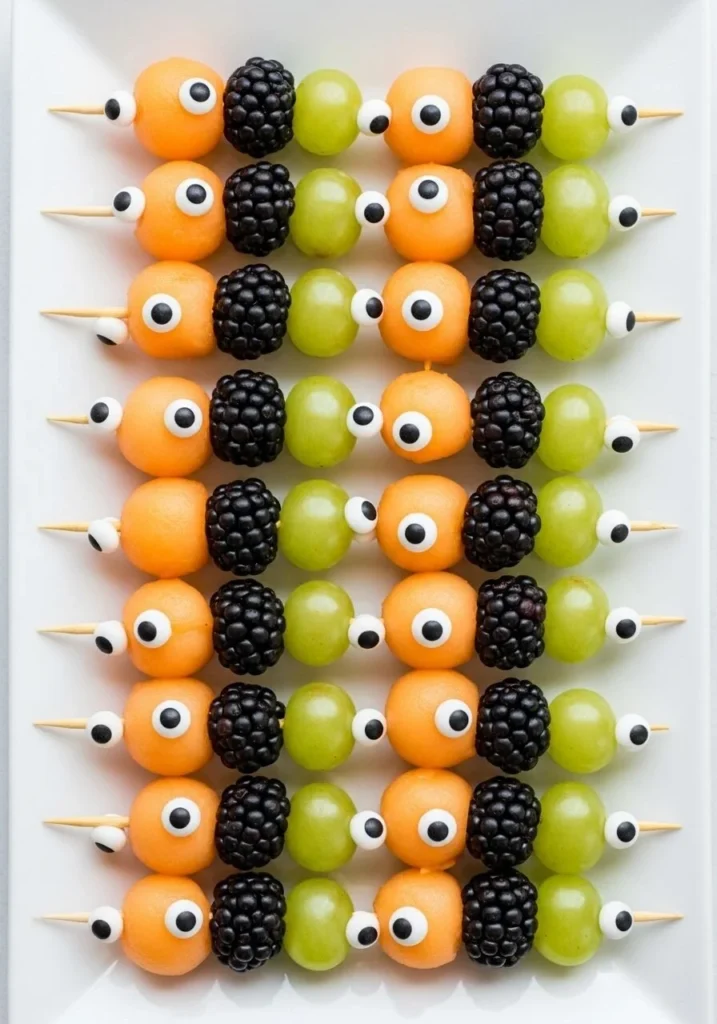
Layering the fruit onto the skewers is where it turns into an actual party trick rather than just food prep. I like to let a pattern evolve as I go—sometimes two cantaloupe balls, a blackberry, a grape with eyes, another blackberry, and then another cantaloupe ball. The important rule I tell friends is to make sure each skewer has at least 2 of each fruit so every bite is balanced and every skewer reads as festive. While assembling, I press each piece gently so nothing rips the berry or squishes the melon.
Once the grapes have that thin slice and are resting on the skewer, I carefully press two candy eyeballs onto the sliced portion of each green grape, pushing gently to adhere them to the fruit. The candy sticks surprisingly well because the grape’s natural moisture acts like a tiny glue. If I am making a batch for kids, I put the skewers on a chilled tray for a minute so the eyes set a bit before moving them.
You can tell when it’s done right by the way the skewers stand up on a platter and how each grape looks like it is giving you a little stare. Texture-wise, the melon should be cool and slightly yielding, the blackberries plump and slightly tart, and the grapes crisp with a snap when bitten. If any fruit looks dull or mushy, it’s a sign it wasn’t fresh to begin with.
Small tricks that save time (and keep things tidy)
I have a few habits that make this less of a production. First, I always use a melon baller that is slightly larger than the candy eyeballs so the cantaloupe spheres are substantial and not too fragile. Second, wash and dry the blackberries and grapes well; moisture can make candy eyes slide. Third, slice the grape skin thinly and at a slight angle so the eyes sit naturally rather than perched. Those are three little tips I tuck into the assembly part of the day and they save so many tiny frustrations.
If you are wondering how long this lasts if you make it ahead, here is what I do: make and assemble everything except the candy eyeballs up to a few hours in advance, and store the skewers in a single layer in an airtight container in the refrigerator. Add the eyeballs just before serving because they can lose their stickiness. Leftovers (without eyes) keep for about 24 hours refrigerated, though the berries are happiest when eaten the same day.
What I serve with these and a couple of variations
I love serving the kabobs on a wide platter surrounded by a small bowl of plain yogurt mixed with a little honey and a pinch of cinnamon for dipping. The creaminess pairs beautifully with the cantaloupe and the slight tartness of the blackberries. If you are entertaining, they look great standing up in a shallow glass vase packed with ice. For something heartier, I make a spooky fruit spread with cubes of cheddar and tiny crackers on the side.
If you want to switch things up, try a few variations. One is to substitute honeydew for the cantaloupe for a minty color contrast and a milder sweetness. Another is to swap in small marshmallows or cubes of cheddar for an unexpected texture. A third option is to thread a small leaf of fresh mint between pieces for an aromatic pop. I once made a version with dark chocolate drizzle over the cantaloupe in small, controlled zigzags; it looked decadent and felt almost like a Halloween dessert rather than a simple snack. If you enjoy fruit salads, pairing these with a spooky Halloween fruit salad intensifies the festive spread.
Conclusion
If you want a slightly different take or extra inspiration for presentation, I sometimes look at other versions online for plating ideas, like the one at Halloween Fruit Kabobs {Super Simple!} – Feel Good Foodie. They are playful, forgiving, and among the easiest treats to make that still feel like a celebration. Serve immediately when guests arrive, and watch the delight as people realize their snack is both healthy and a little bit cheeky.
Halloween Fruit Kabobs
Ingredients
Method
- Scoop melon balls from the cantaloupe using a melon baller.
- Wash and dry the blackberries and green grapes.
- Carefully slice a thin piece of skin off one side of each green grape.
- Layer the fruit onto skewers in a pattern: two cantaloupe balls, a blackberry, a grape with eyes, another blackberry, then another cantaloupe ball.
- Gently press each piece onto the skewer to avoid squishing.
- Press two candy eyeballs onto the sliced surface of each green grape.
- Place assembled skewers on a chilled tray for about a minute to set the eyeballs.