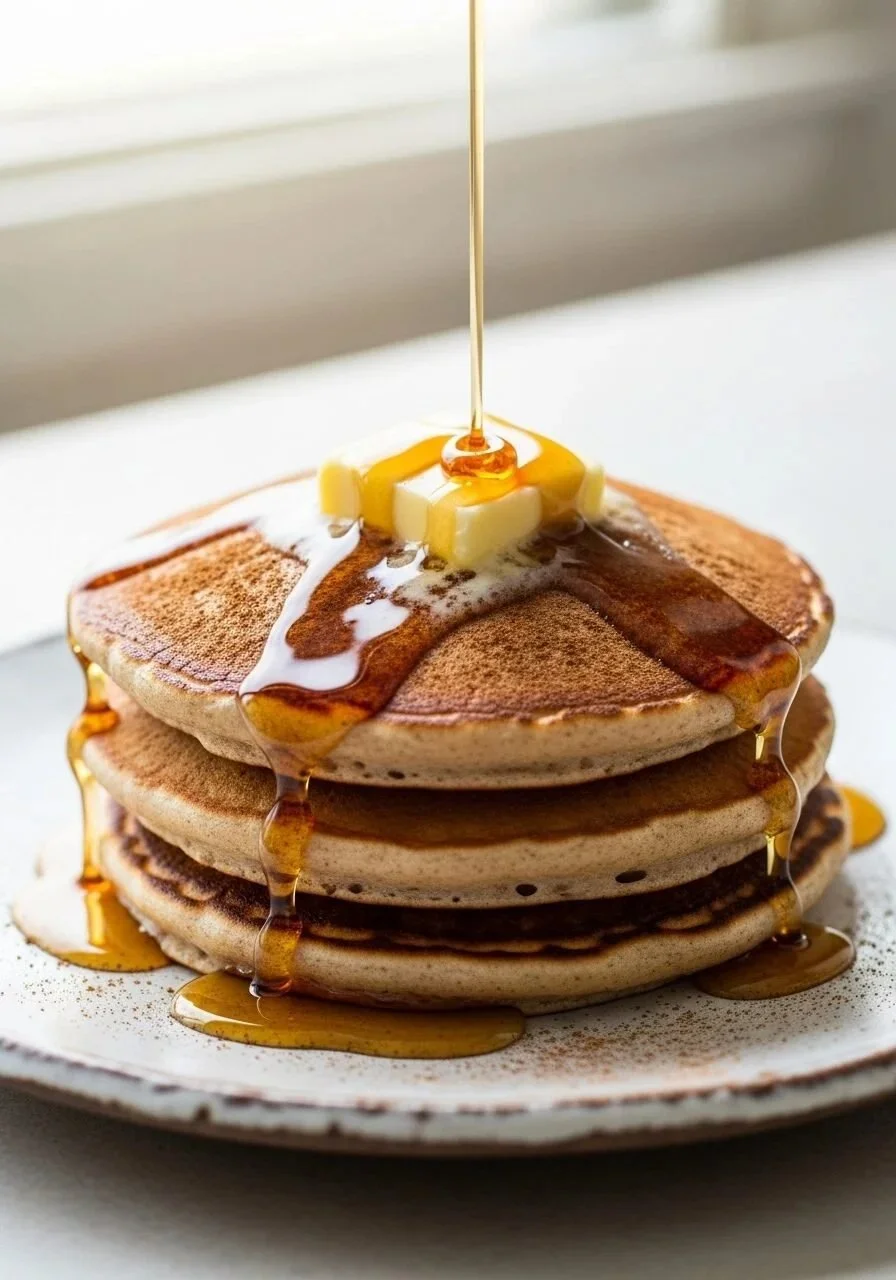
High-Protein Cinnamon Pancakes
Sundays for me are often about small rebellions: sleeping in, skipping errands, and making a batter that smells of cinnamon and comfort. I started experimenting with a whole-grain pancake that still felt indulgent but packed a little protein and kept things simple—no buttermilk fuss, no complicated folding. Early on I riffed from an online base…
Sundays for me are often about small rebellions: sleeping in, skipping errands, and making a batter that smells of cinnamon and comfort. I started experimenting with a whole-grain pancake that still felt indulgent but packed a little protein and kept things simple—no buttermilk fuss, no complicated folding. Early on I riffed from an online base recipe I liked and then pared it down; if you’re curious about that original version I adapted from, I noted it here for reference: the high-protein cinnamon pancake base I first tried.
A quick overview before the cooking tangents: the batter balances whole-wheat flour with a dry milk powder for body, a touch of sugar, and cinnamon for warmth. Leavening is modest, so I expect a slightly denser but tender cake. An egg and a little oil bind everything; water is the thinning agent. I like to keep the spice bold enough to come through after frying.
How I work: I measure dry ingredients into one bowl and wet into another, then bring them together with minimal stirring—just until the flour disappears. I don’t mind a few lumps. The batter should be pourable but not watery; think heavy cream to thin yogurt in texture. If it sits for a few minutes the dry milk hydrates and the batter relaxes, which helps with pancake height.
Ingredients (summarized, not copied verbatim)
- Whole-grain flour (about a cup).
- Nonfat dry milk powder, a few tablespoons for protein and texture.
- A small amount of granulated sugar.
- Baking powder for lift, ground cinnamon for flavor, and a pinch of salt.
- One large egg and a couple tablespoons of oil—coconut gives a nice aroma.
- Water to bring the batter to the right consistency.
On the stove: I heat a skillet over medium and wipe it with a little oil. A ¼-cup scoop makes modest pancakes; I drop batter and watch the surface for bubbles, flipping when the edges set and the undersides are golden. Timing will vary by pan—cast iron runs hotter and gives crisper edges; nonstick stays more forgiving. I sometimes cover the pan briefly to ensure the centers cook without burning the outsides.
Texture and tweaks: the dry milk powder adds body and a faint dairy note; if I want a richer mouthfeel I’ll substitute some of the water with milk or swap the water entirely for milk in a later experiment. For a lighter crumb I could add an extra teaspoon of baking powder, but I prefer the denser, slightly chewy result for breakfast that stands up to toppings.
Variations I’ve tried (short and practical)
- Add a mashed banana for sweetness and moisture; reduce water slightly.
- Fold in a spoonful of cottage cheese for tang and extra protein—this leans toward the cinnamon-roll pancake family, which I explored in another riff: my take on cinnamon-roll–style pancakes.
- Swap the sweetener for maple sugar or a teaspoon of honey for a different caramel note.
A few procedural tips tossed into the narrative:
- Don’t overmix. Overworking whole-wheat batter can create toughness, so I stop at “combined.”
- Keep the pan moderately hot; I test with a drop of batter to check sizzle.
- I let pancakes rest briefly after the flip so the centers finish without drying out.
Storage and reheating: I cool pancakes on a rack to avoid sogginess, then stack and freeze between parchment if I’m making a batch. Reheat in a toaster or a hot skillet; the toaster gives a crisp exterior that I love.
A short troubleshooting FAQ from my kitchen mistakes:
- Q: Why are mine flat? A: Either the baking powder is old or the batter was overmixed. I learned to check the powder periodically.
- Q: Why dry in the center? A: Pan too hot or pancakes too large—make them slightly smaller and lower the heat.
My plating habit is minimal: a smear of yogurt, a drizzle of maple, and a scattering of chopped nuts. I like the contrast of creamy tang against the cinnamony warmth.
Conclusion
I’m including a couple of helpful external resources that inspired me while developing this recipe: one that leans into cinnamon sugar and protein balance, and another that builds on cottage cheese for a cinnamon-roll vibe. If you want a different high-protein cinnamon-sweet take, I found this version informative: Cinnamon Sugar Pancakes (High Protein!) – Joy to the Food. For a custardy, cottage-cheese–forward cinnamon roll approach I referenced this useful guide: Cinnamon Roll Cottage Cheese Pancakes – Jar Of Lemons.
Personal note: I discovered that unless I keep the batter slightly on the thicker side, the pancakes spread too thin and lose the tender interior I’m after—so now I err toward thickness and thin only if needed.
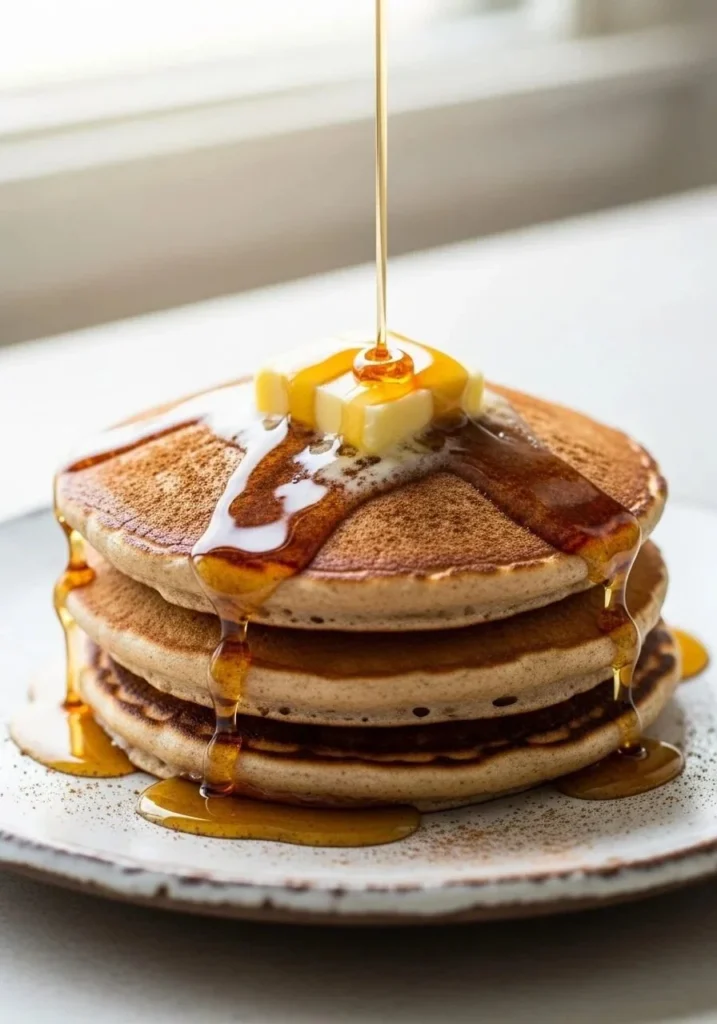
Whole-Grain Cinnamon Pancakes
Ingredients
Method
- In a bowl, combine all dry ingredients: whole-grain flour, dry milk powder, sugar, baking powder, cinnamon, and salt.
- In another bowl, whisk together the wet ingredients: egg, oil, and water.
- Pour the wet mixture into the dry mixture and stir gently just until combined. The batter should be pourable but not watery, similar to thick yogurt.
- Heat a skillet over medium heat and lightly coat with oil.
- Using a 1/4-cup measuring cup, pour batter onto the skillet for each pancake.
- Cook until bubbles form on the surface and the edges appear set, about 2-3 minutes, then flip and cook until golden on the other side, about another 2-3 minutes.