Homemade Fresh Dandelion Jelly That Enlivens Your Spring Meals
I had no plan that morning beyond walking the yard with a mug of tea, but by the end of it I had gathered enough yellow heads to make my first batch of dandelion jelly. The scent of lemon and the faint honeyed aroma of the petals followed me into the kitchen. If you’re thinking…
I had no plan that morning beyond walking the yard with a mug of tea, but by the end of it I had gathered enough yellow heads to make my first batch of dandelion jelly. The scent of lemon and the faint honeyed aroma of the petals followed me into the kitchen. If you’re thinking of small-batch spring preserves, you might also enjoy pairing this with some light biscuits or one of my favorite seasonal bakes — I often send friends the same link I consult for sweet accompaniments: spring cookie recipes that will delight your taste buds.
Ingredients (what I used)
- 2 to 4 cups bright yellow dandelion petals, carefully picked so no green parts slip in
- 4 cups water for steeping the petals until they surrender their color
- 1/4 cup fresh lemon juice for balance and brightness
- 1 packet powdered pectin to help the jelly set
- 3 to 4 cups granulated sugar, adjusted to taste and the tartness of the infusion
I measured loosely. The floral infusion’s strength depends more on the petals-to-water ratio and how long you steep them than on an exact cup here or there.
Preparation — a conversational how-to
I start by separating the petals from the greens: pinch the base of each flower and pull; any green means bitterness, so I discard those. Then I pour the water over the petals in a heavy saucepan and bring it up to a gentle simmer. Let it sit off the heat for an hour or two, occasionally stirring and watching the color deepen to a soft amber-gold.
Next I strain the liquid through a fine mesh or cheesecloth, pressing gently to extract flavor but not grit. To the clear dandelion tea I add the lemon juice and sprinkle in the powdered pectin while whisking to dissolve it fully; this avoids clumps later when the sugar joins.
Sugar goes in last. I return the mixture to the stove, add 3 cups of sugar to start, and bring it to a rapid boil that cannot be stirred down. I boil for about a minute to activate the pectin, then test. If it tastes too tart or the jelly seems thin, I add a little more sugar and another brief boil. Expect to use up to 4 cups depending on how floral or tangy your infusion is.
A note on texture and testing
I don’t rely only on the temperature method; I spoon a small bit onto a chilled saucer and tilt it to check for wrinkling. The jelly will continue to set as it cools, so a slightly softer finish in the pan is fine. If you prefer a firmer spoonable texture, increase the sugar slightly or ensure a full minute of hard boil.
Preserving and jars
Ladle the hot jelly into sterilized jars, leaving a small headspace. Wipe rims clean, seal, and process in a boiling-water bath for 5–10 minutes depending on elevation. The scent while you jar is intoxicating: lemon, green honey, the faint sun-warm perfume of dandelions.
Ways I use this jelly
Short paragraphs, quick ideas: I smear it on toast, fold it into yogurt, and use a spoonful in vinaigrette to brighten a spring salad. It’s also lovely with soft cheeses or as a glaze for roasted carrots.
A little kitchen improvisation
Sometimes I fold in a few bruised strawberries during the steep for extra depth; other times I add a scrape of vanilla to the final boil. If you’re aiming for a lower-sugar set, play with fruit pectin designed for low-sugar recipes and reduce sugar incrementally, but know the texture will differ.
Pairing note and another recipe nudge
When I serve this at a brunch or tea, I reach for light cookies and crisp butter biscuits — for a few matching ideas I turn to this collection of delightful Easter cookies that complement spring preserves beautifully: delightful Easter cookies — your ultimate spring baking treat.
Storage and shelf life
Unopened and properly processed, jars keep in a cool, dark pantry for up to a year. Once opened, refrigerate and use within a month for best flavor. The color will slowly darken over time; taste first if the jar’s been a while.
Troubleshooting in plain language
If the jelly doesn’t set, it’s usually due to under-boiled pectin or too much juice relative to pectin and sugar. Re-boil with another half packet of powdered pectin mixed into a little sugar, then add to the pan and bring to a full rolling boil for one minute. If the flavor is flat, a splash more lemon juice revives it.
Variations I’ve tried
- Lemon-thyme dandelion jelly: add a few thyme sprigs to the steep, remove before canning.
- Spiced batch: a small cinnamon stick and a few crushed cardamom pods in the steep add warmth that pairs well with whole-grain toast.
- Low-sugar version: use low-sugar pectin, lower the sugar, and accept a looser set that’s great on pancakes.
I rarely write strict timings in stone because petals, pots, and stovetops differ; think of this as a seasonal formula and adjust by taste.
Conclusion
I learned the hard way that any stray green on a petal brings bitterness — so patience in picking is the small chore that pays off in every jar. For inspiration about wild preserves that marry fruit and a spirited finish, I turned to a recipe that influenced my canning approach: Boozy Preserves: Wildcrafted Berry Compote – Gather Victoria.
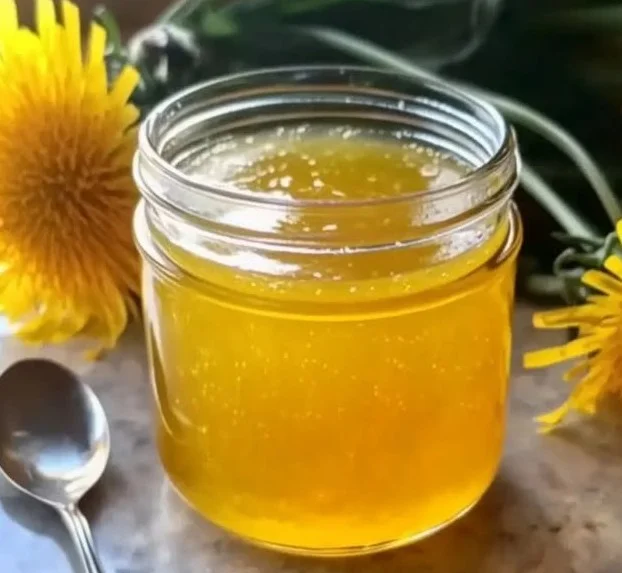
Dandelion Jelly
Ingredients
Method
- Separate the petals from the greens by pinching the base of each flower and pulling; discard any green for bitterness.
- Pour the water over the petals in a heavy saucepan and bring it up to a gentle simmer. Let it sit off the heat for 1-2 hours, stirring occasionally and watching the color deepen.
- Strain the liquid through a fine mesh or cheesecloth, pressing gently to extract flavor but not grit.
- Add lemon juice to the dandelion tea and sprinkle in the powdered pectin while whisking to dissolve it fully.
- Return the mixture to the stove, add 3 cups of sugar to start, and bring it to a rapid boil that cannot be stirred down.
- Boil for about a minute to activate the pectin, then test the taste. Adjust sweetness with more sugar if needed and boil briefly again.
- Ladle the hot jelly into sterilized jars, leaving a small headspace. Wipe rims clean, seal, and process in a boiling-water bath for 5-10 minutes.