Irresistibly Flavorful Jamaican Brown Stew Chicken Recipe
I still remember the first time I braised chicken the Jamaican way: the kitchen filled with sweet onion and thyme, and something about the darkened gravy that felt like a hug. If you like bold, homey flavors, I sometimes turn to riffs I’ve borrowed from other recipes—like the buttery pasta that balances richness with tang—so…
I still remember the first time I braised chicken the Jamaican way: the kitchen filled with sweet onion and thyme, and something about the darkened gravy that felt like a hug. If you like bold, homey flavors, I sometimes turn to riffs I’ve borrowed from other recipes—like the buttery pasta that balances richness with tang—so when I’m prepping a one-pot dinner, a memory of that cowboy butter chicken pasta guides my seasoning choices.
A quick note on the bird and what I use: I prefer bone-in pieces because they keep the meat juicier and add depth to the simmer, but you can use a whole chicken carved into parts. Salt and freshly cracked black pepper are my baseline; a spoonful or so of browning gives the sauce a glossy mahogany color and a hint of caramelized flavor. Olive oil for the pan, a bit of dark brown sugar to balance, and a cup or two of stock to braise—those are my building blocks.
I don’t follow a rigid step sheet every time. Often I start by seasoning the chicken with salt and pepper and letting it sit while I prep aromatics: onion sliced into ribbons, garlic minced, scallion chopped fine, thyme stripped from the stems, and a couple of bay leaves tucked into the pan if I’m feeling extra fragrant. I usually slice both a red and a green bell pepper for brightness; their colors make the stew look as good as it tastes. For heat I handle the Scotch bonnet carefully—just a touch goes a long way, and I either stew it whole to keep the heat gentle or chop and discard some seeds for more fire.
Browning the chicken is non-negotiable for me. Three tablespoons of oil in a heavy skillet, hot but not smoking, then the pieces go skin-side down until the surface is deeply colored. I don’t crowd the pan; if necessary, I do it in batches so each piece gets its own crust. Once browned, I remove the chicken and in the same pan I soften the onion and garlic, scraping up all those fond bits. That’s where the gravy starts to build character.
About the sauce: a tablespoon of ketchup helps thicken and give a rounded sweetness, and a splash of soy adds umami when I want that background depth. I toss in pimento (allspice) berries—whole if I want to fish them out later, crushed if I want the scent to bloom through the sauce. A tablespoon of brown sugar balances the savory-sour notes. Then I nestle the chicken back in, add the stock so the pieces are halfway submerged, toss in the thyme and bay leaf, and let the pot go on low. Simmering gently for 30–40 minutes makes the meat tender without drying it.
Sometimes I write the steps; sometimes I just watch and adjust. If the sauce seems thin toward the end I lift the lid and reduce until it’s glossy and coat-worthy. If it’s too salty, a peeled potato tucked into the simmer will take up a surprising amount of salt (I don’t always remember this trick until I need it). Near the finish I add the julienned peppers and scallions so they stay vibrant and offer a fresh counterpoint to the deep sauce.
A few practical notes I keep close by:
- Pimento seeds: crush a couple with the back of a spoon if you want their aroma to permeate, or leave them whole to remove before serving.
- Browning liquid: don’t discard the browned bits; deglaze with a splash of stock to capture that flavor.
- Scotch bonnet caution: gloves or careful handling will save you from lingering heat on your fingers.
Leftovers reheat beautifully. I store the stew in an airtight container in the fridge for up to 3 days; it tastes even better the next day after the flavors marry. For longer storage I freeze in portion-sized containers and thaw overnight in the fridge before reheating gently on the stovetop.
If you prefer a lighter profile, I’ve adapted this method toward a cleaner, herb-forward finish—taking cues from Mediterranean preparations has helped me keep the chicken bright without sacrificing depth, a trick I learned from experimenting with Mediterranean chicken tenders techniques.
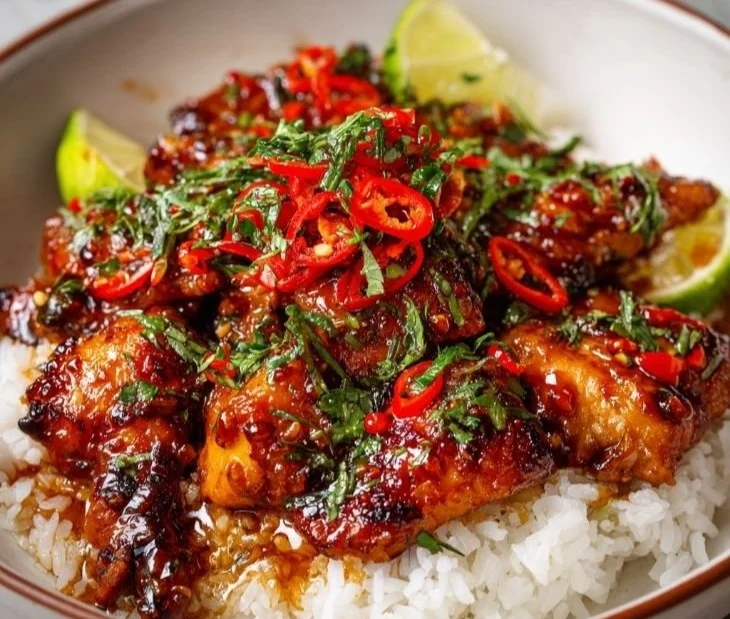
I like to finish the plate with fluffy rice or plain dumplings; the sauce soaks in and becomes the point of the whole meal. When I serve, people often ask whether I removed the Scotch bonnet—sometimes I have, sometimes I left it whole so it softened into a mellow warmth.
Conclusion
If you want more inspiration for hearty cooked dishes and plating ideas I sometimes compare notes with other recipe collections like the one at Yard Cooked Dishes to see different takes on stewed and oven-braised meals.
Personal limitation discovered: I often underestimate how long the sauce needs to reduce to a glossy finish, so I must remind myself to be patient and resist upping the heat.
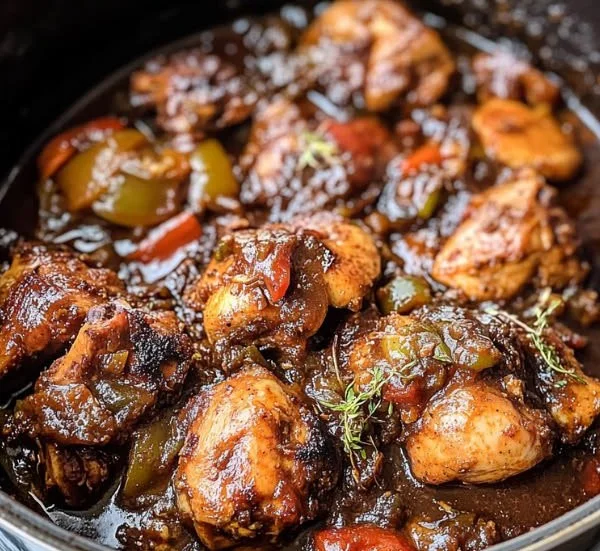
Jamaican Braised Chicken
Ingredients
Method
- Season the chicken with salt and freshly cracked black pepper. Let it sit while preparing the aromatics.
- Slice the onion, mince the garlic, chop the scallion, strip the thyme from the stems, and prepare the bell peppers.
- Heat olive oil in a heavy skillet over medium heat. Add the chicken skin-side down and brown until deeply colored, in batches if necessary.
- Remove chicken once browned and set aside.
- In the same pan, add onion and garlic, stirring to deglaze and scrape up fond bits.
- Add ketchup, soy sauce, pimento berries, and brown sugar. Stir to combine.
- Nestle chicken back into the pan, ensuring pieces are halfway submerged. Add stock, thyme, and bay leaf.
- Cover and simmer on low for 30-40 minutes until the chicken is tender.
- If sauce is thin, remove lid and reduce until glossy. If too salty, add a peeled potato to absorb some salt.
- Near the end of cooking, add the julienned peppers and scallions for brightness.