Italian Grandma’s Lemon Custard Cake
How I stumbled into my grandmother’s kitchen I still remember the first time I walked into my Italian grandmother’s kitchen on a chilly afternoon and the whole house smelled like bright citrus and warm custard. She wasn’t one for recipes on paper; everything was memorized, felt out by hand and smell. Over the years I…
How I stumbled into my grandmother’s kitchen
I still remember the first time I walked into my Italian grandmother’s kitchen on a chilly afternoon and the whole house smelled like bright citrus and warm custard. She wasn’t one for recipes on paper; everything was memorized, felt out by hand and smell. Over the years I coaxed the method out of her between cups of coffee and the sound of her wooden spoon tapping the bowl. If you like the idea of something that feels both homey and elegant, this is my go-to: Italian Grandma’s Lemon Custard Cake. If you want to see other takes on a similar dessert, I once compared notes with a friend and found a few ideas on a different lemon custard cake that helped me tweak the texture for guests who like things a bit denser.
The ingredient that changes everything
When I tell people what’s in it, they’re always surprised by how few ingredients you need: 1 cup all-purpose flour, 1 cup granulated sugar, 2 large fresh lemons (zest and juice), 3 large eggs (room temperature), 1 cup whole milk, 4 tablespoons unsalted butter (melted). That’s it. No heavy creams, no fancy extracts. The lemons—both the zest and the juice—are the star. Zest gives you those tiny pops of aroma in the crumb; the juice adds that bright tartness that balances the custardy richness. I almost always use organic lemons if I can find them, because the oils in the peel are the secret perfume of the cake.
Building the cake with a few of my grandmother’s motions
My grandmother would start by heating the kitchen with warmth and by telling you to preheat the oven, so I do the same: Preheat your oven to 350°F (175°C) and grease an 8-inch round cake pan. She’d probably laugh if I used parchment, but a little greased pan keeps that caramelized edge she liked. In a large bowl, whisk together the flour and sugar until combined. That’s the dry base—keeps things simple. In another bowl, whisk the eggs, milk, melted butter, lemon zest, and juice until smooth. I fold and stir by hand because it’s gentler; the goal is a tender custardy crumb, not a fluffy sponge.
Then comes a step where patience matters: Gradually add the wet mixture to the dry ingredients while stirring gently until just combined; small lumps are acceptable. Don’t overbeat; small lumps mean the cake will set with that slightly rustic custard texture rather than becoming rubbery. Pour the batter into the prepared pan and bake for 30-35 minutes or until golden brown, using a toothpick to check for doneness. You’ll smell the lemons and see the top go from pale to a warm gold; that’s when you know it’s close. Let cool in the pan for 10 minutes before transferring to a wire rack; dust with powdered sugar before serving. The dusting is optional, but it makes it feel like a small celebration.
Little tricks my Nonna swore by
There are a few things I learned the hard way and now pass on like family heirlooms. First, bring the eggs to room temperature. Cold eggs don’t incorporate as smoothly and you’ll fight the batter more than you should. Second, zest before juicing the lemons; once you’ve got the juice out, the zest is harder to grate and you can lose that fragrant oil. Third, if your kitchen is humid, a quick 5 to 10 second pulse in the blender after mixing can smooth out stubborn lumps without overworking the batter. I use that trick when I’m short on time and need the cake to look a little more refined for guests.
When I say how to know it’s done, think about the top and the toothpick. A toothpick should come out with a few moist crumbs but not wet batter. The top should be a warm golden color and have a slight jiggle at the very center that settles as it cools. If you poke and it’s shiny and raw, give it another five minutes.
The best part: eating it with someone you love
When this cake comes out of the oven, the kitchen smells like a blend of lemon zest and warm milk. The texture is what I keep picturing: the top has a delicate golden crust, the inside is silky and custard-like, but still a cake that slices nicely. I often serve it with a simple dollop of whipped cream or a spoonful of mascarpone to echo the Italian roots, and sometimes a handful of fresh berries if they are in season. For lighter pairings, a cup of strong espresso or a slightly floral tea is perfect. If you want to explore similar berry accents, I once experimented with mini cheesecakes and found inspiration in this recipe for mini lemon blueberry cheesecakes—the tart-sweet pairing of lemon and blueberry is just irresistible.
How I store it and a couple of ways to make it mine
If I bake it ahead for a dinner or want leftovers for the week, I wrap the cooled cake in plastic wrap and keep it in the refrigerator for up to four days. It keeps surprisingly well because the custardy interior stays moist. Slices also freeze well individually wrapped; when I thaw them slowly in the fridge overnight they almost taste like freshly made. If you want to change things up, try one of these small variations: fold a handful of poppy seeds into the batter for a nutty texture, or swap half the milk for buttermilk to add tang and a slightly fluffier crumb. For a more decadent twist, brush the warm top with a thin lemon syrup (juice plus sugar heated briefly) before dusting with powdered sugar.
When things go wrong—and they sometimes do—the usual fix is gentle. If the cake seems to sink a little in the center, it’s usually because the oven door was opened too soon or the batter was overmixed. Serve it slightly chilled and call it a “custard torte”; no one complaints about eating cake that’s labeled fancy. If the cake is too dry, a thin glaze or a smear of jam revives it instantly.
Conclusion
If you want a visual reference or another version to compare notes with, I sometimes glance at an online rendition like Lemon Custard Cake – OMG Chocolate Desserts to see how other bakers finish their tops and plate the slices. Making this cake always reminds me of talking with my grandmother, the way she measured with her heart and told stories while stirring. It’s simple, forgiving, and the lemon makes every bite feel like sunlight.
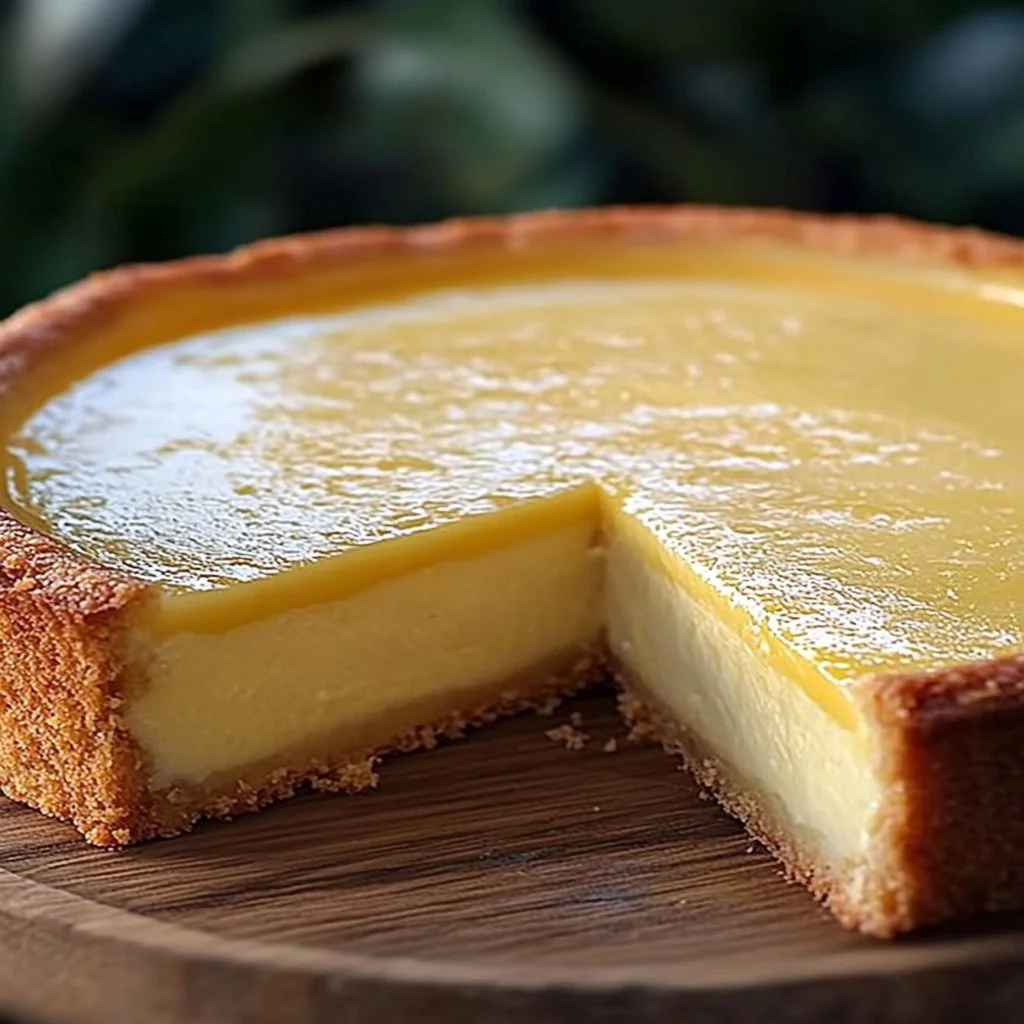
Lemon Custard Cake
Ingredients
Method
- Preheat your oven to 350°F (175°C) and grease an 8-inch round cake pan.
- In a large bowl, whisk together the flour and sugar until combined.
- In another bowl, whisk the eggs, milk, melted butter, lemon zest, and juice until smooth.
- Gradually add the wet mixture to the dry ingredients while stirring gently until just combined.
- Pour the batter into the prepared pan.
- Bake for 30-35 minutes or until golden brown, using a toothpick to check for doneness.
- Let cool in the pan for 10 minutes before transferring to a wire rack.
- Dust with powdered sugar before serving, if desired.