Korean Style Pot Roast
How I stumbled into a new favorite There are dishes that feel like comfort and then there are dishes that slowly rearrange what comfort means. My Korean Style Pot Roast does the latter. I first made this on a rainy Sunday when I wanted something that smelled like home but tasted a little unexpected. It…
How I stumbled into a new favorite
There are dishes that feel like comfort and then there are dishes that slowly rearrange what comfort means. My Korean Style Pot Roast does the latter. I first made this on a rainy Sunday when I wanted something that smelled like home but tasted a little unexpected. It smells of caramel and garlic as it braises, the kitchen filling with a warm, sticky sweetness from the brown sugar and a gentle savory edge from the soy sauce. If you enjoy a classic roast you might also appreciate the slow-cooked comfort in a cozy slow-cooker pot roast I often make, but this version has a sesame-scented lift that keeps everyone reaching for seconds.
The Ingredient That Changes Everything
When people ask what makes it “Korean style” I always point to the balance: soy sauce and brown sugar for deep umami and sweetness, rice vinegar for brightness, and sesame oil for that toasty finish. For this recipe I use a 3-4 pounds beef chuck roast because it shreds into silk after long, slow cooking. The sauce I whisk together is simple: 1/4 cup soy sauce, 1/4 cup brown sugar, 2 tablespoons rice vinegar, 2 tablespoons sesame oil, 4 cloves garlic minced and 1 tablespoon ginger minced. I find that using fresh ginger and garlic is worth the tiny bit of prep time because it perfumes the broth as the meat cooks. Add 2 cups beef broth to loosen things up, and you have a braising liquid that keeps the roast juicy and forms the most delicious pan juices to spoon over everything.
Building the flavors and cooking it slow
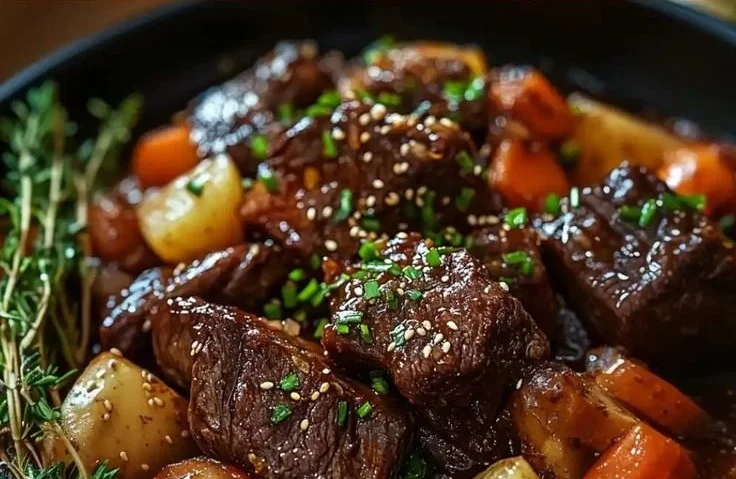
Preheat your oven to 300°F (150°C). That low temperature is key to getting the collagen in a chuck roast to melt without drying out the meat. In a bowl, mix together soy sauce, brown sugar, rice vinegar, sesame oil, garlic, and ginger so the sugar dissolves and the flavors marry. I season the beef roast with salt and pepper, then sear it in a hot skillet until browned on all sides; the crust you get from searing adds depth. After searing, place the seared roast in a large pot or Dutch oven, and pour the sauce mixture over it. Add beef broth, carrots, onion, and potatoes to the pot so the vegetables sit around the roast, absorbing braising juices as they soften. Cover and cook in the oven for 3-4 hours, or until the beef is tender. When it’s done, serve hot, garnished with sliced green onions for a pop of color and sharp freshness.
My little tricks while building the dish: brown the roast in batches so the pan doesn’t steam, and scrape those browned bits into the pot when you deglaze; they dissolve into the sauce and make the whole thing sing. If you like a thicker glaze, take the roast out when it’s done and reduce the pot liquid on the stove until it coats a spoon, then pour it over the meat. That glossy finish is what people fight over.
Getting the texture just right and knowing when it’s done
You’ll know this roast is done when a fork slides into the meat with almost no resistance and the roast begins to fall apart when you nudge it. The connective tissue should be silky, not rubbery. If you test it at three hours and it still resists, give it another half hour; ovens vary and chuck roasts love a patient cook. The carrots should be vivid orange and tender, the potatoes soft but not mushy. Taste the braising liquid near the end and adjust salt if needed; because soy sauce is salty, I usually add just a pinch more salt at the very end, if at all.
A personal tip: if you plan to serve this at a dinner where you want to be relaxed, cook it a day ahead. It tastes even better after resting in the fridge overnight because the flavors meld. When you’re ready to serve the next day, gently rewarm it in a low oven or on the stove and skim any hardened fat from the surface before reheating.
What to serve with it and a couple of playful variations
This roast stands beautifully on its own, but I like to pull together sides that soak up the sauce. A crusty bread or something cheesy and potato-forward is perfect, which is why I often serve it alongside Gouda and roasted potato bread when I want people to sop up every last drop. For a lighter contrast, a crisp green salad with rice vinegar dressing cuts through the richness. If you want more veggies, roasted squash with a bit of spice is a lovely match and echoes the sweet-sour notes; try pairing it with chipotle roasted butternut squash and black beans for a heartier plate.
Two variations I often suggest are easy to execute. First, swap some of the brown sugar for honey if you like a slightly floral sweetness. Second, for a bit of heat, add a tablespoon of gochugaru or a smear of gochujang to the sauce mixture; it makes the final dish more assertive without overpowering the roast. If you need to speed things up on a weeknight, you can adapt this recipe to a pressure cooker; I follow similar flavor ratios but cut the cook time dramatically, inspired by my go-to instant pot pot roast experiments.
A few things I’ve learned and how to keep leftovers happy
Here are a few lessons from repeated Sunday roasts. First, don’t skip the sear; even a quick, smoky crust adds so much flavor. Second, low and slow yields the most tender results; high heat might be faster but you lose that melting texture. Third, be generous with the green onions at the end; they add brightness that makes each bite lively.
Leftovers store beautifully. Cool the roast to room temperature, then transfer everything to an airtight container and refrigerate for up to four days. The sauce will thicken as it chills; when reheating, add a splash of beef broth or water and gently warm over low heat so the meat stays moist. For longer storage, freeze portions in freezer-safe bags for up to three months. I often shred the meat while it is still slightly warm and freeze it in portions that are perfect for quick bowls, sandwiches, or a busy weeknight dinner.
Conclusion
If you want another take on Korean-style pot roast, you can compare notes with the Korean Style Pot Roast at The Modern Proper, which has its own lovely spin. Or, to see a different home-cook version, look at the recipe from The Beach House Kitchen and borrow ideas that fit your pantry. This roast is the kind of dish that becomes part of your regular rotation once you discover how forgiving and soulful it is, and I hope it brings the same cozy satisfaction to your table that it has to mine.
Korean Style Pot Roast
Ingredients
Method
- Preheat your oven to 300°F (150°C).
- In a bowl, mix together soy sauce, brown sugar, rice vinegar, sesame oil, garlic, and ginger.
- Season the beef roast with salt and pepper.
- Sear the roast in a hot skillet until browned on all sides.
- Place the seared roast in a large pot or Dutch oven.
- Pour the sauce mixture over the roast and add beef broth, carrots, onion, and potatoes.
- Cover and cook in the oven for 3-4 hours, or until the beef is tender.
- For a thicker glaze, reduce the pot liquid on the stove until it coats a spoon.
- Serve hot, garnished with sliced green onions.