Kouign-Amann (Breton Butter Cake)
I remember the first time I tried making Kouign-Amann (Breton Butter Cake): my kitchen smelled like warm caramel and browned butter for hours, and I sat on a stool by the counter, stealing pieces until the whole tray was suspiciously light. If you like the silky layers of a croissant with a crunchy, caramelized sugar…
I remember the first time I tried making Kouign-Amann (Breton Butter Cake): my kitchen smelled like warm caramel and browned butter for hours, and I sat on a stool by the counter, stealing pieces until the whole tray was suspiciously light. If you like the silky layers of a croissant with a crunchy, caramelized sugar shell, this is the thing. It took me a few practice rounds (and one very patient neighbor) to get the timing and technique right, but once you do, you’ll want to make this instead of store-bought pastries on slow mornings. I even baked it one evening after cooking something savory — like when I make that simple weeknight curry — and it felt like the most indulgent way to finish a meal; for days I had the aroma floating through the house, much like when I follow that 5-ingredient recipe for butter chicken I use sometimes 5-ingredient keto butter chicken.
The Secret Behind Perfect Kouign-Amann (Breton Butter Cake)
The truth is the ingredient list is deceptively short, but each item matters. You’ll be working with 1 cup warm water, 1 tablespoon white sugar, and 1 teaspoon active dry yeast to wake up the dough. Then there’s 2 ½ cups bread flour, divided, and 2 tablespoons melted butter (plus more for greasing), balanced by 1 teaspoon kosher salt. What makes the outside sing is 2 sticks (1 cup) ice-cold unsalted butter grated over the dough and ⅔ cup white sugar mixed with 2 teaspoons sea salt for a seasoned sugar that caramelizes as it bakes. I always take a breath and set everything out before I begin because once the yeast is ready you move fairly quickly.
In a large bowl, combine warm water, 1 tablespoon sugar, and yeast; let rest until foamy (about 5 minutes). This little foam is your green light. Add 2 cups flour, 1 tablespoon melted butter, and salt; stir to form a wet, sticky dough. The dough at this point will feel slack and a little sticky and that’s right—the remaining half cup of flour is for your kneading stage. When I knead I flour the surface and keep it gentle: knead on a floured surface using remaining flour until soft and elastic. Place in a greased bowl, cover, and let rise until doubled (about 1.5 hours). Letting it double gives the interior that lovely tender crumb.
Rolling and Folding: The Part That Feels Like Magic
This is the step that looks like pastry school but is really just patient folding. For seasoned sugar, mix remaining sugar and sea salt. Grease a muffin tin with melted butter and coat with seasoned sugar. Roll out dough into a rectangle. Grate ice-cold butter over it, fold into thirds, and chill for 30 minutes. Repeat rolling and folding two more times, chilling between folds. If you can imagine the butter as snowflakes landing on a canvas, you’ll get the idea: keep the butter cold so it creates separate layers rather than disappearing into the dough.
A few practical tips here: keep a bench scraper handy for clean edges, flour lightly and not obsessively so you don’t toughen the dough, and use a really cold block of butter—if it softens up it’s harder to keep those layers distinct. I also find that chilling between folds for the full 30 minutes makes the difference between a tangle of butter and a pastry with flaky strata that crackle when you bite it.
A Few Things I’ve Learned (Timing, Texture, and Troubleshooting)
After the last chill, preheat your oven to 375°F (190°C). Roll dough into a rectangle on a sugared surface, cut into 12 squares, and shape into cups in the muffin tin. Shape them gently; you want the layering visible but not mangled. Let rest, sprinkle with more sugar, and bake for 25-30 minutes until browned. The smell that hits you when they’re browning is pure coaxing: sugar, butter, and a hint of toasted flour. Cool briefly on a rack before serving.
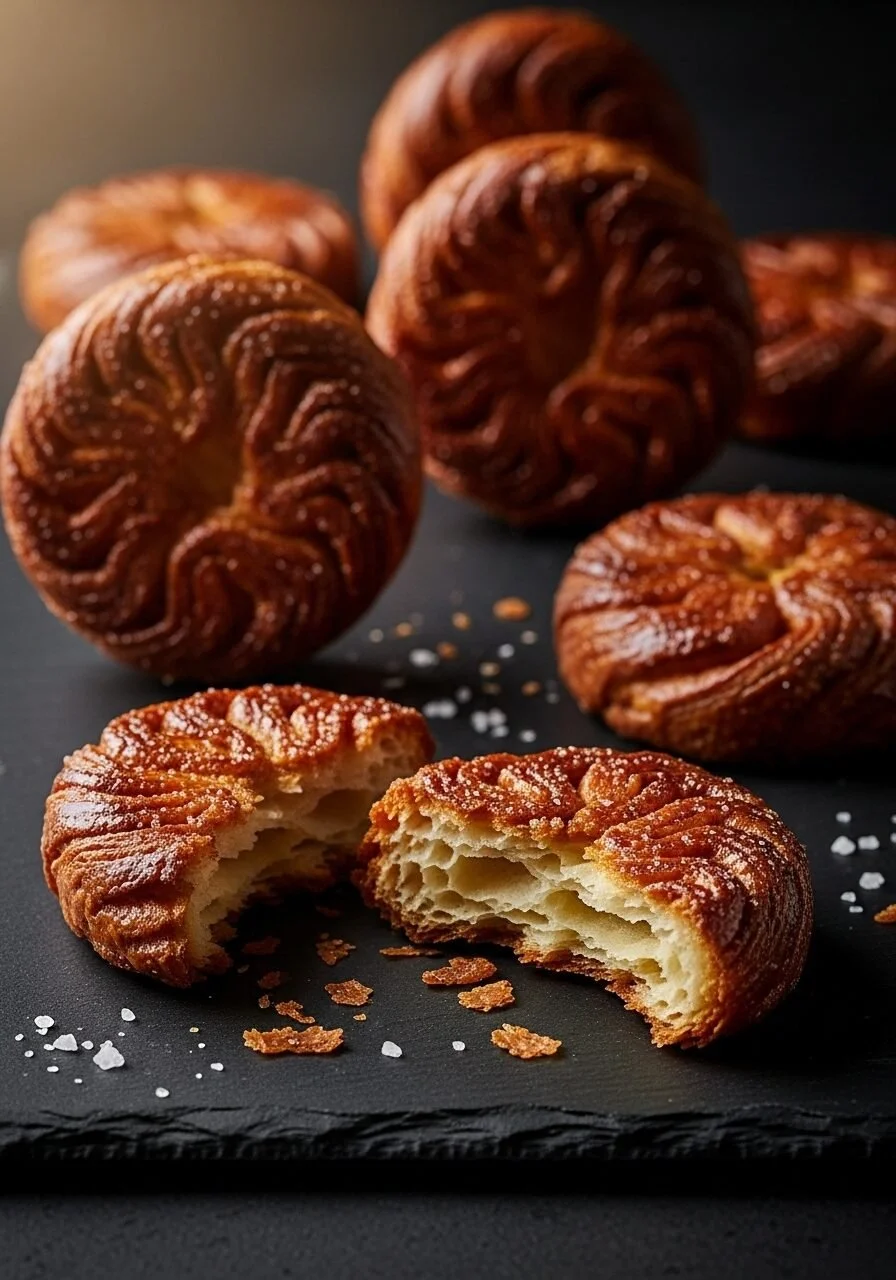
How do you know when it’s done right? The exterior should be deep golden, almost lacquered, with a sticky caramel snap when you break into it. The inside should be airy but still buttery. If it’s pale, give it a few more minutes; if the sugar is still soft and not crunchy, a minute or two under the broiler (watch it like a hawk) can help. One time I missed that crisp finish and the pastries were more like buttery buns—still tasty but not the Kouign-Amann I love. Also, if you’re worried about the bottoms burning, line the lower rack with a sheet pan for a little buffer.
I usually grease my muffin tin with melted butter and toss in the seasoned sugar right before placing the dough; the sugar provides immediate caramelization and prevents sticking. If you want a cleaner look, use silicone liners and scrape up the extra caramel for an incredible spoonful on vanilla ice cream.
Small Ways to Change It (Variations & Serving Ideas)
There are so many small variations that keep the soul of Kouign-Amann while introducing something new. For a citrus lift, add a teaspoon of orange zest to the seasoned sugar. For a spiced version, fold a pinch of cinnamon into the sugar before the final sprinkle. If I’m feeling extra decadent, I’ll tuck a few thin slices of pear or apple into the center before shaping—think of the pastry as an elegant vessel for fruit. If you want a chocolate angle, sprinkle tiny shards of dark chocolate over the sugar before the final roll; it melts into pockets as the layers bake.
What to serve it with? I love them warm with plain Greek yogurt and a drizzle of honey, or alongside a strong espresso. They also play beautifully with fruit-based desserts like the apple cider cupcakes I made recently; pairing buttery, caramelized pastries with something bright balances the richness—I wrote out that experiment somewhere else when I paired a pastry with fruit fillings and it showed how well butter and acidity tango apple cider cupcakes with apple butter filling.
How to store leftovers: short answer, they are happiest eaten the day of. If you must keep them, cool completely and store in an airtight container at room temperature for up to 2 days; reheat in a 350°F oven for 5–8 minutes to refresh the crisp. If you freeze them, flash-freeze the cooled pastries on a tray, then transfer to a freezer-safe bag; reheat from frozen at 350°F for about 10–12 minutes.
A few more tips I swear by: keep your butter as cold as possible, don’t skimp on the final sugar sprinkle, and be patient with the rises. If your kitchen is cold, the dough will take longer—set it somewhere warm but not hot. I also sometimes use a tablespoon of melted butter in the dough for tenderness, but the laminating butter is where the flavour comes from, so make that butter good.
Conclusion
If you want to read more about the traditional French background and see another take on this pastry, I like this write-up about Kouign Amann (Brittany’s Buttery, Caramelised, Layered Pastry Cake) which gives lovely context and photos that match what you’re aiming for in texture and color.
Making Kouign-Amann is part science and part warmth—the sticky, sugared crust, the layered interior, and the small ritual of folding make it a project you’ll remember. Invite a friend over, pour a strong coffee, and don’t be surprised if everyone lingers at the table a little longer than usual.
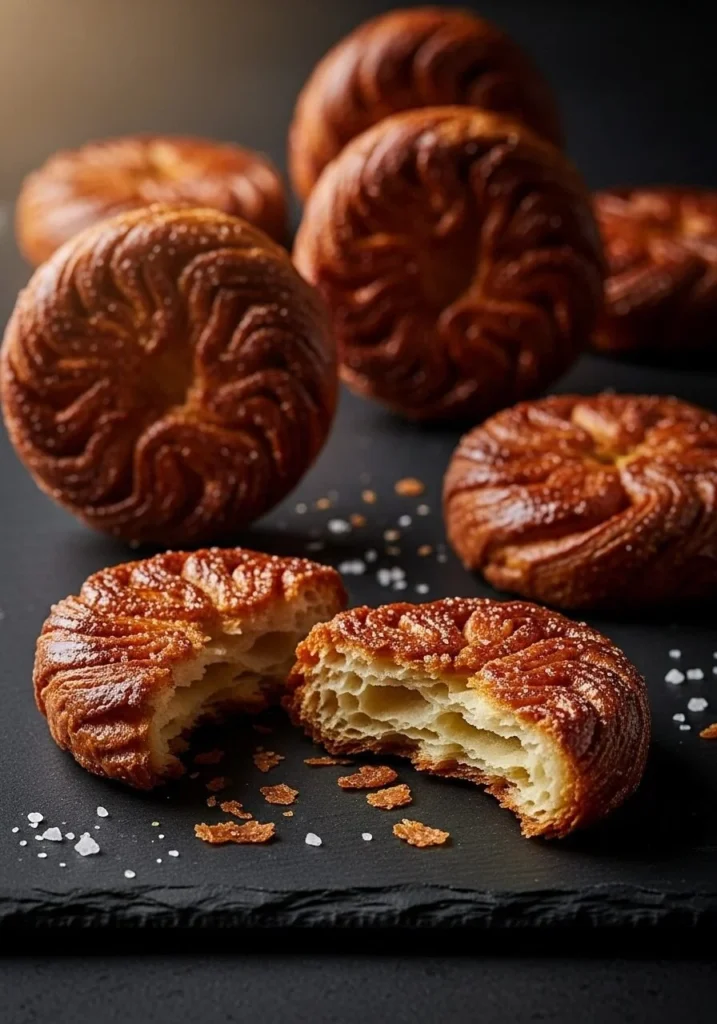
Kouign-Amann
Ingredients
Method
- In a large bowl, combine warm water, 1 tablespoon sugar, and yeast; let rest until foamy (about 5 minutes).
- Add 2 cups flour, 1 tablespoon melted butter, and salt; stir to form a wet, sticky dough.
- Knead on a floured surface using remaining flour until soft and elastic.
- Place in a greased bowl, cover, and let rise until doubled (about 1.5 hours).
- Mix remaining sugar and sea salt for the seasoned sugar.
- Grease a muffin tin with melted butter and coat with seasoned sugar.
- Roll out dough into a rectangle, grate ice-cold butter over it, fold into thirds, and chill for 30 minutes.
- Repeat rolling and folding two more times, chilling between folds.
- Preheat oven to 375°F (190°C).
- Roll dough into a rectangle on a sugared surface, cut into 12 squares, and shape into cups in the muffin tin.
- Let rest, sprinkle with more sugar, and bake for 25-30 minutes until browned.
- Cool briefly on a rack before serving.