Lavender Lemon Bars
How I Found Lavender Lemon Bars [65 Minutes] The first time I tasted lavender lemon bars I was at a small neighborhood potluck; someone had brought a pan that smelled like sun-warmed lemon zest and what I later learned was culinary lavender. I went back for seconds and scribbled down what I could from the…
How I Found Lavender Lemon Bars [65 Minutes]
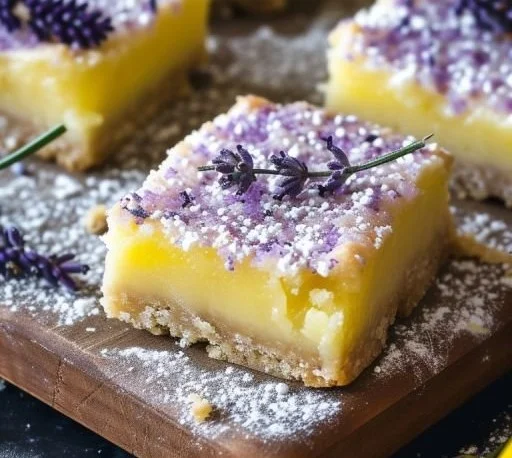
The first time I tasted lavender lemon bars I was at a small neighborhood potluck; someone had brought a pan that smelled like sun-warmed lemon zest and what I later learned was culinary lavender. I went back for seconds and scribbled down what I could from the polite conversation happening around the dessert table. If you like lemon desserts, you might also enjoy a denser, oat-forward cousin of this treat, which is why I often tell friends about recipes like lemon oatmeal crumble bars when we trade weekend-baking ideas. That day I took home a pan, experimented a bit, and this version—now affectionately titled Lavender Lemon Bars [65 Minutes] – became a staple whenever I want something bright yet floral.
The Secret Behind Perfect Lavender Lemon Bars [65 Minutes] –
I think the secret is balance. Too much lavender makes things taste like potpourri; too little and you lose the gentle perfume that elevates the lemon. For an 8×8 pan you need a shortbread-like crust and a tart, silky lemon filling that sets with a tender bite. Ingredients list: for the crust you will want 1 cup all-purpose flour, 1/4 cup powdered sugar, 1/4 teaspoon salt, and 1/2 cup cold unsalted butter cut into cubes. For the filling you will use 1 cup granulated sugar, 3 large eggs, 1/3 cup fresh lemon juice, the zest of 2 lemons, 2 tablespoons all-purpose flour, 1/4 teaspoon salt, and 2 tablespoons culinary lavender (use less if your lavender is very fragrant). Finish with a dusting of powdered sugar. I say culinary lavender because that is one of my first tips: always use lavender labeled for cooking so you avoid oils that are too bitter.
Getting the Texture Just Right
Cooking directions: start by preheating your oven to 350 degrees Fahrenheit and lining an 8×8 inch pan with parchment so you can lift the bars out later. For the crust, pulse together the flour, powdered sugar, and salt, then cut in the cold butter until the mixture resembles coarse sand. Press it into the pan and bake for about 18 to 20 minutes, until it is set and barely golden at the edges. While the crust is baking, I heat the lemon juice, granulated sugar, and lavender together in a small saucepan just until the mixture is warm and fragrant; then I remove it from the heat and let the lavender infuse for 8 to 10 minutes before straining out the buds through a fine sieve. Straining is one of those little steps that makes the texture smooth while still keeping the floral note. Whisk the eggs with the lemon zest, flour, and salt, then slowly pour in the infused sugar-lemon mixture, whisking constantly so you do not scramble the eggs. Pour the filling over the hot crust and return to the oven for another 18 to 22 minutes, until the filling is just set with the slightest jiggle in the center. Let the whole pan cool completely, then chill for at least an hour; the chill makes for cleaner slices. I always dust with powdered sugar right before serving.
You can tell they are done when the edges are slightly puffed and golden and the center no longer looks wet. If you press the center gently with a fingertip, it should wobble faintly but spring back. That’s when I take them out.
A Few Things I’ve Learned
One tip I share with everyone is to use the lemon zest aggressively; those oils are where the brightness comes from, and they play beautifully with the lavender. Another trick is to warm the lemon juice with lavender instead of steeping the flowers in cold sugar; heat unlocks the floral oils quickly and gives you more control. I also learned the hard way that overbaking kills the silkiness of the filling. If the center is completely firm, your bars will be dry. Finally, press the crust firmly into the pan so it bakes evenly and does not crumble when you cut the bars.
Serving is simple. These bars are wonderful slightly chilled with a cup of Earl Grey or a bright, grassy green tea, and they are surprisingly lovely with a dollop of lightly whipped cream or a scoop of vanilla ice cream on the side for contrast. For a brunch spread I like to place them next to fresh berries—the tartness of raspberries pairs nicely with the floral notes. If you want a light drink pairing, try the herbal lemon and berry smoothie I sometimes make after baking; it keeps the lemon theme going and is basically my go-to refresher, similar to the anti-inflammatory lemon blueberry smoothie I save for mornings when I want something bright.
When Things Don’t Go As Planned
I once rushed the straining step because guests were arriving and ended up with little lavender flecks in every bite. While still tasty, the texture was less elegant. If your filling looks grainy or the lavender pieces are prominent, a gentle pass through a sieve before baking fixes that. If your crust puffs up in the oven, next time chill it in the pan for 15 minutes before baking to help it keep its shape. If the center never seems to set, your oven may run cool; let the bars sit longer in the warm oven with the door cracked, or bake an extra 5 to 10 minutes while checking for the jiggle test.
This is also where a second internal recipe link makes sense: if you love the bright lemon flavor but prefer something cakier with a glaze, you might enjoy my adaptation inspired by mini lemon cakes with lavender glaze, which I sometimes serve when I want individual portions.
When You Want to Change It Up
Variations are one of my favorite parts of baking. Try a blueberry variation by folding 3/4 cup fresh or thawed frozen blueberries into the filling before baking for a rustic lemon-blueberry bar. If you want a softer floral note, substitute 1 tablespoon lavender and add a tablespoon of honey to the filling for a honey-lavender lemon bar. For a gluten-free version, swap the crust for a mixture of almond flour and a touch of coconut flour and press it in firmly, baking a few minutes longer until golden. Each variation requires only small adjustments but gives a completely new spin.
Storage is practical: if you want to make these ahead, they keep beautifully in the refrigerator for up to four days in an airtight container, with parchment between layers to prevent sticking. You can also freeze the bars cut into squares for up to one month; thaw in the fridge overnight and dust with powdered sugar before serving. I usually bake these the night before a gathering so the flavors meld and the slices come out tidy, which is a helpful trick when hosting.
Conclusion
If you want the original inspiration or to see another take on this exact recipe, the original post for Lavender Lemon Bars [65 Minutes] is a lovely reference and where my version found its home.
Lavender Lemon Bars
Ingredients
Method
- Preheat your oven to 350 degrees Fahrenheit and line an 8×8 inch pan with parchment paper.
- For the crust, pulse together the flour, powdered sugar, and salt, then cut in the cold butter until the mixture resembles coarse sand.
- Press the mixture into the pan and bake for about 18 to 20 minutes, until set and barely golden at the edges.
- While the crust is baking, heat the lemon juice, granulated sugar, and lavender together in a small saucepan just until warm and fragrant.
- Remove from heat and let the lavender infuse for 8 to 10 minutes before straining out the buds through a fine sieve.
- Whisk the eggs with the lemon zest, flour, and salt, then slowly pour in the infused sugar-lemon mixture, whisking constantly.
- Pour the filling over the hot crust and return to the oven for another 18 to 22 minutes, until the filling is just set with a slight jiggle in the center.
- Let the whole pan cool completely, then chill for at least an hour.
- Dust with powdered sugar right before serving.