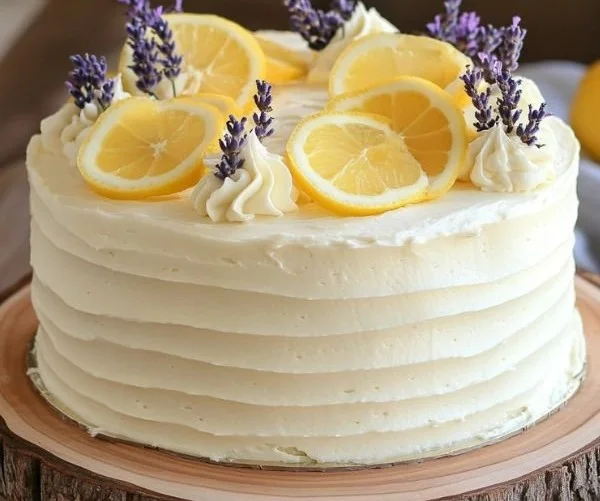
Lemon Lavender Cake
Lemon Lavender Cake feels like the kind of recipe you stumble into on a slow Sunday afternoon, the house full of sunlight and the kind of quiet that invites baking. I call it Lemon Lavender Cake whenever I bring it to a brunch or bake it for a neighbor, and it always gets a comment…
Lemon Lavender Cake feels like the kind of recipe you stumble into on a slow Sunday afternoon, the house full of sunlight and the kind of quiet that invites baking. I call it Lemon Lavender Cake whenever I bring it to a brunch or bake it for a neighbor, and it always gets a comment about how the lemon wakes up the lavender in a way that is somehow both delicate and bold. If you like lemon-and-flower combinations, you might also enjoy a lighter take I often link to when I’m brainstorming — mini lemon cakes with lavender glaze make the same flavor in party-size portions.
The First Time I Baked Lemon Lavender Cake
The first time I made this I had a handful of fresh lavender buds from a friend’s garden and more lemons than I knew what to do with. The scent as the cake baked was intoxicating: bright citrus on a bed of soft floral perfume, the kitchen filling with a golden, warm smell that made me want to slice into it before it cooled. I use simple, pantry-friendly amounts: 2 cups all-purpose flour, 1 1/2 cups granulated sugar, 1 cup unsalted butter softened, 4 large eggs, 1/2 cup milk, 2 tablespoons lemon zest, 1/4 cup fresh lavender buds, 1/2 teaspoon baking powder, 1/2 teaspoon salt, and 1 teaspoon vanilla extract. For the lavender glaze I keep it easy with 1 cup powdered sugar, 2 tablespoons lemon juice, and if I’m feeling extra floral I stir in 1 tablespoon fresh lavender buds.
Why Lavender Isn’t Just for Sachets
Lavender is easy to overdo, which is why I only use a 1/4 cup of fresh lavender buds in the batter. It gives a whisper of floral flavor without tasting like perfume. I love this recipe because it tastes like summer without being cloying. The lemon zest brings that bright, slightly bitter citrus note that keeps the cake lively. I often tell friends that the lavender is the supporting actor; it makes the lemon more interesting rather than stealing the show.
How I Make It (and the Ingredients I Use)
I start by preheating the oven to 350°F (175°C) and greasing and flouring a 9×5 inch loaf pan so the cake slides out neatly later. In a large bowl I cream the softened butter and the 1 1/2 cups granulated sugar together until light and fluffy; that takes a few minutes with an electric mixer, and you want it pale and a little airy. Then I add the eggs one at a time, mixing well after each addition, and I stir in the 1/2 cup milk, the 2 tablespoons lemon zest, and the 1 teaspoon vanilla extract so the batter smells bright and familiar.
Meanwhile I whisk the 2 cups all-purpose flour with 1/2 teaspoon baking powder and 1/2 teaspoon salt in a separate bowl. I gradually add the dry mixture to the wet, folding until just combined so the cake stays tender. Right before the batter is fully smooth I fold in the 1/4 cup fresh lavender buds gently; overmixing will toughen the cake and bruises the lavender into an over-strong flavor, so I stop as soon as I see the petals evenly distributed. I pour the batter into the prepared loaf pan and bake it for 55 to 60 minutes, or until a toothpick inserted in the center comes out clean. While the cake is baking I mix the glaze — 1 cup powdered sugar with 2 tablespoons lemon juice until smooth — and if I want extra texture and aroma I fold in 1 tablespoon fresh lavender buds.
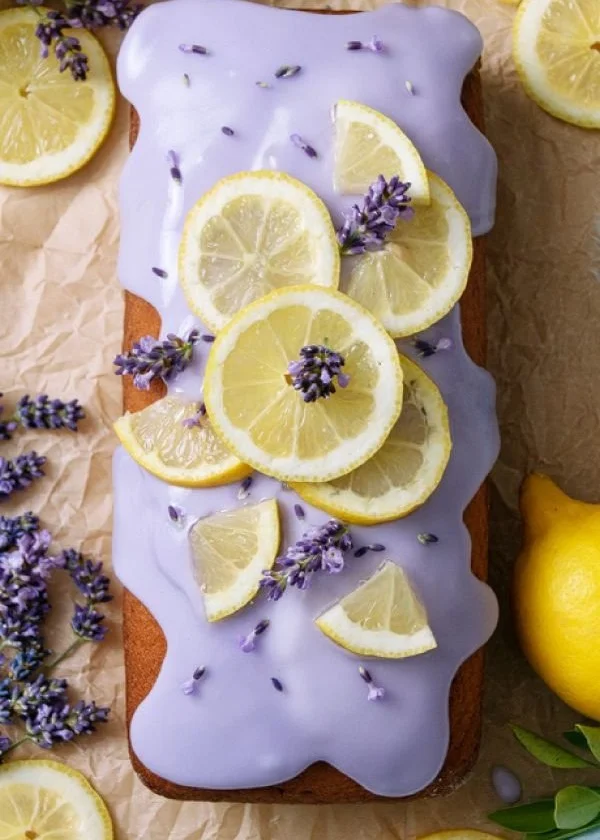
I always let the cake cool in the pan for about 10 minutes before transferring it to a wire rack; it holds together better that way. Once it is completely cooled I drizzle the lavender glaze over the top, watching it run down the sides in thin ribbons. A few thin lemon slices and a sprig of fresh lavender flowers make it look like I spent twice as long as I actually did.
Knowing When It’s Done and What to Serve With
You will know the cake is done when the center springs back slightly and a toothpick inserted in the middle comes out clean. The edges will pull away a touch from the pan, and the top will be golden without cracking open too much. The first slice is always the best test: the crumb should be tender and slightly moist, not dense or gummy. I like serving a slice with a dollop of crème fraîche or a spoonful of plain Greek yogurt, and a pot of strong tea complements the floral notes. For a more indulgent brunch I pair it with lemon curd and fresh berries; it cuts through the sweetness and adds a bright, juicy contrast. If you want a garnish, thin lemon slices and a few lavender flowers make it pretty and fragrant.
A Few Tricks, Variations, and How I Keep Leftovers Happy
One trick I’ve learned is to zest the lemons before squeezing them so you don’t waste any juice. Another is to let the butter sit out until truly soft; it creams better and gives a lighter texture. I also sometimes toast the lavender very lightly in a warm dry pan for a few seconds to deepen the flavor, but only if I am using dried lavender; with fresh buds I skip to keep it fresh and green tasting. If your loaf browns too quickly, tent it loosely with foil halfway through baking.
For variations, swap half the milk for buttermilk for a tangier crumb, or fold a cup of blueberries into the batter for a summery twist — I’ve used a blueberry-lavender pairing in other small-batch desserts and it is lovely, see one version I often think about when I want fruit with my floral flavors: blueberry lavender cheesecake minis. If you prefer a lighter, tea-time cake, reduce the sugar slightly and bake in a muffin tin; that brings me to my next idea, which riffs on tea cakes I found once and kept tweaking until it was mine: for small tea cakes try the method in this recipe that balances lavender with berries in little delicate portions: lavender blueberry tea cakes.
Leftovers keep well wrapped at room temperature for a day or two, and refrigerated for up to a week if you want to keep the glaze fresh on the first day. I find the texture actually improves a little after a day as the flavors settle, but bring it back to room temperature before serving. You can also freeze slices wrapped tightly in plastic and foil for up to three months; thaw in the fridge overnight and bring to room temperature before glazing.
There are a few things that can throw this cake off. Overmixing after adding the flour ruins the tenderness, and using too much dried lavender makes it bitter. If your cake seems underdone after 60 minutes, test in the center and around the edges; sometimes ovens vary and a ten-minute addition saves it. If the glaze is too thick, add a little more lemon juice; if too thin, a touch more powdered sugar.
Conclusion
If you want to see a different, fancier take that layers lemon curd into a multi-tiered version, I find inspiration in a gorgeous assembled cake method shown in Lemon Lavender Cake with Lemon Curd Filling – Chelsweets, which is a lovely companion to this simpler loaf when you are ready to go bigger.
Lemon Lavender Cake
Ingredients
Method
- Preheat the oven to 350°F (175°C) and grease and flour a 9x5 inch loaf pan.
- In a large bowl, cream the softened butter and granulated sugar together until light and fluffy.
- Add the eggs one at a time, mixing well after each addition.
- Stir in the milk, lemon zest, and vanilla extract until well combined.
- In a separate bowl, whisk together the flour, baking powder, and salt.
- Gradually add the dry mixture to the wet mixture, folding until just combined.
- Fold in the lavender buds gently to avoid overmixing.
- Pour the batter into the prepared loaf pan.
- Bake for 55 to 60 minutes, or until a toothpick inserted in the center comes out clean.
- Let the cake cool in the pan for about 10 minutes before transferring to a wire rack.
- While the cake cools, mix the powdered sugar and lemon juice until smooth.
- If desired, fold in fresh lavender buds for extra flavor.
- Once the cake is completely cool, drizzle the lavender glaze over the top.
- Decorate with thin lemon slices and fresh lavender flowers if desired.