Lemon Poppy Seed Macarons
I remember the first time I made lemon poppy seed macarons like it was a small, gloriously sticky adventure. I was nervous about the meringue, excited about the lemon curd, and convinced that if these came out even half as pretty as the photos in my head I would host tea parties for a week….
I remember the first time I made lemon poppy seed macarons like it was a small, gloriously sticky adventure. I was nervous about the meringue, excited about the lemon curd, and convinced that if these came out even half as pretty as the photos in my head I would host tea parties for a week. They turned out better than I dared hope, and now Lemon Poppy Seed Macarons are my go-to for gifts, celebrations, and those afternoons when I need something bright and chewy to brighten the day. If you like a little crunch from the seeds and a bright, tangy filling, this is the one I keep returning to. If you want something fresh alongside them, I sometimes serve these with a simple fruit salad like the one I linked to when I first started experimenting with poppy seeds fresh fruit salad with honey-lime poppy seed dressing because the acidity and sweetness play so well together.
The Secret Behind Perfect Lemon Poppy Seed Macarons
What makes these special for me is the balance: a delicate, crisp shell that gives way to a tender interior, and then an almost molten lemon heart. To make that possible you need the right ingredients and a little patience. For the shells I use 1 2/3 cup (200 grams) powdered sugar, 1 cup (110 grams) almond flour, 3 large (100 grams) egg whites and 1/4 cup (50 grams) granulated sugar folded into the meringue, plus 1/2 tablespoon poppy seeds folded into the batter. For the filling I whisk together 1/3 cup plus 1 tablespoon (75 grams) granulated sugar, 1/4 cup (48 grams) fresh squeezed lemon juice, 1 large (50 grams) egg and 1 large (15 grams) egg yolk, then finish with 6 tablespoons (90 grams) unsalted butter cubed and softened and 1/4 cup heavy whipping cream (cold) to give it a lush mouthfeel. Seeing those measurements written out makes it sound clinical, but I promise it reads and tastes anything but.
How I Mix, Pipe and Know They’re Ready
For Macarons: I start by sifting the powdered sugar and almond flour together at least once, ideally twice, to make sure there are no lumps. When I’m in a hurry I still never skip sifting because it changes the texture entirely. I whip the 3 large egg whites to soft peaks and then add the 1/4 cup granulated sugar slowly until glossy and medium-stiff peaks form. Folding matters more than speed here. I gently fold the dry mix into the meringue; the batter should flow like lava and form a thick ribbon when lifted. At this point I sprinkle in the 1/2 tablespoon poppy seeds and fold just to distribute them. I pipe small rounds onto parchment-lined trays, tap each tray on the counter a couple of times to release large air bubbles, and then let them rest until a skin forms, about 30 to 60 minutes depending on humidity. I bake at around 300°F (150°C) for 14 to 16 minutes; you want the shells to have risen feet and be set on top but not browned. A little tip I learned the hard way is to rotate your pans halfway through baking for even heat and don’t open the oven early or you’ll deflate the feet. When done they should lift off cleanly from the paper and sound slightly hollow when tapped.
Lemon Curd Filling That Makes Them Sing
For Filling: I combine 1/3 cup plus 1 tablespoon granulated sugar with the 1/4 cup fresh lemon juice, the whole egg and the egg yolk in a small saucepan and whisk constantly over medium-low heat until the mixture thickens and reaches about 170°F and coats the back of a spoon. If you do not have a thermometer, watch for it to noticeably thicken and leave a trail when you drag a spatula through it. Remove from heat and whisk in the 6 tablespoons cubed unsalted butter until smooth. For extra silkiness I strain the curd to remove any cooked egg bits and then chill it. Right before I fill the macarons I fold in the cold 1/4 cup heavy whipping cream to loosen the curd into a creamy, pipeable filling. If you prefer a firmer texture, chill the curd longer or beat a bit of softened butter with it to make a lemon buttercream.
A Few Things I’ve Learned (and Use Every Time)
I always age my egg whites by leaving them in a covered container in the refrigerator for 24 to 48 hours when I can; this concentrates proteins and helps the meringue. If you don’t plan ahead, separating eggs while they are cold and then letting the whites come to room temperature for 30 minutes works too. Measure on a scale when possible; grams remove guesswork. When piping, use a template under the parchment if you want uniform sizes. If humidity is high, give the shells extra resting time. When macaron projects go wrong they almost always trace back to overmixing, under-sifting, or skipping the rest period.
When It’s Done Right and What to Serve It With
You’ll know they’re done right when the shells have those neat little feet, the tops are smooth and matte, and they lift without sticking to the paper. The filling should be bright but not runny; it should hold its shape when piped. These pair wonderfully with a fragrant tea, a light sparkling wine, or a cold latte. For a brunch spread I sometimes serve them alongside lighter lemony drinks like a smoothie for contrast and color anti-inflammatory lemon blueberry smoothie because people love the echo of citrus.
How I Make Them Ahead and Store Leftovers
I often make the shells a day in advance and keep them in an airtight container, unfilled, at room temperature. Once filled, store the macarons in a single layer in an airtight container in the refrigerator for up to three days. They actually mature and taste better after 24 hours because the filling softens the shell slightly. If I want to keep them longer I freeze unfilled shells or filled macarons for up to a month, wrapped well; thaw them in the fridge to avoid condensation washing out the delicate texture.
Two Ways I Play with the Flavor
For a subtle twist I fold a teaspoon of finely grated lemon zest into the shells or swirl a little blueberry purée into the lemon curd for a marbled effect. Another favorite variation is to add a few drops of culinary lavender extract to the filling for a floral note, or to replace some of the almond flour with finely shredded coconut for a tropical poppy seed cookie. If you like savory contrasts, a pinch of finely chopped rosemary in the curd can be surprisingly good.
When Things Don’t Go As Planned
I’ve had flat shells and cracked tops, and the best fix is to step back and troubleshoot: check your oven temperature, sift more thoroughly, or give the batter less vigorous folding. If the filling is too runny, chill it more or fold in a bit of softened butter. If it’s too stiff, stir in a little cold cream until it loosens.
Personal Memory That Sells This Recipe to Me
There’s one afternoon I always think about: I made a double batch, packed a tin full, and walked up to my neighbor’s porch because she had just had surgery. Her smile when she tasted one was everything. That small, lemon-bright moment convinced me that making macarons is worth the fuss.
Conclusion
If you want to compare technique or try another version, I like to look at other takes on the same flavor and learn little tricks from them; this one from Lemon Poppy Seed Macarons Recipe – Barley & Sage has been a useful reference when I’m tweaking texture or ratio. Happy baking, and don’t be afraid to make them imperfect the first time.
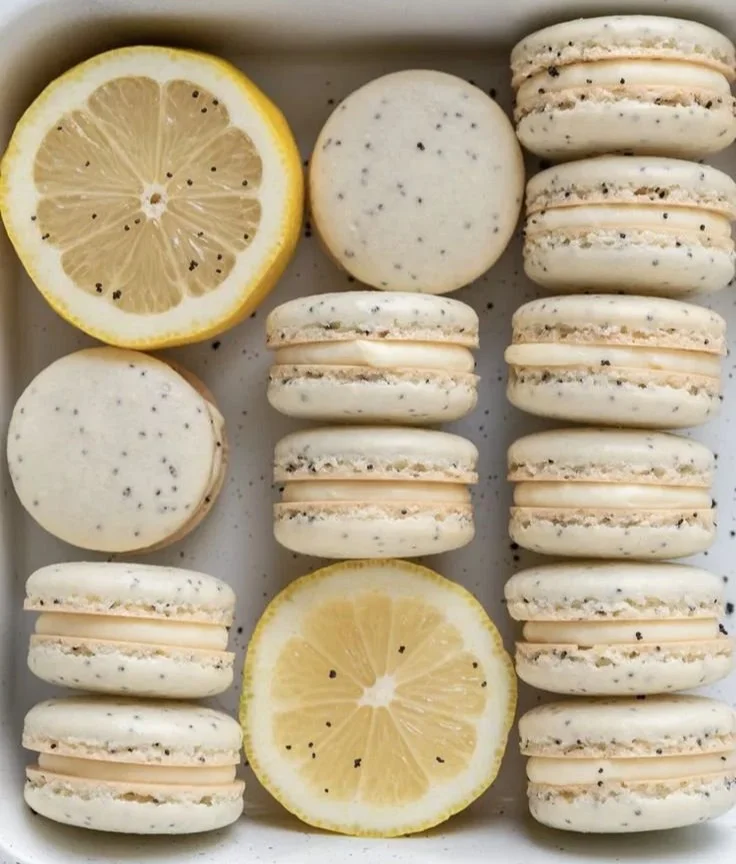
Lemon Poppy Seed Macarons
Ingredients
Method
- Sift the powdered sugar and almond flour at least once, ideally twice, to prevent lumps.
- Whip the egg whites to soft peaks and gradually add the granulated sugar until glossy medium-stiff peaks form.
- Gently fold the sifted dry mix into the meringue until the batter flows like lava and forms a thick ribbon.
- Sprinkle in the poppy seeds and fold to distribute.
- Pipe small rounds onto parchment-lined trays and tap to release air bubbles.
- Let the macarons rest until a skin forms, about 30 to 60 minutes depending on humidity.
- Preheat the oven to 300°F (150°C).
- Bake macarons for 14 to 16 minutes, rotating trays halfway. They should lift cleanly from the paper.
- In a small saucepan, combine the sugar, lemon juice, whole egg, and egg yolk.
- Whisk constantly over medium-low heat until thickened and reaches about 170°F, or until it leaves a trail when a spatula is dragged through.
- Remove from heat and whisk in the cubed butter until smooth. Strain if desired, then chill.
- Before filling macarons, fold in the cold heavy whipping cream to make a creamy, pipeable filling.