London Fog Cake
I remember the first time I tried to bake something that tasted like tea. It was more curiosity than confidence—I loved Earl Grey in a mug and lavender on a biscuit, but putting them inside a cake felt like trying to catch a scent and make it stick. The result surprised me: a cake that…
I remember the first time I tried to bake something that tasted like tea. It was more curiosity than confidence—I loved Earl Grey in a mug and lavender on a biscuit, but putting them inside a cake felt like trying to catch a scent and make it stick. The result surprised me: a cake that smells like an afternoon parlor and tastes like a polite secret. If you like experimenting, this London Fog Cake will reward small adjustments with big personality.
This recipe is part memory, part lab experiment. If you want a quick reference before we wander into why each choice matters, I briefly list everything here in one place so you can check your pantry: 1 cup all-purpose flour, 1/2 cup sugar, 1/2 teaspoon baking powder, 1/4 teaspoon baking soda, 1/4 teaspoon salt, 1/2 cup unsalted butter softened, 2 large eggs, 1/2 cup Earl Grey tea brewed and cooled, 1 tablespoon dried lavender, 1/2 cup milk, 1/2 teaspoon vanilla extract, 1 package cream cheese softened, 1 cup powdered sugar, 1 teaspoon vanilla bean paste or vanilla extract. If you prefer to see a similar take before diving in, I once compared versions and found one useful note on a London Fog Cake with Earl Grey and lavender.
When Earl Grey meets cake batter
Earl Grey brings aromatic bergamot, and that’s the whole point here. I brew 1/2 cup of strong Earl Grey and let it cool completely so it acts like a flavorful milk replacement rather than a liquid that shocks the butter. In the batter I combine dry elements—1 cup all-purpose flour, 1/2 teaspoon baking powder, 1/4 teaspoon baking soda, and 1/4 teaspoon salt—so they are evenly distributed before anything wet touches them. Separately I cream 1/2 cup softened unsalted butter with 1/2 cup sugar until light and fluffy, then add 2 large eggs one at a time, beating well after each. The cooled tea and 1/2 teaspoon vanilla extract go in next, followed by alternating in the dry mix and 1/2 cup milk until just combined. Finally, I fold in 1 tablespoon dried lavender and pour the batter into a greased and floured cake pan.
The lavender decision
Dried lavender can be assertive. I use 1 tablespoon stirred into the batter so floral notes are present but not so forward that they taste soapy. If you are new to lavender, toast a pinch in a dry pan for 10 seconds to reduce grassy bitterness before measuring. If you want to explore a different floral angle, see the variations below.
The exact sequence I follow
- Preheat the oven to 350°F (175°C). Grease and flour a cake pan.
- In a bowl, whisk together flour, baking powder, baking soda, and salt.
- In another bowl, cream the butter and sugar until light and fluffy.
- Add eggs one at a time, mixing well after each addition.
- Stir in the cooled Earl Grey tea and vanilla extract.
- Gradually incorporate the dry ingredients into the wet mixture, mixing until just combined.
- Add dried lavender and pour the batter into the prepared cake pan.
- Bake for 25-30 minutes or until a toothpick inserted comes out clean.
- Once baked, allow to cool before soaking with the sweet Earl Grey lavender milk.
- For the frosting, beat cream cheese until smooth, then add powdered sugar and vanilla bean paste, blending until creamy.
- Frost the cooled cake with the lavender vanilla bean cream cheese frosting before serving.
How to know when it’s done
The toothpick test is reliable here. Stick a toothpick in the center: it should come out clean or with a few moist crumbs, but not wet batter. The top will be lightly golden and spring back when pressed. If the edges are pulling away from the pan slightly, that’s another good sign.
Practical tips from my experiments
- Room temperature matters: Bring butter and eggs to room temperature so they emulsify smoothly; this gives a lighter crumb.
- Don’t overmix: Once the dry ingredients meet the wet, stir until just combined to avoid toughness.
- Cool before frosting: If the cake is even a little warm, the cream cheese frosting will melt; patience yields a neat finish.
What to serve it with
This cake loves small, quiet accompaniments. Serve slices with a cup of plain Earl Grey or a simple lemon tea to highlight the bergamot. A spoonful of lightly whipped cream or a handful of fresh berries on the side brightens the floral notes without competing.
Variations and substitutions
- Citrus boost: Add a teaspoon of finely grated orange zest to the batter to amplify bergamot’s citrus side.
- Lavender swap: If dried lavender feels risky, steep a teaspoon of culinary lavender in your 1/2 cup of milk as it heats, then cool and use; this yields more subtle floral flavor.
- Milk alternative: Use almond milk or oat milk instead of dairy milk for a dairy-free crumb (but keep the cream cheese frosting as written or swap for a vegan alternative).
Storage and leftovers
Wrap the cooled, frosted cake tightly and store in the refrigerator for up to 4 days. Slices can be frozen (wrap individually) for up to 1 month; thaw in the fridge overnight. If the frosting firms up too much after chilling, let slices sit for 20 minutes before serving to soften the cream cheese layer.
A few more experiments worth trying
I once tried an Earl Grey-infused simple syrup to brush on the crumb before frosting—the cake soaked up the syrup and became almost pudding-like in the center. Use a tablespoon or two of sugar dissolved in the brewed tea and brush sparingly. Another experiment was folding a few tablespoons of crushed shortbread into the batter for texture; it’s delicious if you like a bit of crumbly contrast.
The personal touch
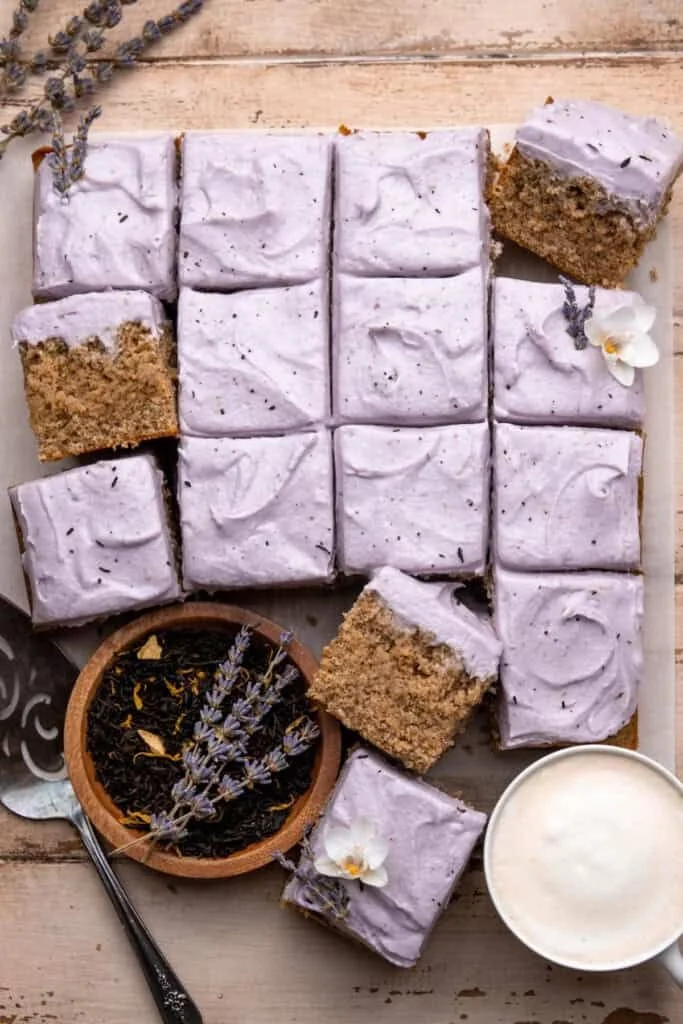
When I bring this cake to friends, someone always asks if it’s homemade or bought. The smell gives it away. I also have a small ritual: I press a few dried lavender buds into the center top of the frosted cake like a tiny bouquet. It feels like a signature and people always notice.
A note about frosting choices
I favor cream cheese here because it adds tang that balances the sugar and floral notes. To make the frosting, beat one package of softened cream cheese until smooth, then add 1 cup powdered sugar and 1 teaspoon vanilla bean paste or vanilla extract, blending until creamy. If you prefer a less sweet finish, reduce the powdered sugar by a couple of tablespoons.
If you want more inspiration along the lines of tea-flavored bakes, I once bookmarked a list of celebratory cakes that sparked a few decorative ideas you can borrow for this cake; see that idea set at a number cake creative collection. For healthier snack alternatives that pair well with tea, I also explored toppings and light accompaniments in this write-up on healthy rice cake toppings.
Conclusion
If you want to compare versions or see a slightly different American-style approach, this London Fog Cake with Earl Grey Buttercream – Sugar & Sparrow is a helpful reference to inspire your next tweak.
London Fog Cake
Ingredients
Method
- Preheat the oven to 350°F (175°C). Grease and flour a cake pan.
- In a bowl, whisk together the flour, baking powder, baking soda, and salt.
- In another bowl, cream the butter and sugar together until light and fluffy.
- Add the eggs one at a time, mixing well after each addition.
- Stir in the cooled Earl Grey tea and vanilla extract.
- Gradually incorporate the dry ingredients into the wet mixture, mixing until just combined.
- Add the dried lavender and pour the batter into the prepared cake pan.
- Bake for 25-30 minutes or until a toothpick inserted comes out clean.
- Allow to cool before frosting.
- Beat cream cheese until smooth, then add powdered sugar and vanilla bean paste, blending until creamy.
- Frost the cooled cake with the lavender vanilla bean cream cheese frosting before serving.