London Fog Cake with Earl Grey & Lavender
The day I fell in love with London Fog Cake with Earl Grey & Lavender I still remember the first time I tried to recreate the cozy tea-shop dessert that had been stalking my dreams: London Fog Cake with Earl Grey & Lavender. The name alone promised foggy afternoons and soft, floral notes, and the…
The day I fell in love with London Fog Cake with Earl Grey & Lavender
I still remember the first time I tried to recreate the cozy tea-shop dessert that had been stalking my dreams: London Fog Cake with Earl Grey & Lavender. The name alone promised foggy afternoons and soft, floral notes, and the kitchen smelled like a small perfumery as the butter and sugar creamed together. If you’re the sort of person who finds Earl Grey comforting and lavender oddly soothing, this is the cake you’ll want to make for guests or to cheer yourself up on a rainy Tuesday. If you like lavender-focused frostings, I once cross-referenced methods from a favorite lavender buttercream frosting guide when I was dialing in the texture.
A few of the ingredients are a little specific, so I’ll say them like I recite them when I go shopping: 3 tbsp 12 g loose leaf Earl Grey tea, 1 tbsp 2 g culinary lavender, 2 1/4 cups 282 g all-purpose flour, spooned and leveled, 1 1/2 tsp baking powder, 1/4 tsp baking soda, 1/2 tsp salt, 10 tbsp 140 g unsalted butter, softened, 1 1/2 cups 300 g granulated white sugar, 3 large eggs (room temperature), 1 tbsp vanilla bean paste, 1 cup 240 ml buttermilk, 1/2 cup 120 ml whole milk, 2 tbsp 8 g Earl Grey tea, 1/2 tbsp 1 g culinary lavender, 1/2 cup 150 g sweetened condensed milk, 1/2 tsp vanilla bean paste, 1 tbsp 2 g culinary lavender, 1 cup 224 g unsalted butter, softened, 8 oz 226 g cold cream cheese, 2 cups 260 g powdered sugar, 1 tsp vanilla bean paste, Optional: Purple food coloring. Say it out loud and it becomes less intimidating.
The secret behind the flavor — and what I do first
The two ingredients that change everything are the loose leaf Earl Grey and the culinary lavender. I usually start by tacking the aromatic work: Pulse the tea and lavender in a food processor until fine, then sift through a mesh sieve to remove any large pieces. That little bit of grinding makes the bergamot and floral notes disperse through the crumb instead of settling like a pocket of dust. A personal tip here: if you don’t have a food processor, a spice grinder works fine, but pulse gently so the oils don’t heat up.
Once that’s done, I whisk together the flour, ground tea/lavender mixture, baking powder, baking soda, and salt in a medium bowl. I say whisk because I want air in the dry mix and the herbs evenly distributed. Preheat the oven to 350°F (175°C), grease a 9×9 inch pan, and line it with parchment paper. It’s habit now: parchment makes the final reveal so much less dramatic and saves the edges from tearing.
How I build the batter — and a trick I learned from a friend
I always cream the butter and sugar on high speed for about two minutes until the mixture is pale and fluffy. That’s the moment you see the batter lighten and your kitchen turns slightly sweeter. Cream the softened butter and sugar on high speed for about two minutes until the mixture is pale and fluffy. Then I beat in the eggs one at a time, followed by the vanilla bean paste, until the batter is smooth. If your eggs are cold, they’ll seize the butter a little, so I leave them on the counter beforehand. Gradually add the buttermilk and dry ingredients on low speed, alternating between them until just combined. Overmixing flattens the cake, so I stop when I see no streaks of flour. A friend taught me to scrape the bowl twice during this process — it prevents little pockets of flour and keeps the batter smooth.
Pour the batter into the pan and bake for 30 to 35 minutes, then let it cool for 20 minutes before moving to a wire rack. You’ll know it’s done right when the top is lightly golden, the center springs back when touched gently, and a toothpick comes out mostly clean with a few moist crumbs.
The soak and why it matters
Here’s the part that makes this cake feel like tea rather than just cake: Heat the milk for the soak until steaming, steep the tea and lavender for 15 minutes, then strain and stir in the condensed milk and vanilla. Using the 2 tbsp 8 g Earl Grey tea and 1/2 tbsp 1 g culinary lavender in the milk gives a silky infusion that soaks into the cake and marries the flavors. I leave the milk infusion to cool just slightly so it’s warm but not scalding when it hits the cake. Trim a thin layer off the top of the cooled cake, poke holes across the surface, pour the milk soak over it, and finish with the lavender frosting. The holes let the soak sink in instead of running off the edges.
A practical tip: pour slowly and use a spoon to help spread the liquid if it prefers one side. It’s tempting to flood it all at once; don’t. Patience here creates a tender, moist crumb without sogginess.
Frosting, assembly, and a few ways I change it up
For the frosting I do things in two stages. First I beat the frosting butter for five minutes until light, then add cold cream cheese, sifted ground lavender, powdered sugar, and vanilla until fluffy. I use 1 cup 224 g unsalted butter, softened and 8 oz 226 g cold cream cheese and 2 cups 260 g powdered sugar plus 1 tsp vanilla bean paste, and I’ll often add 1 tbsp 2 g culinary lavender that’s been sifted and ground to a powder. If you like a pale purple tint, a drop or two of purple food coloring can make the frosting look as dreamy as it smells.
Variations I recommend are simple. Add lemon zest to the batter for a bright lift, inspired by recipes for mini lemon cakes with lavender glaze. Or fold in a handful of toasted almonds for texture, borrowing a slice of technique from an almond cake with sugared cranberries I love making around the holidays. If you want a more citrus-forward twist, the other lemon-lavender version gave me inspiration to use lemon oil instead of a bit of vanilla once, and it worked beautifully.
A frosting tip: beat the butter alone first until light, then add the cold cream cheese. If the cream cheese is too warm the frosting can become runny. If you accidentally overbeat and it gets loose, pop it in the fridge for ten minutes and then re-whip.
When to make it, how to serve it, and how to store leftovers
This cake is forgiving enough to make a day ahead. I’ll trim a thin layer off the top of the cooled cake, poke holes across the surface, pour the milk soak over it, and finish with the lavender frosting the morning I plan to serve it. If you need to make it further in advance, frost it and keep it in the fridge; I usually let it sit at room temperature for 20 minutes before serving so the buttercream softens slightly. To store leftovers, keep them covered in the refrigerator for up to 4 days or freeze slices wrapped tightly for up to 2 months. A quick tip if you’re packing it to go: put a layer of parchment between slices so nothing sticks.
I like to serve this with a pot of strong Earl Grey or a lightly spun milk tea. The cake is not aggressively floral; it’s subtle, so something with a bit of tannin balances the sweetness. For a small gathering I’ll serve thin slices with a spoonful of crème fraîche on the side.
Conclusion
If you ever want to compare notes or see another bakery’s elegant version, this is a lovely reference I’ve returned to: London Fog Cake – In Bloom Bakery. This recipe has become one of my comfort bakes: it is floral but grounded, tea-forward but cake-like, and it makes rainy afternoons feel like a ceremony.
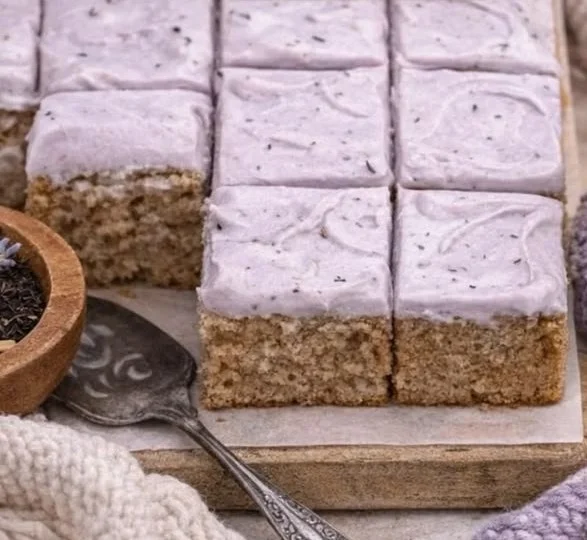
London Fog Cake
Ingredients
Method
- Pulse the loose leaf Earl Grey tea and culinary lavender in a food processor until fine, then sift through a mesh sieve to remove any large pieces.
- Whisk together flour, ground tea/lavender mixture, baking powder, baking soda, and salt in a medium bowl.
- Preheat the oven to 350°F (175°C), grease a 9x9 inch pan, and line it with parchment paper.
- Cream the softened butter and granulated sugar on high speed for about two minutes until pale and fluffy.
- Beat in the eggs one at a time, followed by the vanilla bean paste until fully incorporated.
- Gradually add the buttermilk and dry mixture on low speed, alternating between them until just combined.
- Pour the batter into the prepared pan and bake for 30 to 35 minutes until the top is golden and a toothpick comes out with a few moist crumbs.
- Heat the milk for the soak until steaming, steep the Earl Grey tea and culinary lavender for 15 minutes, then strain.
- Stir in the condensed milk and vanilla, then let cool slightly.
- Trim a thin layer off the top of the cooled cake, poke holes across the surface, and pour the warm milk soak over it.
- Beat the frosting butter for five minutes until light, then add cold cream cheese, sifted ground lavender, powdered sugar, and vanilla and mix until fluffy.
- Add optional purple food coloring for a visual touch.
- Frost the cooled and soaked cake with lavender frosting and let it sit at room temperature for 20 minutes before serving.
- Serve with a pot of strong Earl Grey or lightly spun milk tea.