Low Carb Mongolian Ground Beef Cabbage
I remember the first time I wanted something warm and savory but low on carbs; that craving led me to adapt a stir-fry I already loved into something simpler and faster. While experimenting, I referenced a low-carb take on Mongolian beef and cabbage and then stripped it down to what worked for my weeknights. A…
I remember the first time I wanted something warm and savory but low on carbs; that craving led me to adapt a stir-fry I already loved into something simpler and faster. While experimenting, I referenced a low-carb take on Mongolian beef and cabbage and then stripped it down to what worked for my weeknights.
A short ingredient sketch before the kitchen chaos: I used a pound of ground beef as the base, about half of a small onion finely chopped for sweetness, roughly three cups of shredded green cabbage for bulk and texture, and three cloves of garlic to punch it up. For the sauce I balanced salty and tangy with two tablespoons of soy sauce (or coconut aminos if I wanted less sodium), a tablespoon each of sesame oil and rice vinegar, and a teaspoon of ground ginger for warmth. I sometimes sprinkle a quarter teaspoon of red pepper flakes while cooking; salt and black pepper get used sparingly. For finishing touches I slice two green onions and toss on a tablespoon of toasted sesame seeds when I feel fancy.
How I cooked it (a conversational method rather than strict steps): I heat a large skillet until it’s hot but not smoking, then add the beef. I break it up and let it brown until most of the pink is gone, which takes around five to seven minutes. I push the beef to one side, add a tiny splash of oil if the pan is dry, and toss in the diced onion. When the onion softens I stir in the minced garlic and let it bloom for just thirty seconds so it doesn’t burn. I combine the sauce ingredients in a small bowl while the aromatics finish.
The cabbage goes in next. I prefer adding it straight into the skillet with the beef rather than wilting it separately; the cabbage will release moisture that deglazes the pan and folds into the flavor. After pouring the soy-sesame-rice vinegar mix over everything, I crank the heat up a bit and let it bubble. If the mixture seems watery I keep stirring and cooking until the liquid reduces to a glossy coating—usually another three to five minutes. If I want heat, I toss in the red pepper early; if not, I save it as a table option. Final seasoning with salt and black pepper is brief because the soy already contributes sodium.
Timing and textural notes: total active time is about twenty minutes. The cabbage should be tender but still have a little bite; overcooking makes it limp and watery. I like crisp edges on the beef for contrast. If the pan looks dry before the cabbage cooks through, a splash of water helps carry the steam; if it looks too wet, a minute over high heat cures it.
A few practical variations I use from time to time: swap ground beef for ground pork or turkey if I want a different flavor profile, and switch the soy to coconut aminos for a milder, slightly sweet finish. For a nuttier aroma I sometimes toast the sesame seeds in a dry pan first. When I want to bulk it up without carbs I add extra shredded cabbage or a handful of sliced mushrooms. If I want a more classic Mongolian edge, I check the original adaptation for inspiration and then pick elements that suit my pantry.
Storage and make-ahead thoughts: this reheats well in a skillet on medium heat; the cabbage softens further after refrigeration, so I usually plan to eat leftovers within three days. Freezing is possible but I lose some of the cabbage’s texture when thawed, so I avoid that unless I’m desperate.
A couple of tips I learned the hard way: don’t overcrowd the pan—browning is flavor. Taste as you go because soy and vinegar strengths vary by brand. And if you like a glossy sauce, resist adding too much liquid up front; patience with reduction makes all the difference.
I enjoyed the straightforward aroma and quick turnaround, but I noticed that the cabbage releases more water than I expected, which required extra cooking time to get a saucy coating rather than a soupy skillet.
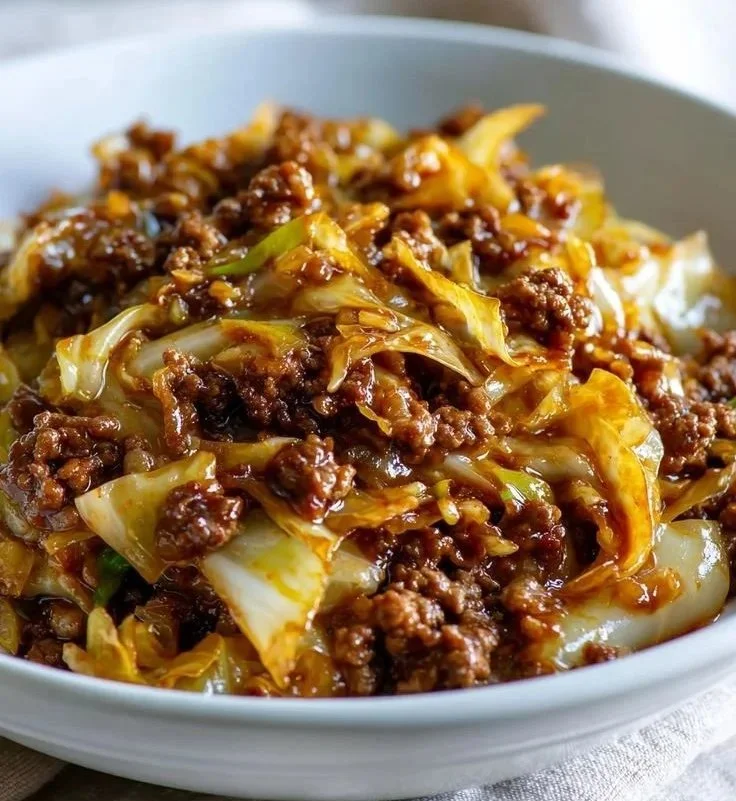
Low-Carb Beef and Cabbage Stir-Fry
Ingredients
Method
- Heat a large skillet until hot but not smoking.
- Add the ground beef and break it up. Brown until most of the pink is gone, about 5-7 minutes.
- Push the beef to one side of the skillet. If the pan is dry, add a tiny splash of oil and then toss in the diced onion.
- Once the onion softens, stir in the minced garlic and let it bloom for 30 seconds.
- Combine the sauce ingredients in a small bowl while the aromatics finish cooking.
- Add the shredded cabbage directly to the skillet.
- Pour the sauce over the mixture and increase the heat slightly to let it bubble.
- Stir and cook until the liquid reduces to a glossy coating, about 3-5 minutes.
- If desired, add red pepper flakes for extra heat.
- Season briefly with salt and black pepper before serving.