Mango Mousse Cake
The First Time I Made It I remember the afternoon I decided to try Mango Mousse Cake for the first time: sunlight pooling on the counter, the kitchen smelling faintly of butter and sugar, and a stack of mangoes that had ripened faster than I expected. I was trying to impress a friend who always…
The First Time I Made It
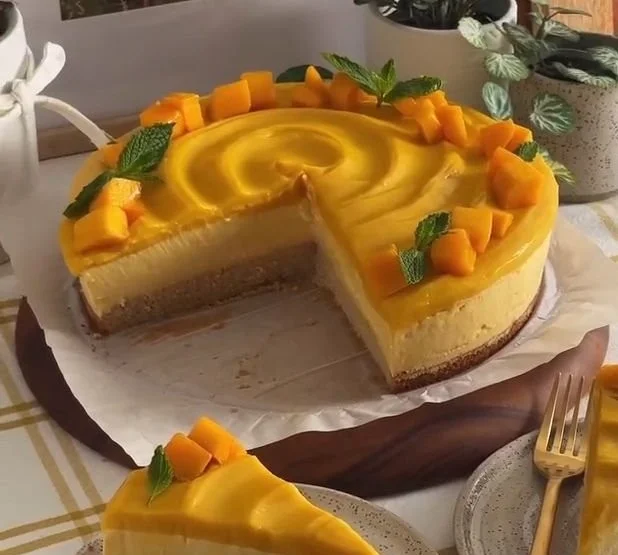
I remember the afternoon I decided to try Mango Mousse Cake for the first time: sunlight pooling on the counter, the kitchen smelling faintly of butter and sugar, and a stack of mangoes that had ripened faster than I expected. I was trying to impress a friend who always showed up with homemade tarts, and I wanted something light, fruity, and a little bit theatrical. It turned out better than I dared hope — the sponge was tender, the mousse cloud-like, and the top shimmered with glossy mango slices. If you like layered desserts, you might also enjoy how this compares to a rich chocolate raspberry mousse cake I often make for holidays, which is where I first learned to balance mousse textures chocolate raspberry mousse cake.
Gathering What You’ll Need
I never start a recipe without laying out the essentials, and for this cake I keep the list simple so it feels achievable even on a busy day. You want 1 cup all-purpose flour, 1/2 cup sugar, and 1/2 cup unsalted butter softened so it creams easily. Two large eggs, 1/2 cup milk, 1 teaspoon baking powder, and 1 teaspoon vanilla extract make the little sponge — nothing fancy, just reliable pantry staples. For the mango magic you need 1 1/2 cups ripe mango puree, and then 1 cup heavy cream and 1/4 cup powdered sugar to turn that puree into mousse. I finish with 1/2 cup mango curd (eggless) for a glossy top and fresh mango slices for garnish. It’s the kind of ingredient list that looks longer when written down than it feels while you’re actually cooking.
Baking and Whipping (the fun part)
Once you’re ready, preheat the oven to 350°F (175°C). Grease and flour a cake pan so the sponge releases cleanly later. I usually set the pan on a towel so it does not slide, and that helps me forget about it while I prepare the rest. In a mixing bowl, beat together the butter and sugar until light and fluffy; you want it pale and airy, which traps the little air pockets that make the cake tender. Then add the eggs, milk, and vanilla extract and mix well so everything looks cohesive. Gradually add the flour and baking powder, mixing until smooth; don’t overwork it or the cake will be dense. Pour the batter into the prepared cake pan and bake for 25 to 30 minutes or until a toothpick comes out clean. I always tap the toothpick in the middle and near the edge because ovens can have hot and cool spots. Let it cool completely before you do anything more.
While the cake is cooling, make the mousse. To make the mango mousse, whip the heavy cream and powdered sugar until soft peaks form. This is a moment to pay attention: stop when the cream holds its shape but still has a little sheen. Gently fold in the mango puree so the mousse stays airy and doesn’t deflate. Once the cake has cooled, spread the mango mousse over the top and refrigerate until set. I put mine in the fridge for at least two hours, though overnight is even better. Finally, top with eggless mango curd and garnish with fresh mango slices before serving. The curd adds a vibrant tang that contrasts the sweet mousse and gives the cake that finished, glossy look.
Little tricks that save the day
I’ve learned a few small things that make this dish consistently good. First, let the butter come fully to room temperature; it beats into sugar much more quickly and gives you that fluffy base for the cake. Second, when whipping the cream, chill your bowl and beaters for ten minutes if you have time — it helps the cream reach soft peaks faster and stay stable longer. Third, when folding mango puree into whipped cream, add just a spoonful first to loosen the cream, then fold in the rest gently. If your mangoes are overly fibrous, strain the puree through a fine sieve to keep the mousse silky. These are simple moves but they change texture and mouthfeel in a noticeable way. If you’re curious about a parfait-style take on fruit and cream, I sometimes turn leftover mousse into layered cups similar to what I use for strawberry treats chocolate strawberry mousse cake parfaits.
How to tell it’s right, what to serve, and variations
You’ll know the cake is done when the sponge springs back lightly to the touch and a toothpick comes out clean or with a few moist crumbs. The mousse should be set but still jiggly in the center — it should not feel like pudding, nor should it be rock solid. I love serving this cake with lightly toasted coconut flakes or a scoop of vanilla bean ice cream; the heat from a strong espresso cuts through the sweetness nicely, too. For leftovers, cover the cake tightly with plastic wrap or keep it in an airtight container in the refrigerator; it keeps beautifully for up to three days, though the fresh mango topping is best eaten within a day. If you want to make it ahead, bake the sponge the day before and keep it wrapped; assemble the mousse layer the morning you plan to serve.
There are a few variations I recommend. For a tropical twist, fold a tablespoon of lime zest into the mousse for brightness. If you need a lighter version, swap half the heavy cream for whipped aquafaba to make the mousse vegan-friendly, and use a store-bought vegan butter and egg replacer for the sponge. Another favorite is to add a thin layer of crushed ginger cookie crumbs between sponge and mousse for texture and a spicy counterpoint. If gluten is a concern, I often think about recipes like a gluten-free chocolate mousse cake to see how to adapt flours and baking times, and that comparison has helped me tweak this sponge successfully gluten-free chocolate mousse cake.
A Few Things I’ve Learned
Why do I love this recipe so much? It’s an easy way to make something that looks like it took far longer than it did. The colors are summer on a plate: pale golden cake, sunset-orange mousse, and bright mango slices. The textures — the soft crumb, the cloud of mousse, the glossy curd — all play together. One of my favorite memories is serving this at a small dinner party; as I cut the first slice, someone remarked that the cake tasted like a mango cloud, and that description stuck. My gentle insistence on cooling the cake fully, whipping steady soft peaks, and taking a moment to slice mangoes thinly are the little habits that keep this dessert reliably delightful.
Conclusion
If you want a detailed variation and step-by-step inspiration, I first adapted ideas from a lovely version I saw on Woman Scribbles a version on Woman Scribbles. For a different baker’s perspective with photos that make you want to try it immediately, Cakesperiments has a visual walk-through that I often glance at for plating ideas a visual walk-through at Cakesperiments. And if you’re interested in how this recipe became a little internet sensation, Allison Chen’s write-up about a viral mango mousse cake recipe is an entertaining read that inspired some of my finishing touches the viral mango mousse cake recipe by Allison Chen.
Give it a try on a sunny afternoon and tell me how it turns out. If your sponge comes out especially tender or your mango slices glisten just so, I’ll know you’ve hit the sweet spot.
Mango Mousse Cake
Ingredients
Method
- Preheat the oven to 350°F (175°C). Grease and flour a cake pan.
- In a mixing bowl, beat the softened butter and sugar together until light and fluffy.
- Add the eggs, milk, and vanilla extract; mix until cohesive.
- Gradually add the flour and baking powder, mixing until smooth without overworking it.
- Pour the batter into the prepared cake pan and bake for 25 to 30 minutes, or until a toothpick comes out clean.
- Let the cake cool completely.
- While the cake cools, whip the heavy cream and powdered sugar until soft peaks form.
- Gently fold the mango puree into the whipped cream to maintain airiness of the mousse.
- Spread the mango mousse over the cooled cake and refrigerate for at least 2 hours until set.
- Top the set mousse with mango curd and garnish with fresh mango slices before serving.