Mini Lemon Cakes With Lavender Glaze
How I Fell For These Tiny Cakes The first time I made Mini Lemon Cakes With Lavender Glaze I was chasing a memory of a neighbor’s porch tea: a small scalloped plate, a pile of tiny, sun-bright cakes and the faint perfume of lavender in the air. I still laugh at how tiny they are…
How I Fell For These Tiny Cakes
The first time I made Mini Lemon Cakes With Lavender Glaze I was chasing a memory of a neighbor’s porch tea: a small scalloped plate, a pile of tiny, sun-bright cakes and the faint perfume of lavender in the air. I still laugh at how tiny they are compared with my usual grand desserts, but they pack so much personality. If you want to see the recipe that started me down this path, I first stumbled across a version online and compared notes with a few different takes, including one I bookmarked as Mini Lemon Cakes With Lavender Glaze because friends kept asking for the link.
On paper, the ingredient list is modest: 1 1/3 cups all-purpose flour, 1/2 tsp. kosher salt, 1/8 tsp. baking soda, 1/2 cup unsalted butter, softened, 2/3 cup granulated sugar, 1/3 cup packed light brown sugar, 1 Tbsp. grated lemon zest (from 2 lemons), 2 large eggs, at room temperature, 1/4 cup sour cream, at room temperature, 1/4 cup whole milk, at room temperature, 1 tsp. vanilla extract. For the glaze you only need 1/4 cup whole milk, 1/2 tsp. culinary lavender, 1 1/2 cups powdered sugar, 1/4 tsp. kosher salt, 1/8 tsp. vanilla extract, and milk as needed to adjust consistency. Edible flowers and lemon zest are lovely for garnish. Saying the ingredients out loud makes it sound almost too simple, but it’s the tiny measurements and the gentle handling that make these special.
The Secret Behind the Bright Lemon Flavor
What gives these mini cakes their sunny personality is not just the lemon zest but the way I fold everything together. I use 1 Tbsp. grated lemon zest from 2 lemons and add it to the butter and sugars while creaming so the oils release and the whole kitchen smells of citrus. I once adapted a version that browned the butter and loved the deeper nuttiness so much I kept a link to those brown-butter variations in my recipe notes as mini brown butter lemon cakes for when I want a more caramel edge.
A couple of tips I always share right here: let the eggs and dairy come to room temperature so the batter emulsifies smoothly; measure flour with a spoon-and-level method so the crumb stays tender; and if you want extra lemon punch, a teaspoon of lemon extract will not hurt. When I grate zest, I use a microplane and stop before the white pith to keep bitterness out. The bright pop of lemon should be sunny, not sharp.
Part 1: Make the Lemon Cakes
I preheat the oven to 350°F and start by whisking the dry trio together: 1 1/3 cups all-purpose flour, 1/2 tsp. kosher salt, and 1/8 tsp. baking soda. In my stand mixer I cream 1/2 cup unsalted butter, softened, with 2/3 cup granulated sugar and 1/3 cup packed light brown sugar until it looks paler and a touch fluffy. Then I stir in the 1 Tbsp. grated lemon zest so it flecks the butter like confetti.
Next come 2 large eggs, at room temperature, added one at a time, and then 1 tsp. vanilla extract. I alternate adding the dry mixture with 1/4 cup sour cream, at room temperature, and 1/4 cup whole milk, at room temperature, folding gently so I do not overwork the batter. The texture should be thick but spoonable, not dense. If you like things extra smooth, scrape the bowl once or twice and give it a final, gentle fold.
I spoon the batter into a greased mini bundt or mini muffin tin, filling each cavity about two-thirds full. You can hear the little plops of batter land and that sound always makes me grin. Bake until they’re golden at the edges and a toothpick inserted in the center comes out clean, about 12 to 15 minutes depending on your pan and oven. My rule for "done right" is not just the toothpick; the tops should spring back gently when touched and the aroma should be that mix of warm lemon and butter. Let them cool in the pan for a few minutes, then turn out to finish cooling on a rack.
When I want to change the rhythm of baking entirely, I make larger versions or even try the mini cheesecake approach for a different texture and presentation; if that tempts you, I keep a record of my cheesecake experiments at mini cheesecakes with vanilla wafer crust for reference.
Part 2: Make the Glaze and Serve
While the cakes cool, I make the lavender glaze. Heat 1/4 cup whole milk gently with 1/2 tsp. culinary lavender until it is warm and fragrant, not boiling. Let it steep for about 10 minutes, then strain out the buds so the glaze is smooth. In a bowl whisk together 1 1/2 cups powdered sugar, 1/4 tsp. kosher salt, and 1/8 tsp. vanilla extract, then whisk in the lavender-infused milk a little at a time. You want a glaze that is pourable but not runny; add milk as needed to reach that sheen that drips slowly off a spoon.
When the cakes are cool, place them on a wire rack with a tray underneath and spoon the glaze over, watching it pool and run into pretty drips. I scatter a bit of fresh lemon zest and an edible flower on top while the glaze is still tacky. The first time I glazed a batch for my mother she inhaled and said it smelled like summer, which is my favorite compliment. Serve them with a fragrant tea, or for an evening treat, a glass of sparkling wine. The floral notes of the lavender pair surprisingly well with green tea and chamomile.
A Few Ways to Change Them Up
If you want variations, there are a few easy swaps that keep the spirit of the cake. You can brown the butter for a deeper flavor, or fold a spoonful of lemon curd into the center for a burst of tartness. For a more herbaceous twist, replace the lavender with a tiny pinch of finely chopped rosemary if you enjoy savory-sweet contrasts. When entertaining, I sometimes dress them up with candied lemon slices and a sprinkle of finely chopped pistachios for color.
A few practical tips I never skip: strain the lavender so no gritty bits interfere with the glaze, cool the cakes completely before glazing to avoid a melty mess, and if you want shiny, even glaze, pour in one central stream rather than splattering. Also, if you have a crowded oven, rotate the pan halfway through baking for even color.
For storage, these hold well in an airtight container at room temperature for a day or two. If you want to make them ahead, keep the unglazed cakes in a single layer in an airtight container in the refrigerator for up to three days, or freeze them for up to a month; thaw, then glaze just before serving so the glaze remains fresh and glossy. I often make the cakes the day before and do the glaze the morning of a brunch, which saves time and keeps everything lively.
I love this recipe because it is small-scale and immediate. It is the kind of thing you can make in an afternoon and bring to a friend without the fuss of a full cake. The textures are tender and fine, the glaze is luxuriously floral, and the whole thing is deceptively elegant.
Conclusion
If you’d like to compare this home version with a polished magazine take, the original inspiration I adapted is available at Mini Lemon Cakes With Lavender Glaze Recipe – Southern Living.
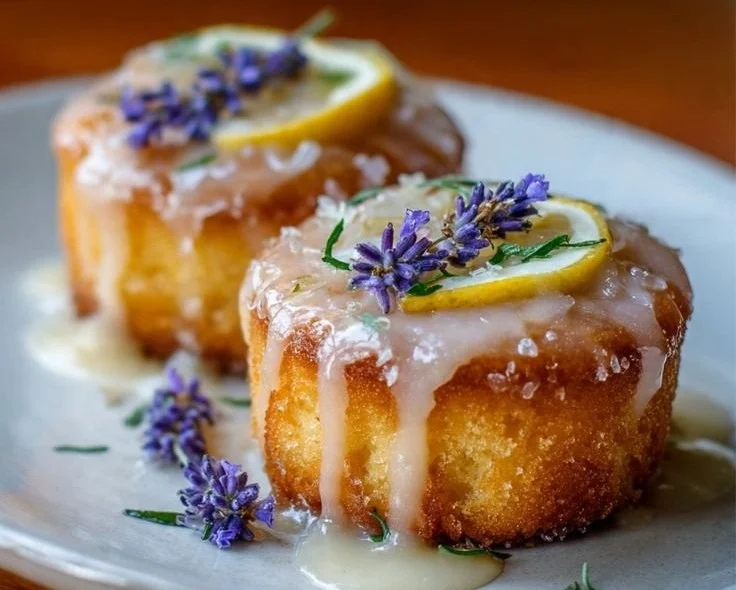
Mini Lemon Cakes With Lavender Glaze
Ingredients
Method
- Preheat the oven to 350°F (175°C).
- In a bowl, whisk together the flour, salt, and baking soda.
- In a stand mixer, cream the softened butter with granulated sugar and brown sugar until fluffy.
- Stir in the grated lemon zest.
- Add the eggs one at a time, mixing well after each addition.
- Add the vanilla extract.
- Alternately mix in the dry ingredients with sour cream and whole milk, folding gently to combine.
- Spoon the batter into a greased mini bundt or mini muffin tin, filling each cavity about two-thirds full.
- Bake for 12 to 15 minutes or until golden and a toothpick comes out clean. Let cool in the pan for a few minutes before transferring to a wire rack.
- Heat the milk with culinary lavender until warm, not boiling, and steep for 10 minutes.
- Strain the lavender and whisk the infused milk into a bowl with powdered sugar, salt, and vanilla extract until smooth.
- Adjust the consistency with additional milk if necessary until pourable.
- Once the cakes are cool, place them on a wire rack and drizzle the glaze over each.
- Garnish with lemon zest and edible flowers while the glaze is still tacky.