Mini Lemon Tart with Lilac Meringue: Spring Dessert
The first spring I made these I still remember the first time I tried to make a spring dessert that actually looked like the season—pale purples, sunny yellows, that bright lemon smell that fills the kitchen. I was inspired by a tiny tart I once had at a friend’s garden party and wanted to recreate…
The first spring I made these
I still remember the first time I tried to make a spring dessert that actually looked like the season—pale purples, sunny yellows, that bright lemon smell that fills the kitchen. I was inspired by a tiny tart I once had at a friend’s garden party and wanted to recreate it for my mother’s birthday. It turned into a ritual: squeezing lemons in the morning light, the soft hum of a mixer in the afternoon, and the tiny puffs of lilac meringue browned with a torch just before we sat down to eat. If you like small, elegant desserts that taste like sunshine, this Mini Lemon Tart with Lilac Meringue: Spring Dessert will be your new favorite. If you want something creamier as a cousin to this idea, I sometimes look back at a recipe for a creamy lemon tart with blueberry sauce I adapted for a picnic.
The Ingredient That Changes Everything
When I tell people what’s really crucial, they expect me to say the freshest lemons or the meringue technique, and both matter. But before we even heat a pan, you need the right lineup of ingredients: 1 1/4 cups all-purpose flour, 1/4 cup powdered sugar, 1/2 cup unsalted butter, cold and cubed, 1 large egg yolk, 1–2 tbsp cold water, 1/2 cup fresh lemon juice (about 2 lemons), 1 tbsp lemon zest, 3/4 cup granulated sugar, 3 large eggs, 6 tbsp unsalted butter, cubed, 3 large egg whites, 3/4 cup granulated sugar, 1/4 tsp cream of tartar, 1/2 tsp vanilla extract, A few drops of violet food coloring or a mix of red and blue, Optional: edible lilac flowers for garnish. I love that list because each item is humble, but together they sing.
A quick note about the lemon: use fresh lemon juice and zest. I learned that the hard way—bottled juice makes the curd dull and flat. If you want to riff on lavender, there’s a lovely take on similar flavors in this mini lemon cakes with lavender glaze (version 2) that gave me ideas for pairing floral notes with citrus.
How the tarts come together
Once you have your ingredients on the counter, the process is almost meditative. In a food processor, pulse flour and powdered sugar. Add the cold butter and pulse until crumbly. Add egg yolk and water; pulse until the dough just comes together. Wrap and chill for 30 minutes. Preheat oven to 350°F (175°C). Roll out dough and press into mini tart pans. Prick the base with a fork, line with parchment and pie weights. Bake for 10–12 minutes until golden. Let cool completely.
Then comes the curd, which is what your kitchen will begin to smell like—sharp and buttery and impossibly bright. In a saucepan, whisk together lemon juice, zest, sugar, and eggs. Cook over medium heat, stirring constantly until thickened (about 8–10 minutes). Remove from heat and whisk in butter until smooth. Let it cool slightly, then pour into tart shells. Chill for 1 hour to set.
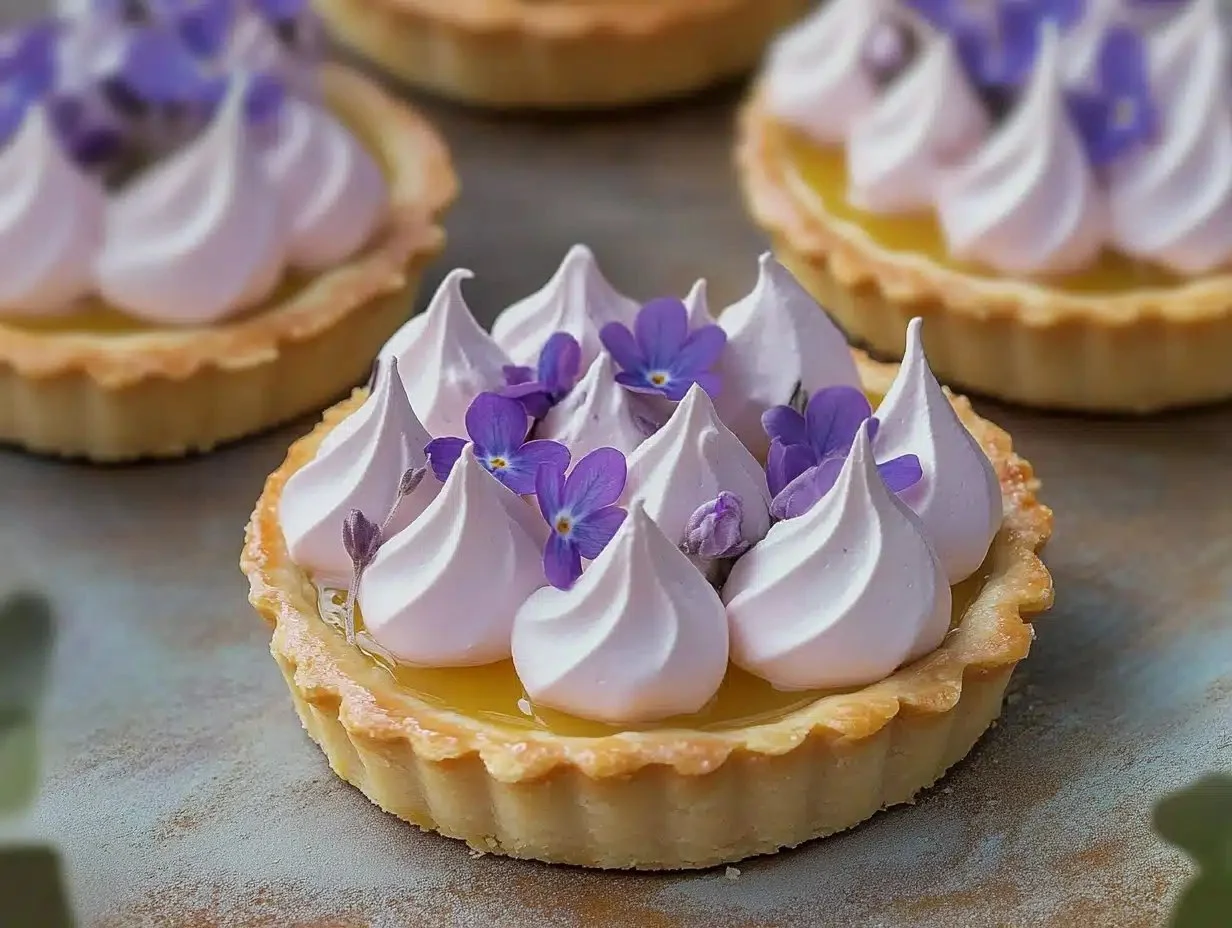
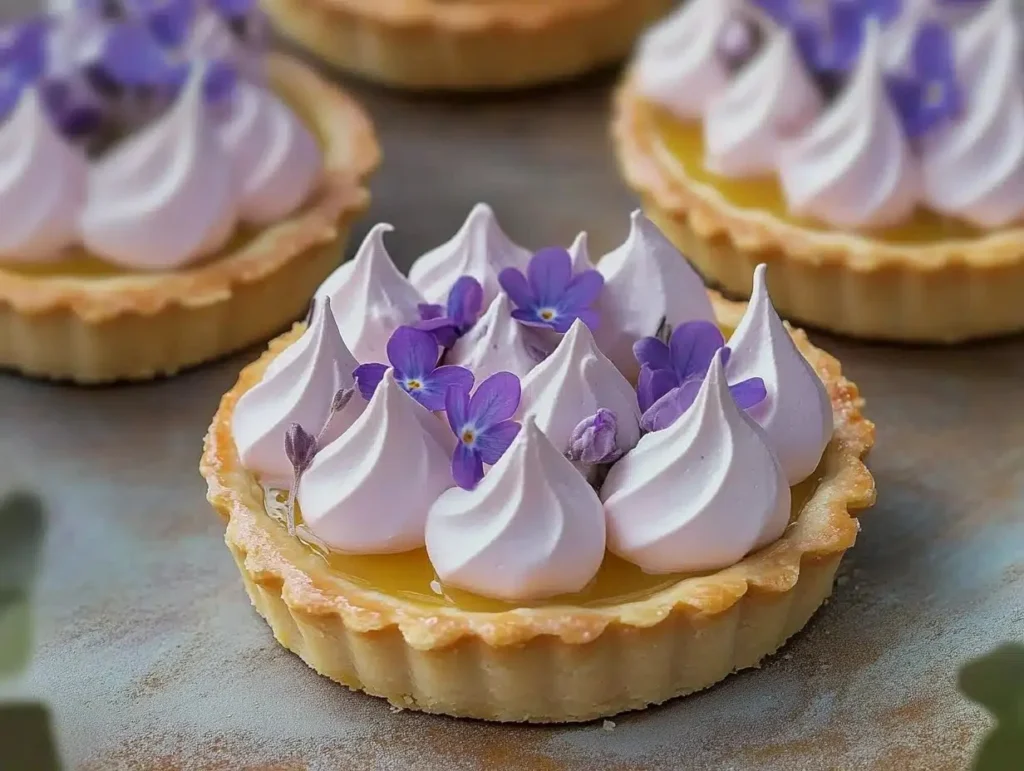
I like to make the meringue while the curd chills so nothing sits too long. In a heatproof bowl over a saucepan of simmering water, whisk egg whites, sugar, and cream of tartar until warm and sugar dissolves. Remove from heat and beat with an electric mixer until stiff peaks form (about 5–7 minutes). Add vanilla and a drop of violet food coloring to achieve a soft lilac hue. Pipe onto chilled lemon tarts using a star tip. Use a kitchen torch to lightly toast the meringue tips. Garnish with edible lilac petals or dried lavender for a stunning finish.
When I describe the steps like this I’m not trying to be prescriptive, I’m saying it’s a flow: prep crust, make curd, chill, whip and pipe. If you follow the order you’ll find it manageable even on a busy afternoon.
A few tricks I’ve picked up
A couple of things I always tell friends: chill the dough well—cold butter is the secret to flaky, tender pastry; if the dough warms as you roll, pop it back in the fridge for 10 minutes. When cooking the curd, stir constantly and use a wooden spoon or silicone spatula so you can feel when it thickens; it should coat the back of the spoon and leave a clear line when you run your finger through it. For the meringue, warming the egg whites and sugar over simmering water until the sugar dissolves makes for a shinier, more stable meringue; that little step cuts down on weeping.
If you’re wondering how you’ll know it’s done right: the tart shells should be evenly golden, not too dark; the curd should be gelatinous and not run all over when you tilt the pan; the meringue should hold stiff, glossy peaks and feel light when you touch it with a spoon. Toasted tips should have tiny brown flecks, not large burnt patches—move the torch constantly.
Variations I love: swap the violet tone for a pale pink by adjusting the coloring, or infuse the butter in the curd with a tiny sprig of lavender (remove before whisking in) for a fragrant twist. You can also skip the torch and quick-broil the tarts for 20–30 seconds under a preheated broiler—watch closely. If you want a simpler take, pipe plain white meringue and sprinkle dried lavender for a rustic look; for a cocktail crowd, serve the tarts with a splash of elderflower liqueur in the tea or prosecco.
If you’re short on time, the dough and curd both keep well and can be made a day ahead. I often bake shells in the morning, make curd in the afternoon, and whip the meringue just before guests arrive. Leftovers keep in the fridge for up to three days in an airtight container (tip: store tarts flat so the meringue doesn’t get smashed). If you need to freeze, freeze the shells only, and fill with fresh curd after thawing.
I learned one memorable lesson when I brought tarts to a neighborhood potluck: people will tell you all evening which one they ate, and someone will always ask for the recipe. That’s the best validation.
The best part about this dish
For me the best moment is torching the meringue—there’s something theatrical about turning those lavender peaks into little golden kisses. The aroma of lemon curd and the soft floral hint from the lilac is such a spring smell it makes everyone pause. Serve these with a pot of jasmine tea or a lightly chilled sparkling wine and they feel like a little celebration. If you want another floral-citrus idea to play with, I sometimes revisit this simpler mini lemon cakes with lavender glaze recipe for small gatherings where I don’t want to fuss with piping.
Conclusion
If you want to read a different take on lemon and lavender meringue tarts and the differences between meringue styles, I found a thoughtful exploration at Lemon-Lavender Meringue Tarts – ZoëBakes – Zoe Bakes.
Mini Lemon Tart with Lilac Meringue
Ingredients
Method
- In a food processor, pulse together the flour and powdered sugar.
- Add the cold butter and pulse until crumbly.
- Add the egg yolk and cold water; pulse until the dough just comes together.
- Wrap and chill the dough for 30 minutes.
- Preheat the oven to 350°F (175°C).
- Roll out the dough and press it into mini tart pans, pricking the base with a fork and lining with parchment and pie weights.
- Bake for 10–12 minutes until golden. Let cool completely.
- In a saucepan, whisk together lemon juice, zest, sugar, and eggs.
- Cook over medium heat, stirring constantly until thickened (about 8–10 minutes).
- Remove from heat and whisk in the butter until smooth.
- Let cool slightly, then pour into the tart shells and chill for 1 hour to set.
- In a heatproof bowl over a saucepan of simmering water, whisk the egg whites, sugar, and cream of tartar until warm and the sugar dissolves.
- Remove from heat and beat with an electric mixer until stiff peaks form (about 5–7 minutes).
- Add the vanilla extract and a drop of violet food coloring.
- Pipe onto the chilled lemon tarts using a star tip.
- Use a kitchen torch to lightly toast the meringue tips.
- Garnish with edible lilac petals or dried lavender.
- Serve with jasmine tea or chilled sparkling wine.