No Knead Cheddar Bread
How I Found This No Knead Cheddar Bread I stumbled on this loaf on a rainy Saturday, standing in the kitchen with nothing but cheese and a stubborn craving for fresh bread. I remember thinking the idea of a no-knead loaf studded with sharp cheddar sounded too good to be true, but within hours my…
How I Found This No Knead Cheddar Bread
I stumbled on this loaf on a rainy Saturday, standing in the kitchen with nothing but cheese and a stubborn craving for fresh bread. I remember thinking the idea of a no-knead loaf studded with sharp cheddar sounded too good to be true, but within hours my apartment smelled like a bakery. If you like the rustic, crunchy crust of a Dutch oven loaf, this is right up your alley — and you can read a version of a similar no-knead cheddar in the Dutch oven at no-knead cheddar in the Dutch oven for inspiration. I use this recipe when I want something impressive without the arm workout.
The Ingredients That Make It Sing
The math on this bread is simple: three cups of all-purpose flour, one and a half cups of lukewarm water, one and a quarter teaspoons of instant yeast, one and a half teaspoons of kosher salt, and a whole cup of sharp cheddar cheese shredded right before you fold it in. I like to finish with about half a teaspoon of flaky sea salt on top for that instant crunchy burst. If you want a primer on similar minimalist doughs that turn out reliably, I sometimes compare notes with a handy five-ingredient crusty panini bread I bookmarked at 5-ingredient crusty panini bread. Freshly shredded cheddar is key — pre-shredded cheese has anti-caking agents that can affect how it melts into the dough.
Making the Dough, really no knead
Here’s how I walk through it in my kitchen. 1. In a large bowl, whisk together the flour, yeast, and kosher salt. Add the lukewarm water and mix with a rubber spatula until a shaggy dough forms. Fold in the shredded cheddar cheese. Cover and let rise at room temperature for 12 to 18 hours. I know that sounds like a long nap for a bowl of dough, but this slow, patient rise is the secret to the open crumb and the deep flavor. Tip: I set my bowl in the warmest corner of the kitchen, not under direct heat; my phone timer helps me remember the window rather than the exact hour.
When that long wait is over, the dough will have bubbles on the surface and feel pillowy. 2. Lightly flour a work surface and scrape the dough onto it. Fold the dough over itself 2-3 times to form a rough ball. Cover loosely and let it rest for another 30 minutes. Preheat a Dutch oven to 450°F (232°C). I always preheat my Dutch oven with the lid on; it’s amazing how much a screaming-hot pot helps form a blistered crust. A little trick I use when the dough is sticky: a bench scraper is worth its weight in gold for scraping and folding without adding too much extra flour.
Getting the Crust and Knowing It’s Done
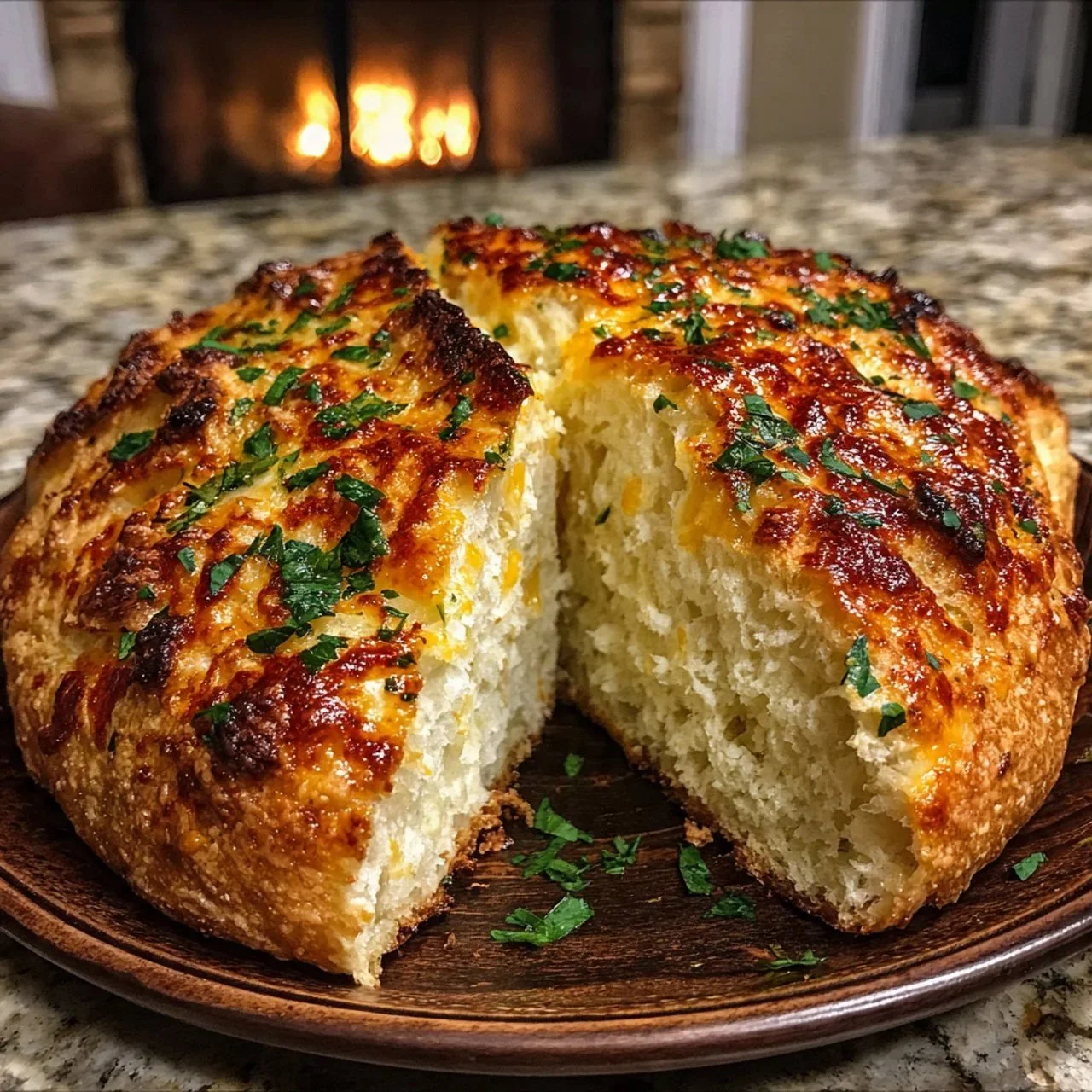
- Transfer the dough into the hot Dutch oven and sprinkle with flaky sea salt. Cover and bake for 30 minutes, then uncover and bake for another 15-20 minutes until golden brown. When I lift the lid after the first 30 minutes, there’s steam, a toasty aroma, and the dough has rounded into a beautiful dome. The final 15–20 minutes without the lid is when the crust really colors and crisps.
How do you know when it’s done right? The crust should be a deep golden brown with a few darker spots; it should sound hollow when you tap the bottom, and the loaf will feel noticeably lighter than it did before baking. If you have an instant-read thermometer, the internal temperature of a fully baked artisan loaf is usually around 200 to 210°F, but the hollow sound test works just as well if you don’t want to use a thermometer. Tip: if the top is browning too quickly during the last stretch, I tent foil loosely to avoid burning while the interior finishes.
Little Twists and What I Love to Serve It With
I love this bread because it’s flexible. Sometimes I fold in finely chopped fresh herbs like chives or thyme with the cheese; other times I try pepper jack for a spicy version. You can swap up to a quarter cup of the flour for whole wheat if you want a nuttier flavor; the dough will be slightly denser but still marvelous. A favorite variation is adding caramelized onions and a little Dijon mustard into the mix for a sandwich-ready loaf. If you want more artisan bread ideas to riff from, I often glance at a trusty recipe for the basics at foolproof artisan no-knead bread.
When it comes to serving, this cheddar loaf is happiest warm. I tear off a hunk and slather it with butter while the cheese is still melty, or slice it thin and use it for grilled cheese with tomato soup. It also makes a gloriously rustic accompaniment to stews and salads. Tip: let it cool for at least 20 minutes before slicing for cleaner cuts and a better interior texture.
A Few Practical Notes I Learned the Hard Way
A couple of things I’d tell a friend: first, use lukewarm water — not hot — so the yeast wakes up without getting shocked. Second, don’t over-handle the dough after the long rise; the whole point is to preserve those air pockets, so be gentle when folding it into a ball. Third, shredding the cheddar yourself yields better melting and integration into the crumb. If you’re short on time, this dough is forgiving — you can shorten the first rise to 8 hours if your kitchen is warm, but expect a slightly tighter crumb.
If you make a double batch and have leftovers, the easiest way to store extra bread is to keep it in a paper bag at room temperature for a day or two, or slice and freeze for longer. To refresh, pop slices in a toaster or reheat the whole loaf in a 350°F oven for 10 minutes. I often make this loaf the day before a gathering because it saves on last-minute fuss and still tastes like it was pulled from the oven that morning.
There have been weekends when I baked this loaf three times in a row — one to eat right away, one to bring to a neighbor, and one to keep in the freezer. My downstairs neighbor still thinks I have a secret bakery. Baking this is like inviting slow magic into the day: a small ritual that rewards your patience.
Conclusion
If you want more cheesy bread ideas and another take on this exact concept, I also like the approach in Cheese Bread (no knead!) – RecipeTin Eats which has slightly different proportions and techniques worth comparing. For a different flavor profile and additional tips on shaping and add-ins, see Cheese Bread {No Knead} – Girl Versus Dough. Give this No Knead Cheddar Bread a try on a quiet weekend — it’s the kind of recipe that makes the kitchen smell like home and produces a loaf people ask you to make again.
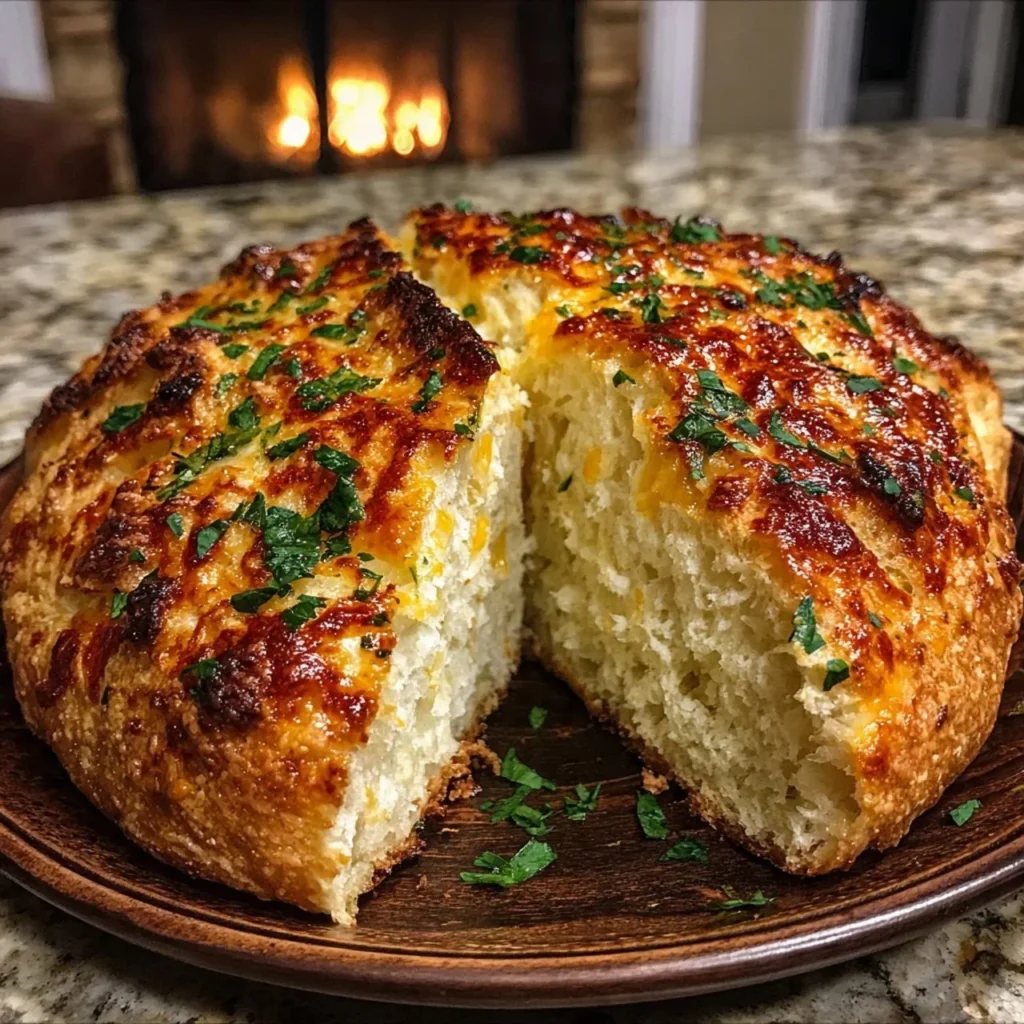
No Knead Cheddar Bread
Ingredients
Method
- In a large bowl, whisk together the flour, yeast, and kosher salt.
- Add the lukewarm water and mix with a rubber spatula until a shaggy dough forms.
- Fold in the shredded cheddar cheese.
- Cover and let rise at room temperature for 12 to 18 hours.
- Lightly flour a work surface and scrape the dough onto it.
- Fold the dough over itself 2-3 times to form a rough ball.
- Cover loosely and let it rest for another 30 minutes.
- Preheat a Dutch oven to 450°F (232°C) with the lid on.
- Transfer the dough into the hot Dutch oven and sprinkle with flaky sea salt.
- Cover and bake for 30 minutes.
- Uncover and bake for another 15-20 minutes until golden brown.