Orange Blossom Cupcakes
Catching you off guard: orange blossom water is not just floral perfume for old-school bakers, it is a tiny, transformative ingredient that can make a humble cupcake feel ceremonial. I say this as someone who has swapped flavors around like a lab tech—sometimes with success, sometimes with soothed lessons—and who once riffed this recipe after…
Catching you off guard: orange blossom water is not just floral perfume for old-school bakers, it is a tiny, transformative ingredient that can make a humble cupcake feel ceremonial. I say this as someone who has swapped flavors around like a lab tech—sometimes with success, sometimes with soothed lessons—and who once riffed this recipe after a weekend of comparing ideas with other cupcakes, from riffing on almond joy cupcakes to trying something spiced and unexpected.
What I used to think, and what changed
I used to think citrus meant lemon or orange zest alone. Then I learned what layering does: zest gives brightness, milk and butter give lifting and tenderness, and a teaspoon of orange blossom water whispers floral that keeps the cake interesting instead of cloying. This is a discovery recipe—simple, forgiving, but subtle enough that one small move (add or omit the floral water) changes the whole personality.
The Ingredients That Changed My Sunday Baking
Here is the full list I use when I make a tray of these cupcakes. Keep them together on the counter before starting so nothing surprises you mid-bake.
- 175 g self-raising flour
- 125 g unsalted butter (softened)
- 150 g caster sugar
- 2 large eggs
- Zest of 1 orange
- 2 tsp orange blossom water
- 60 ml milk
- Pinch of salt
- 200 g full-fat cream cheese (softened)
- 100 g unsalted butter (softened)
- 300 g icing sugar
- 1 tsp orange blossom water
- 1 tsp vanilla extract
Why these specific things
Self-raising flour does the lifting without you needing to measure raising agents; softened unsalted butter blends smoothly with the sugar to trap air when creamed; orange zest is where most of the citrus aroma lives; orange blossom water is potent, so the cupcake uses 2 tsp in the batter and 1 tsp in the frosting for a balanced bouquet. The pinch of salt finishes the sweetness.
CUPCAKES – the method I settled on
- Preheat oven to 180C (160C fan) and line a 12-cup muffin tin. Cream 125 g softened unsalted butter with 150 g caster sugar until pale and fluffy. Beat in 2 large eggs one at a time, scraping the bowl between additions. Stir in the zest of 1 orange and 2 tsp orange blossom water.
- Fold 175 g self-raising flour and a pinch of salt into the wet mixture alternately with 60 ml milk. Do this in three additions, starting and ending with flour; fold until just combined — overmixing loses lightness.
- Spoon batter into cases, filling each about two-thirds full. Bake 18-22 minutes, or until a toothpick comes out with a few moist crumbs and the tops spring back gently when pressed.
- Cool completely on a wire rack before frosting.
FROSTING – how I learned restraint
- Beat 200 g softened full-fat cream cheese with 100 g softened unsalted butter until smooth.
- Add 300 g icing sugar in two additions, then 1 tsp orange blossom water and 1 tsp vanilla extract. Whip until light, taste, and adjust: if it feels too floral, add a touch more icing sugar; if flat, a little extra zest can lift it.
- Pipe or spread on cooled cupcakes and finish with a thin strip of orange zest or a fine sprinkle of finely chopped pistachio.
The quiet tests that taught me timing
- The Fifteen-Minute Mark: check the oven at 15 minutes. A quick visual at this point tells you if yours runs hot.
- Toothpick with a few moist crumbs: that’s done. If it’s wet batter, bake 2-3 minutes more and check again.
- Cool completely before frosting: warm cupcakes will melt the frosting and make it runny.
Three practical tips I now refuse to ignore
- Room temperature eggs and butter make for faster emulsification and no curdled-looking batter. If you’re short on time, give eggs five minutes in warm water to loosen.
- Measure flour by spooning into the cup or using a kitchen scale—packed flour makes dense cakes.
- Taste the frosting before piping. Orange blossom is delicate; you may prefer slightly less than the recipe if you like pure cream cheese tang.
Two substitutions that open doors
- If you can’t find orange blossom water, substitute 1 tsp orange extract plus 1 tsp milk in the batter, and use 1/2 tsp extract in frosting. The result is more citrusy, less floral.
- Use buttermilk instead of milk for a tangier crumb; reduce the baking time by about 1-2 minutes since acid reacts with the raising agents.
What to serve these with
These are elegant enough for afternoon tea and light enough for brunch. Serve with hot Earl Grey or a citrusy herbal tea. For a boozy party pairing, a chilled Prosecco with a hint of orange or an orange-scented aperitif brings out the blossom notes.
How to know you nailed it
A properly done cupcake will have a gentle dome, spring back when touched, and a crumb that’s fine but moist. The frosting should be stable, not weeping; if it slips, it was applied too soon while the cake was warm or it had excess liquid in the cream cheese. The orange blossom should smell present but not loud — imagine the scent of an orange grove at dusk, not a perfume counter.
A small story about patience
I served these once at a small gathering and watched people keep coming back for another—one guest whispered she’d never had a floral frosting she liked until that night. She later admitted she had been skeptical about "flower" flavors, so that is my little personal win: patient restraint yields converts.
Quick variations to try
- Pistachio Orange: fold 30 g finely chopped pistachios into the batter for texture and top with a few whole pistachios.
- Honey-Orange: swap half the caster sugar for mild honey and reduce milk by 10 ml; the cake takes on a soft, golden flavor.
Storing leftovers
Keep cupcakes in an airtight container in the fridge for up to 3 days. If you want to freeze them, freeze unfrosted cupcakes solid on a tray, transfer to a bag, and thaw at room temperature before adding frosting. Frosted cupcakes freeze as well, but place them on a flat tray so the topping doesn’t compress; defrost slowly in the fridge to avoid condensation.
If something goes sideways
- Too dense? Check the flour measurement and mixing. Try adding a tablespoon more milk next time.
- Frosting too thin? Chill it for 20 minutes and re-whip, or add a little extra icing sugar.
- No orange blossom? See substitutions above, or omit and double the orange zest for citrus emphasis.
A couple of honest confessions
I sometimes make half the batch with a light dusting of cinnamon sugar on top instead of frosting for an easier, picnic-friendly option. Also, a few experiments with olive oil in place of butter yielded a silkier crumb, but I always go back to butter for that classic lift.
Conclusion
If you want a concise reminder of the classic idea behind this flavor pairing, I often revisit a vintage Orange Blossom Cupcakes post for inspiration and to remember how small touches turn a cake into something you linger over.
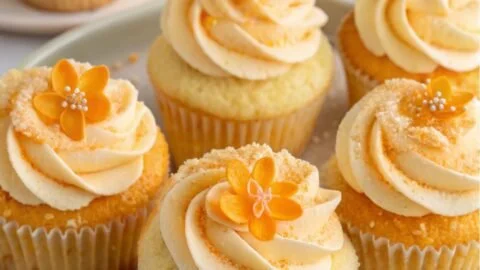
Orange Blossom Cupcakes
Ingredients
Method
- Preheat oven to 180C (160C fan) and line a 12-cup muffin tin.
- Cream the 125 g softened unsalted butter with 150 g caster sugar until pale and fluffy.
- Beat in the 2 large eggs one at a time, scraping the bowl between additions.
- Stir in the zest of 1 orange and 2 tsp orange blossom water.
- Fold in the 175 g self-raising flour and a pinch of salt into the wet mixture alternately with 60 ml milk, doing this in three additions, starting and ending with flour, until just combined.
- Spoon batter into cases, filling each about two-thirds full.
- Bake for 18-22 minutes, or until a toothpick comes out with a few moist crumbs and the tops spring back gently when pressed.
- Cool completely on a wire rack before frosting.
- Beat 200 g softened full-fat cream cheese and 100 g softened unsalted butter until smooth.
- Add 300 g icing sugar in two additions, followed by 1 tsp orange blossom water and 1 tsp vanilla extract. Whip until light.
- Taste and adjust. If too floral, add more icing sugar; if flat, a bit more zest can lift it.
- Pipe or spread on cooled cupcakes and finish with a thin strip of orange zest or a fine sprinkle of finely chopped pistachio.