Orange Cranberry Cookies (Pinwheel Cookies)
How I Found This Orange Cranberry Cookie I still remember the first time the kitchen smelled like warm citrus and tart berries all at once. It was late November, cold outside, and I was trying to recreate a cookie I had at a friend’s holiday party. I tinkered for a few weekends and eventually landed…
How I Found This Orange Cranberry Cookie
I still remember the first time the kitchen smelled like warm citrus and tart berries all at once. It was late November, cold outside, and I was trying to recreate a cookie I had at a friend’s holiday party. I tinkered for a few weekends and eventually landed on what I now call Orange Cranberry Cookies (Pinwheel Cookies). If you like bright orange zest and that unexpected pop of fresh cranberry, this one will become a go-to. If you’re curious about a slightly different twist, I once adapted it toward a sandwich cookie and wrote about that other experiment on a different page, which you can read here: cranberry Nutella sandwich cookies.
Ingredients That Make the Pinwheel Sing
I always start by laying out the ingredients on the counter so I can breathe in their scent and imagine the final cookie. You will need 1 cup butter at room temperature, 1 1/2 cup sugar, 1/2 teaspoon vanilla, and 2 whole eggs. For that bright citrus lift, I use 1 tablespoon fresh orange peel zested right before mixing. The dry base is simple: 3 cups all-purpose flour, 1/4 teaspoon salt, and 1/2 teaspoon baking powder. For the filling you want 1 cup fresh cranberries, 1/4 cup sugar, and another tablespoon fresh orange peel zested for the filling. Seeing the ingredients in one place always makes me feel more confident, like the recipe has personality already.
Rolling, Chilling, and the Filling Trick
Here is what I do, step by step, though I promise it never feels like a chore. In a mixing bowl, I cream together the butter and sugar until fluffy. I mix in the vanilla, the eggs, and that tablespoon of orange peel. Then I gradually add the flour, salt, and baking powder, and mix until just combined. That moment when the dough comes together but is still tender is the point where I stop mixing because I want the crumb to be delicate, not tough. I divide the dough into two parts, wrap each in plastic, and chill in the refrigerator for at least 1 hour. Chilling firms the butter and makes the dough easier to roll without sticking.
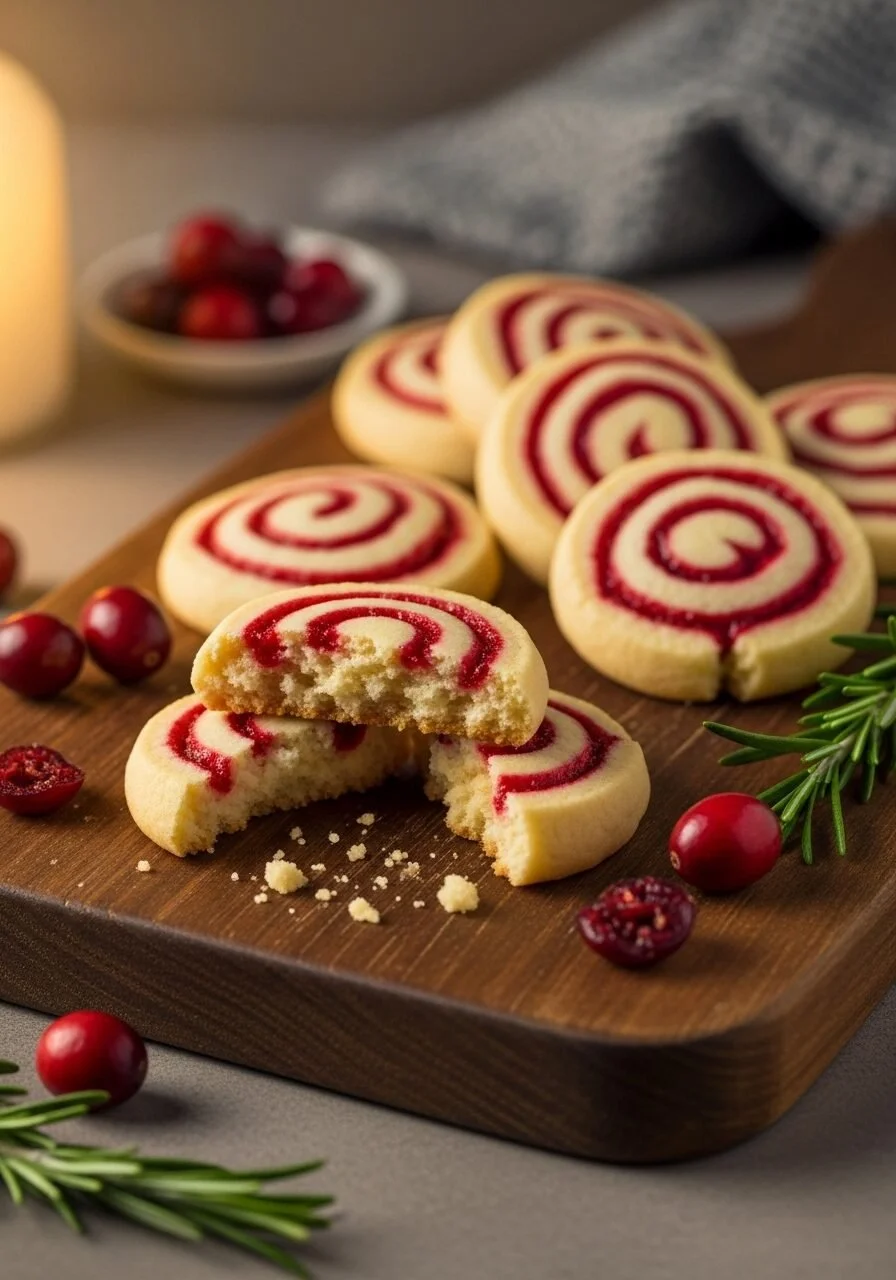
While the dough chills, I make the vibrant filling. For the filling, I blend the cranberries, sugar, and orange peel in a food processor until it forms a paste. It smells like fall and the color is an unreal pink-red that makes me smile every time. When the filling is ready, I roll out one disc of dough into a rectangle; spread half the filling over it, leaving a border so the filling does not seep out when you roll. Then I roll the dough tightly into a log, wrap in plastic, and chill for 2 hours. I repeat with the second disc if I want a second log. A personal tip: if the filling seems too wet, pulse in a tablespoon of flour; if the dough cracks while rolling, let it warm up for 5 minutes and patch it gently with a bit of dough.
I learned another trick from my grandmother: use a silicone mat or lightly floured parchment so the filling does not stick, and roll from the long edge to create a taller pinwheel, which gives a bolder spiral when sliced. If you want to make these ahead, you can wrap the logs tightly and freeze them for up to a month; slice straight from the freezer and add an extra minute or two to the bake time.
When You Know They’re Ready
When the time finally arrives to bake, preheat the oven to 375°F. Slice the chilled logs into 1/2-inch rounds and place them on a baking sheet. The sound of a serrated knife cutting through the cold log is oddly satisfying. Bake for 10-12 minutes until the edges are golden. You will notice the aroma shift in the last few minutes as the orange lifts and the cranberries sing; that is often my cue to peek in the oven. Cool on a rack before serving.
How do you know they are done right? The edges should be golden and slightly crisp while the centers remain tender. If you press lightly on the top, there should be a little spring back. The cookie will firm up a touch as it cools, and the contrast between the sweet, buttery dough and the tart, zesty filling is what I watch for. Another small tip: rotate the baking sheet halfway through baking if your oven has hot spots so the pinwheels brown evenly.
A Few Ways I Make These My Own
I love variations because they keep the recipe fresh. One favorite is to fold 1/2 cup chopped toasted pecans into the dough for crunch. Another is to swap the fresh cranberries for a mixture of dried cranberries and orange marmalade if fresh fruit is scarce; the texture is different but still delicious. For a brighter citrus profile, try replacing the orange zest with lemon and call them lemon-cranberry pinwheels. If you want a prettier presentation for guests, sprinkle a little raw sugar over the rounds before baking so they glint when they come out of the oven.
What to serve them with depends on the moment. For an afternoon treat I make a pot of strong black tea or pour an espresso. At holiday gatherings I set them alongside mulled cider or a light dessert wine. They also make a cheerful breakfast cookie with a smear of ricotta or cream cheese on top.
I have a memory of bringing a tin of these to a winter potluck; someone told me they tasted like “sunlight in a cookie,” and that description stuck. It’s the citrus that seems to brighten everyone’s mood in the middle of darker months.
A Little About Leftovers and Timing
These cookies store well, which is something I appreciate when life is busy. Once cooled, I keep them in an airtight container at room temperature for up to three days. If I need them to last longer, I freeze the logs before slicing, or freeze baked cookies in a single layer and then transfer them to a zip-top bag for up to two months. Thaw baked cookies at room temperature for about 20 minutes. When I know I need them for a party, I often prepare the logs a day ahead and chill them for the full 2 hours and then slice and bake on the day of the event. That makes the morning less frantic and yields better-looking pinwheels.
A couple of final tips I’ve picked up: always zest citrus before juicing because the peel can be slippery; use a fine microplane for the most aromatic zest; and if your cranberries feel intimidatingly tart, the 1/4 cup sugar in the filling is there to balance that exact bite—don’t skip it.
Conclusion
If you want a version of these that’s more like a classic bakery pinwheel, I once compared techniques and inspirations with a recipe that leans into the same cranberry and orange pairing, which is a lovely reference point if you want to tweak proportions or presentation: Cranberry-Orange Pinwheel Cookies. Give these Orange Cranberry Cookies (Pinwheel Cookies) a try when you need something both festive and simple. They look impressive, travel well, and somehow always make a kitchen feel cozier.
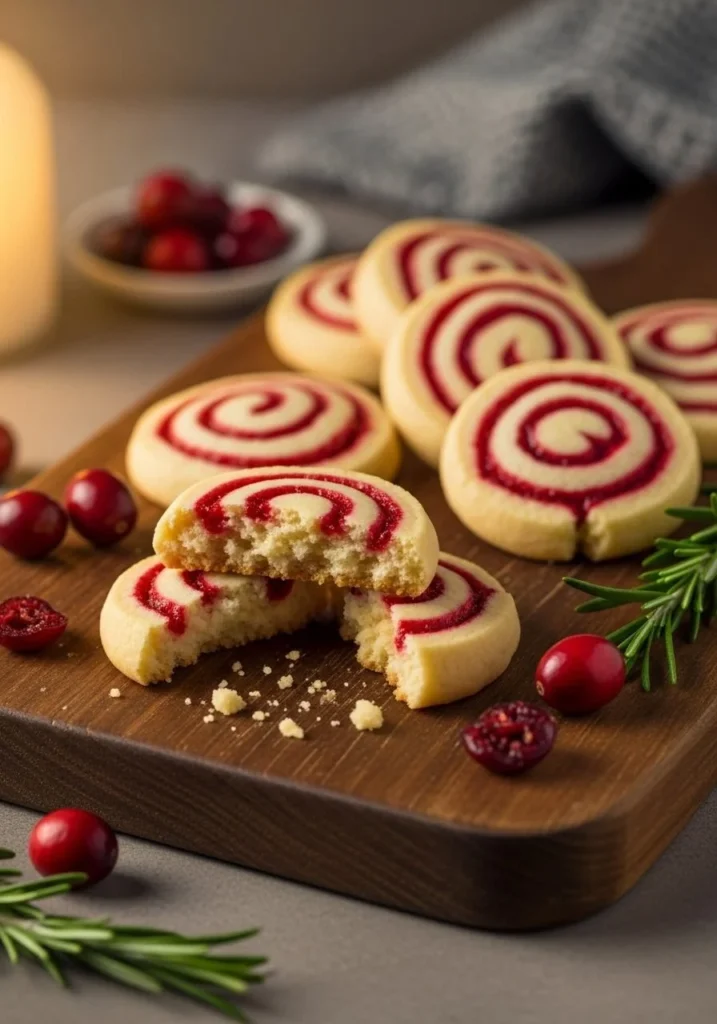
Orange Cranberry Cookies
Ingredients
Method
- In a mixing bowl, cream together the butter and sugar until fluffy.
- Mix in the vanilla, eggs, and orange peel.
- Gradually add the flour, salt, and baking powder, mixing until just combined.
- Divide the dough into two parts, wrap each in plastic, and chill in the refrigerator for at least 1 hour.
- In a food processor, blend the cranberries, sugar, and orange peel until it forms a paste.
- Roll out one disc of dough into a rectangle and spread half the filling over it, leaving a border.
- Roll the dough tightly into a log, wrap in plastic, and chill for 2 hours.
- Repeat with the second disc if desired.
- Preheat the oven to 375°F (190°C).
- Slice the chilled logs into 1/2-inch rounds and place them on a baking sheet.
- Bake for 10-12 minutes until the edges are golden.
- Cool on a rack before serving.