Pineapple Glazed Salmon
I still remember the first time I made Pineapple Glazed Salmon for a casual Sunday dinner; the kitchen smelled like a tropical market and my skeptical partner kept sneaking tastes of the glaze from the spoon. If you want a quick way to brighten a weeknight without fuss, this is it. I actually adapted it…
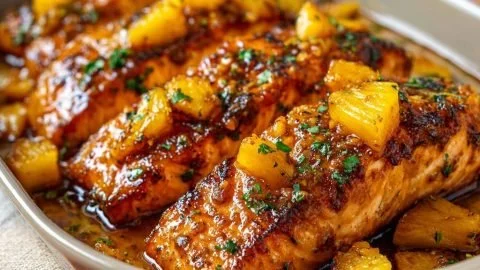
I still remember the first time I made Pineapple Glazed Salmon for a casual Sunday dinner; the kitchen smelled like a tropical market and my skeptical partner kept sneaking tastes of the glaze from the spoon. If you want a quick way to brighten a weeknight without fuss, this is it. I actually adapted it from a few things I’ve tried over the years and it sits somewhere between sweet and savory, with a little tang from rice vinegar that keeps the brown sugar from cloying. If you like recipes that are forgiving but impressive, you might enjoy this version as much as I do, and for a visual reference I often glance at a similar idea on my go-to recipe roundup at this pineapple glazed salmon guide when I need inspiration.
The ingredient list is deceptively simple, which is part of why I love it. You need 4 salmon fillets, approximately 6 ounces each, 1 tablespoon olive oil, 1/2 teaspoon salt and 1/4 teaspoon black pepper to season, and for the sweet-savory punch: 1 cup fresh or canned pineapple, diced and well drained, 1/4 cup packed light brown sugar, 2 tablespoons soy sauce, 1 tablespoon rice vinegar, 1 teaspoon minced garlic, and 1/2 teaspoon grated fresh ginger if you want that warm lift. For finishing, I always sprinkle 1 tablespoon fresh parsley, chopped, over the top because the green color makes it pop on the plate.
The Secret Behind Perfect Pineapple Glazed Salmon
Preheat your oven to 400 degrees Fahrenheit (200 degrees Celsius). Lightly grease a baking dish large enough to hold the salmon fillets without overcrowding. In a small bowl, whisk together the brown sugar, soy sauce, rice vinegar, minced garlic, and grated ginger (if using) to create your glaze. Those few pantry staples are where the magic starts: the soy sauce adds depth, the rice vinegar adds brightness, and the brown sugar helps the glaze caramelize just enough. I like to taste the glaze before it hits the fish, adjusting the salt and tang until it sings.
Getting the Texture Just Right
Pat the salmon fillets thoroughly dry with paper towels. This is important for even cooking and seasoning. Rub each fillet all over with olive oil, then season generously with salt and black pepper. Place the seasoned salmon fillets skin-side down (if skin is on) or flat into your prepared baking dish. Spoon about two-thirds of the pineapple glaze mixture evenly over each salmon fillet. Scatter the diced pineapple around the salmon in the dish. The drying step may feel tedious but it really makes a difference; wet fillets steam instead of roast and you lose that slightly crisp exterior that contrasts so nicely with the glossy glaze.
When I put the dish in the oven I always tell myself to stop hovering, but it only takes 12 to 15 minutes of baking for the salmon to be ready. Bake for 12 to 15 minutes, or until the salmon is just cooked through and flakes easily with a fork. The key to avoiding dry salmon is to remove it from the oven as soon as it reaches this point. It should be opaque throughout but still look wonderfully moist. If you want a lightly caramelized top, I sometimes turn the oven to broil for 1 to 2 minutes after baking, and I do this only if I can watch it the entire time because it can go from perfect to burnt in seconds. If you desire a more caramelized glaze, you can briefly broil the salmon for 1 to 2 minutes after baking, keeping a very close eye on it to prevent burning.
A Few Things I’ve Learned
Remove the dish from the oven. Let the salmon rest in the baking dish for 5 minutes before serving. This allows the juices to redistribute, ensuring a tender and juicy result. When you slide a fork into it, the flakes should separate easily but still be moist; if they look chalky or stringy you’ve gone too far. My rule of thumb is to start checking at 10 minutes if the fillets are on the thinner side. For a slightly different crust I sometimes sear the salmon for a minute in a hot pan before baking, which locks in flavor in a way I learned from a cast-iron skillet method I keep bookmarked at a brown butter and honey glazed salmon post that taught me the value of texture contrast.
The Best Part About This Dish
Garnish with fresh chopped parsley and serve warm with the delicious pan juices and pineapple. The pan juices are syrupy and fragrant; spoon them over rice or roasted vegetables. I usually serve this with jasmine rice and a quick sauté of snap peas, but a bright slaw or even toasted couscous works. If you want a different kind of sweetness, you can substitute maple in similar recipes I like to consult when experimenting with flavors at home, like an easy maple glazed idea I saved to try next time at this maple glazed salmon page.
When Things Don’t Go As Planned
If your pineapple is watery it will dilute the glaze, so make sure that 1 cup fresh or canned pineapple is diced and well drained. If the glaze seems thin, give it a minute on the stove to reduce before you spoon it over the fish. And if you accidentally overbake, shred the fillets and toss them with a bit more glaze and warm rice to make a quick salmon bowl; it still tastes great. For a playful appetizer twist I sometimes cut the pineapple into chunkier pieces and thread them with kielbasa for a party plate, inspired by an old family recipe I adapted from a source like a glazed kielbasa and pineapple bites idea that taught me to think beyond the plate.
Making It Your Own
There are a couple of variations I turn to depending on what’s in my pantry. You can swap the brown sugar for honey for a slightly floral sweetness, or add a splash of orange juice for citrus brightness. If you want to bulk it up, add sliced bell peppers into the baking dish so they roast in the glaze. For a smoky angle try a sprinkle of smoked paprika or a touch of sriracha if you like heat. If you enjoy turning single-dish items into finger foods, I’ve even adapted the glaze to make bite-sized skewers similar to a playful appetizer riff found at another glazed kielbasa with pineapple recipe.
A Few Practical Tips
Always let the fish rest after baking for at least 5 minutes, and taste the glaze before you use it so you can adjust sweetness or acidity. Drain the pineapple well to avoid diluting the glaze. If you have extra glaze, reserve it and warm slightly to pour over the cooked fillets rather than reheating the fish, which can dry it out.
Leftovers and Make-Ahead Notes
This recipe stores well. Cool the salmon completely, then place it in an airtight container with a little of the reserved glaze to keep it moist. It will last in the fridge for up to three days and makes an excellent lunch over greens or mixed into a salad. You can also make the glaze ahead and keep it in the fridge for a week; that saves time on busy nights and lets the flavors mellow.
Conclusion
If you want to explore similar bright, sweet and savory salmon ideas, I like to compare variations such as the Honey Soy Glazed Salmon with Caramelized Pineapples for a richer take, or the Pineapple Salsa Salmon Recipe for a fresher salsa-style finish that pairs wonderfully with this glaze. Give this Pineapple Glazed Salmon a try the next time you want something that looks and tastes like you spent all afternoon cooking, even if you actually started it right after work.
Pineapple Glazed Salmon
Ingredients
Method
- Preheat the oven to 400°F (200°C) and lightly grease a baking dish.
- In a small bowl, whisk together brown sugar, soy sauce, rice vinegar, minced garlic, and grated ginger to create the glaze.
- Pat the salmon fillets dry with paper towels and rub each fillet with olive oil, then season with salt and black pepper.
- Place salmon fillets skin-side down in the baking dish and spoon two-thirds of the glaze over each fillet. Scatter the diced pineapple around the salmon.
- Bake for 12 to 15 minutes or until the salmon is just cooked through and flakes easily with a fork. Optionally broil for 1 to 2 minutes for a caramelized top.
- Remove from the oven and let the salmon rest for 5 minutes. Garnish with fresh chopped parsley and serve with the pan juices.