Pineapple Glazed Salmon
The first time I combined tangy pineapple with a simple soy-and-honey glaze, the kitchen smelled like a tropical takeout. I never set out to replicate anything official, but that moment led me to a riff on a recipe I keep coming back to — a straightforward pineapple-glazed salmon that balances sweet, savory, and heat. If…
The first time I combined tangy pineapple with a simple soy-and-honey glaze, the kitchen smelled like a tropical takeout. I never set out to replicate anything official, but that moment led me to a riff on a recipe I keep coming back to — a straightforward pineapple-glazed salmon that balances sweet, savory, and heat. If you want the source that inspired me, I compared my approach to the version I first bookmarked from a well-loved pineapple-glazed salmon recipe for timing and glaze thickness.
Why I like this dish
Short answer: the glaze clings to the salmon without turning into syrup. Long answer: the acidity of pineapple juice plays well with a salty soy backbone and just enough honey to caramelize; a little oil helps conduct heat and garlic plus fresh ginger give it warmth. I usually prepare enough to feed four people, and I prefer fillets with the skin on for easier searing.
Ingredients (my way of listing)
- Four salmon fillets (about medium-thickness pieces).
- Pineapple juice — roughly one cup will do for making a glossy glaze.
- A splash of soy sauce; think a few tablespoons to quarter-cup range to taste.
- Honey for sweetness — I use about two tablespoons for balance.
- A tablespoon or so of olive oil to help with the pan sear.
- Two cloves of garlic, minced; a teaspoon of freshly grated ginger.
- Salt and pepper to finish, and thinly sliced green onions for garnish.
How I cook it (a narrative-style method)
I start by heating a skillet over medium-high heat and adding the olive oil. Once it’s shimmering I pat the fish dry and season the flesh lightly with salt and pepper; that dryness helps the skin crisp. While the pan warms I whisk together pineapple juice, soy sauce, honey, minced garlic, and grated ginger in a small bowl — this is the glaze base.
Searing the salmon on the skin side first gives me a satisfying crunch; I press each fillet down briefly so the skin makes full contact. After 3–4 minutes I flip and pour the glaze into the pan, letting it bubble and reduce. Spoon the glaze over the fillets as it thickens, watching it go from thin to syrupy in a matter of minutes. If you want a reference for a slightly different balance of sweetness and salt, I sometimes consult another variation of pineapple-glazed salmon to compare proportions and presentation ideas.
A few small technique notes
- Control the heat when the glaze is in the pan; too hot and the honey can scorch.
- If your glaze becomes too thick too quickly, add a splash of water or more pineapple juice and reduce gently.
- To test doneness, I look for the salmon to flake easily with a fork but still be slightly translucent in the center.
Serving and small variations
Serve over steamed rice or wilted greens so the glaze can mingle with the starch or veg. For a brighter edge I sometimes add a squeeze of lime and a scattering of chopped green onions; for more heat, a pinch of red pepper flakes works well. If I’m short on time I’ll mix the glaze and spoon it over the fillets mid-sear rather than making a full reduction — still tasty, just less glossy.
Leftovers, storage, and reheating
Cool leftovers within two hours and store in an airtight container for up to two days. Reheat gently in a low oven (about 275°F/135°C) until warmed through, and avoid microwave nuking unless you don’t mind softer skin. The glaze will re-adhere when warmed slowly.
Trouble I ran into and how I fixed it
At first I over-salted the glaze because the soy sauce I used was high in sodium; I balanced it by adding a touch more pineapple juice and honey. Another time the honey seized and burned — lesson learned: keep the heat moderate and stir constantly once the glaze is in the pan.
A quick tip I obsess over: use fresh grated ginger rather than powdered. The aroma changes everything.
Final thought
I enjoyed the contrast of caramelized-sweet and savory, but I found the glaze will hide delicate seasonings, so I limit other strong flavors when I make this.
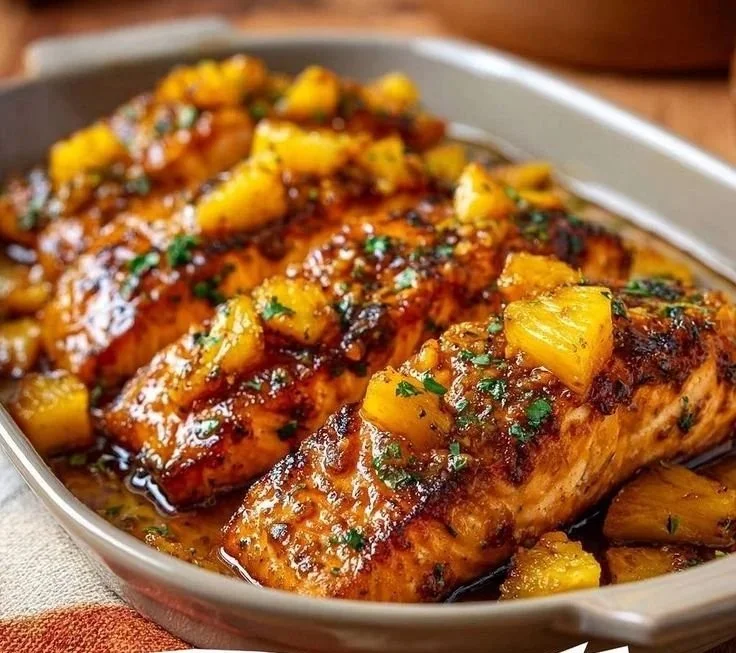
Pineapple-Glazed Salmon
Ingredients
Method
- Heat a skillet over medium-high heat and add the olive oil.
- Pat the salmon fillets dry and season the flesh lightly with salt and pepper.
- In a small bowl, whisk together pineapple juice, soy sauce, honey, minced garlic, and grated ginger to make the glaze base.
- Sear the salmon on the skin side first for 3-4 minutes, pressing down to ensure full contact.
- Flip the fillets and pour the glaze into the pan, allowing it to bubble and reduce.
- Spoon the glaze over the fillets as it thickens.
- Serve over steamed rice or wilted greens, and optionally add a squeeze of lime and chopped green onions.