Pineapple Habanero Hot Sauce
The first time I made a pineapple-habanero sauce it was midnight and the only light in my kitchen came from the stove hood; I wanted something that would wake up scrubbed chicken, dull tacos, and the leftover slices of pineapple in the fridge. I ended up riffing on a bright, vinegar-forward hot sauce and, along…
The first time I made a pineapple-habanero sauce it was midnight and the only light in my kitchen came from the stove hood; I wanted something that would wake up scrubbed chicken, dull tacos, and the leftover slices of pineapple in the fridge. I ended up riffing on a bright, vinegar-forward hot sauce and, along the way, adapted a few ideas I’d used in a mango-habanero honey garlic sauce experiment—lean, sweet, and built around fresh fruit.
Ingredients (what I kept on the counter)
- Fresh pineapple, diced into small pieces so it softens quickly when cooked.
- A small handful of habanero chiles (I started with two and nudged up to four for company with my dinner guests).
- A splash of white vinegar and a little water to help with blending and preservation.
- A spoonful of sugar and a pinch of salt to balance the heat and acidity.
- One clove of garlic, minced—optional but I like the savory backbone it lends.
- A squeeze of lime at the end, if I want the brightness to pop.
A quick note before you start: I roughly halved the fruit-to-heat ratio on my first try and regretted it; when the pineapple simmers the sugars concentrate and make the chiles taste sharper. I eyeball the chilies depending on who’s eating.
How I make it (not a rigid step list)
I chop the fruit and the peppers, then put them into a small saucepan with the vinegar, a quarter cup of water, sugar, and salt. I bring everything to a low boil, then lower the heat and let it bubble gently until the pineapple is soft and the peppers have mellowed—often eight to twelve minutes. Garlic goes in toward the end to keep its raw edge from disappearing completely. After a cooling interval I blitz the mixture until it’s smooth but still has a few tiny pineapple flecks. A final splash of lime brightens the whole jar.
Texture and heat control
If I want a thicker spreadable glaze I reduce the sauce longer on low; for a pourable condiment I strain out a little liquid and stop earlier. I have learned to taste for balance: if it’s too hot, a little more fruit or a hint of sugar calms it; if it’s too sweet, more vinegar or a whisper of extra lime brings it back.
What I do with the sauce
This sauce is my go-to for grilled shrimp and tacos. It also makes a mean dipping sauce for fried plantain and an unexpectedly lovely companion to soft cheeses at a party—think small bites like the air-fried brie idea I sometimes play with when I want something quick and elegant: air-fryer brie and pineapple bites. For a weeknight, I drizzle it over pan-seared fish; once I spooned a bit onto a salmon fillet and it became the best weekday dinner I’d had in months, inspired by a recipe for baked Cajun salmon with creamy avocado lime sauce that I altered on the fly.
Variations I play with
- Swap half the white vinegar for apple cider vinegar for a rounder flavor.
- Roast the pineapple and peppers briefly first for a smokier dimension.
- Use honey instead of sugar if I’m topping roasted carrots or sweeter vegetables.
Storage and a practical heads-up
I keep the sauce in a sterilized jar in the fridge; it lasts about two weeks in my experience. It also freezes well in ice-cube trays so I can thaw a single serving for a quick meal. Remember: the sauce tends to get hotter after resting, so I prefer to err on the milder side while cooking.
A short, messy method (for when I’m rushed)
I simmer briefly, blend, cool, and quickly taste. If I want it saucier, I add a few tablespoons of water and a splash more vinegar. If I want it jammy, I reduce the blend over gentle heat until it clings.
Conclusion
If you’d like to compare an alternate take from another kitchen, I found a nicely balanced recipe at Pineapple Habanero Sauce – Two Cloves Kitchen. One limitation I discovered while making this was that the heat profile changes a lot after resting—what seems tame straight from the blender can bite back after a day in the fridge.
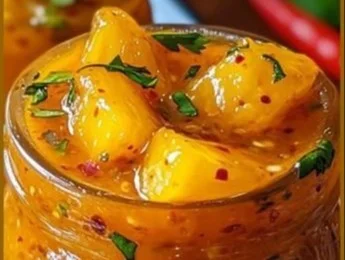
Pineapple Habanero Sauce
Ingredients
Method
- Chop the pineapple and habanero chiles.
- Combine the chopped pineapple, chiles, white vinegar, water, sugar, and salt in a small saucepan.
- Bring the mixture to a low boil, then lower the heat and let it simmer gently for 8 to 12 minutes until the pineapple is soft and the peppers have mellowed.
- Add the minced garlic in the last few minutes of cooking.
- Allow the mixture to cool slightly before blending until smooth, preserving some tiny pineapple flecks.
- Stir in a splash of lime juice to brighten the flavor.