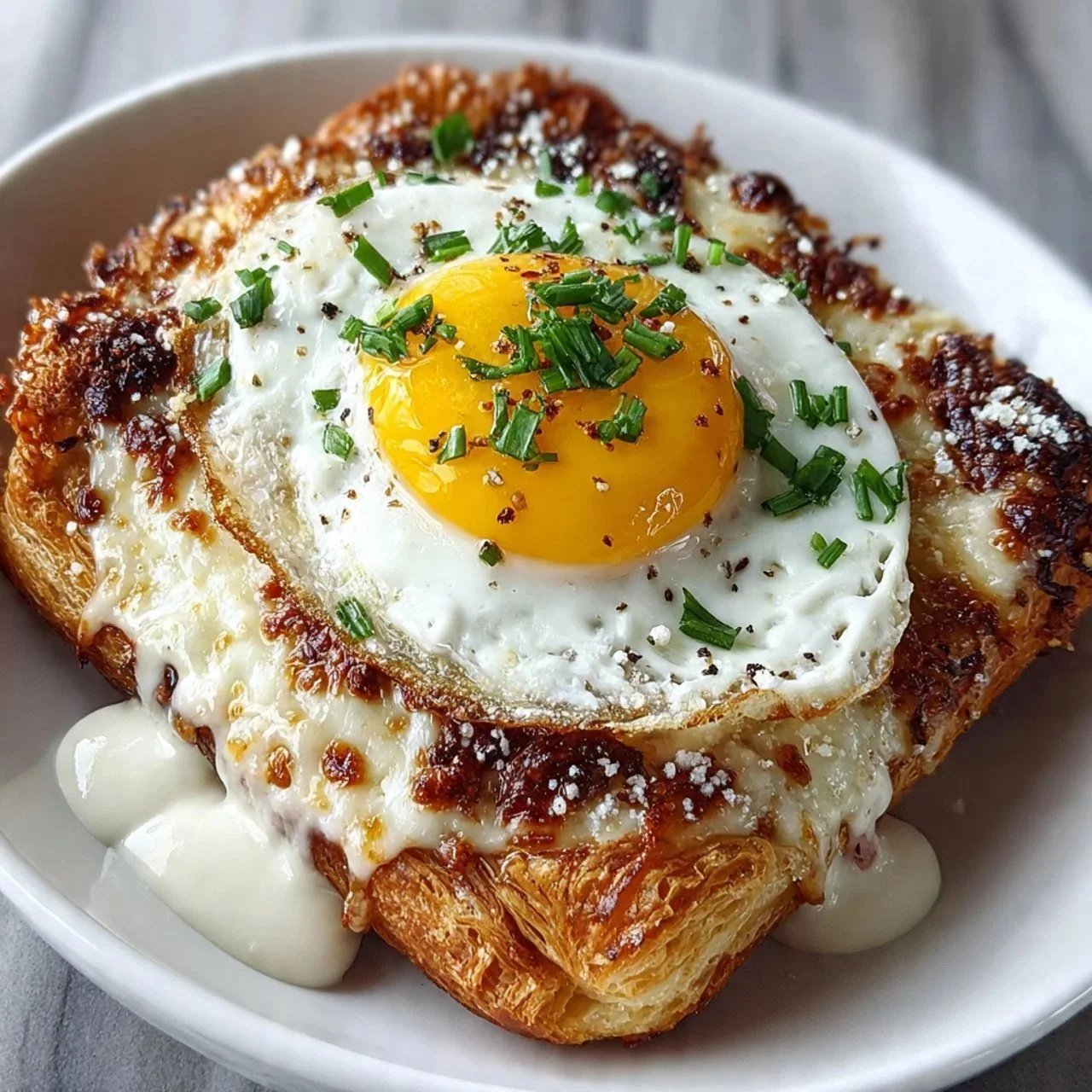
Puff Pastry Croque Madame
I never planned to reinvent a childhood favorite, but one lazy Saturday I found a sheet of frozen puff pastry and the idea of a Croque Madame dancing around in my head. I sketched out a plan on the back of an envelope, then checked a quick online reference to remind myself of proportions; the…
I never planned to reinvent a childhood favorite, but one lazy Saturday I found a sheet of frozen puff pastry and the idea of a Croque Madame dancing around in my head. I sketched out a plan on the back of an envelope, then checked a quick online reference to remind myself of proportions; the puff pastry Croque Madame guide I glanced at helped me remember that a single puff base can carry a surprising amount of filling.
A quick note on what I set out to use: a single sheet of puff pastry as the crisp foundation, a couple of ham slices for savory heft, melting cheese (Gruyère or Swiss are my go-to), a pair of eggs to crown each tart, and a little butter for frying and brushing. I keep mustard on standby if I want a tangy lift, and salt and black pepper to taste. I intentionally keep quantities modest so the pastry puffs without collapsing under too much filling.
Method — told like a small story rather than a strict checklist:
I thawed the pastry on the counter until it was pliable but still cool. While it warmed, I fried the ham lightly in a tablespoon of butter—just enough to render a little fat and caramelize the edges. The cheese slices I stacked, not shredded; I like the way larger slices melt and string between ham and bread. I trimmed the pastry into two rectangles, docked one side with a fork to keep an edge, then layered ham and cheese onto the undocked base. A thin smear of mustard underneath the ham is optional but delightful.
Temperature-wise I preheated my oven to a hot 400°F (200°C) so the layers crisp quickly. I brushed the edges of the top pastry lightly with melted butter and set it over the filling, pressing gently to seal the edges. The tarts went in for 15–18 minutes, until the puff was golden and flaky. In the meantime I fried eggs sunny-side up in the remaining butter, seasoning them simply with salt and pepper; the runny yolk is the mood-maker here, so I aim for whites set and yolks still jiggly.
A practical variation I tried after the first run: instead of laying both cheese slices flat, I folded one slice into the center to create a melty pocket, which reduces grease pooling and gives a slightly denser cheese hit. For other ideas and techniques I sometimes consult sources that expand on assembly and baking notions — for example, here’s a helpful take on a related puff pastry stack: crispy ham and cheese puff pastry stacks.
Serving notes in a rush: slide the fried egg on top of each puff pastry tart right after it comes out of the oven so the heat melds yolk and cheese. I like to sprinkle a tiny pinch of flaky salt over the yolk and grind some black pepper for contrast. Leftovers reheat well in a toaster oven at 350°F (175°C) for 8–10 minutes to revive the crispness; if I know ahead of time I intend to save one, I slightly underbake it at first and finish it later.
A few quick tips I learned by doing:
- Dock the center of the top sheet only if you want the filling to absorb steam; otherwise leave it whole for a more dramatic puff.
- Use a high-quality melting cheese rather than something overly processed; Gruyère gives that classic nutty tone.
- If I’m watching calories, I swap a full tablespoon of butter for a light mist of oil in the pan and still get a decent sear.
I experimented with alternate builds — using shredded cheese instead of slices, or adding a thin béchamel for a richer Croque Madame vibe. The béchamel makes it feel more traditional but also heavier; I preferred the simpler, cleaner layers for a quick brunch. For more classical inspiration on the Croque Madame technique, I sometimes look to variations like this recipe roundup: Croque Madame recipe resources.
Timing and a few micro-decisions decide whether the final bite is glorious or merely good. I found that the key is balancing oven time so the pastry is golden but the interior cheese is molten. If I overbake by chasing color, the pastry puffs beautifully but the cheese can dry; if I underbake, the middle stays gummy.
Conclusion
If you want another home cook’s riff on the same theme, I compared notes with the Crowded Kitchen version, which emphasizes crisp edges and an egg-on-top finish: Crowded Kitchen’s Puff Pastry Croque Madame.
For a slightly different flavor profile and assembly tips, I found the Dash of Savory adaptation useful when I wanted a creamier interior: Puff Pastry Croque Madame | Dash of Savory.
And for a photographed step-through that helped me troubleshoot puff pastry handling, this post was reassuring: Puff Pastry Croque Madame step-by-step.
One personal limitation I discovered while making this is that I tend to rush the cooling of the pastry before slicing, which flattens the delicate layers—next time I’ll let it rest five minutes longer.
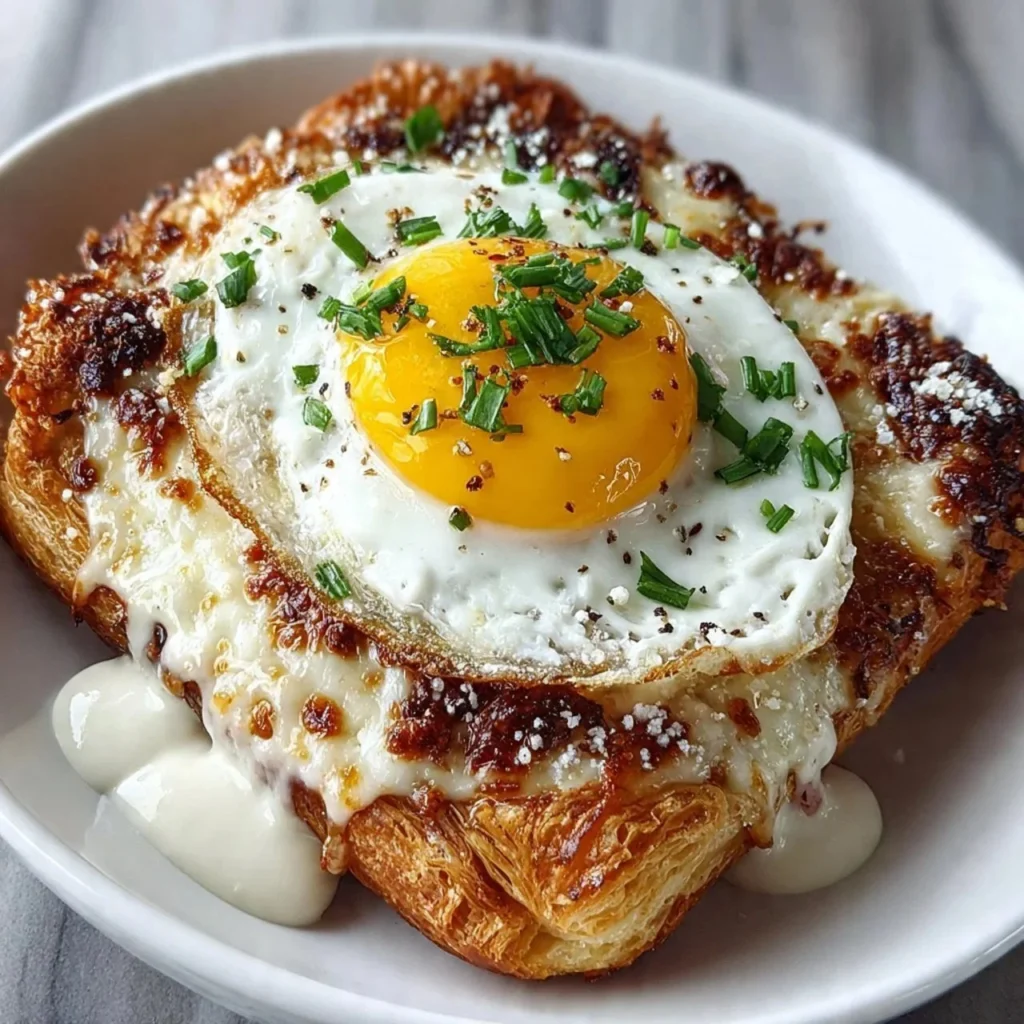
Puff Pastry Croque Madame
Ingredients
Method
- Thaw the puff pastry on the counter until pliable but still cool.
- In a skillet, melt 1 tablespoon of butter and fry the ham lightly to render fat and caramelize the edges.
- Trim the pastry into two rectangles and dock one side with a fork to keep edges raised.
- Layer the ham and cheese on the undocked pastry, optionally spreading a thin smear of mustard underneath the ham.
- Preheat the oven to 400°F (200°C).
- Brush the edges of the top pastry with melted butter and place it over the filling, pressing gently to seal.
- Bake for 15–18 minutes until the pastry is golden and flaky.
- While baking, fry the eggs sunny-side up in the remaining butter, seasoning with salt and pepper.
- Slide the fried egg on top of each puff pastry tart immediately after removing from the oven.
- Sprinkle a tiny pinch of flaky salt over the yolk and grind some black pepper for contrast.
- Leftovers can be reheated in a toaster oven at 350°F (175°C) for 8–10 minutes.