Red Snapper with Creole Sauce
The weeknight fish problem, solved Most weeknights I face the same short list of problems: hungry people, limited hands, and a desire for food that feels special without demanding a lot of attention. This Red Snapper with Creole Sauce answers all three. It gives you bold, layered flavors with a single skillet and about thirty…
The weeknight fish problem, solved
Most weeknights I face the same short list of problems: hungry people, limited hands, and a desire for food that feels special without demanding a lot of attention. This Red Snapper with Creole Sauce answers all three. It gives you bold, layered flavors with a single skillet and about thirty minutes of active time. If you like Gulf Coast-style dishes, you might find a close cousin in the recipe for Gulf Coast red snapper with velvety Creole sauce, which inspired how I balance cream with tomatoes.
I’ll walk you through why this version works for a practical cook, what ingredients do the heavy lifting, and small adjustments to rescue it if the clock or pantry betrays you.
Everything to pull from the pantry
Here is the complete ingredients list you’ll need before you start cooking.
- 2 red snapper fillets
- 1 tablespoon olive oil
- 1 onion, chopped
- 1 green bell pepper, chopped
- 2 cloves garlic, minced
- 1 can diced tomatoes (14.5 oz)
- 1 cup heavy cream
- 2 teaspoons Creole seasoning
- Salt and pepper to taste
- Chopped parsley for garnish
Having these measured and at hand will cut down on fuss. The bell pepper and onion are the backbone of the sauce; garlic and Creole seasoning are the accelerants that make it sing.
The method in plain sight
Follow these exact steps for predictable success:
- Heat olive oil in a skillet over medium heat. Add onion and bell pepper, and cook until softened, about 5 minutes.
- Stir in garlic and cook for an additional minute.
- Add diced tomatoes, heavy cream, and Creole seasoning. Simmer for 10 minutes, stirring occasionally.
- Season the red snapper fillets with salt and pepper. Place them in the sauce, cover, and cook until the fish is opaque and flakes easily with a fork, about 10 minutes.
- Serve the red snapper topped with the Creole sauce, garnished with parsley.
I prefer to use a wide skillet so the fillets lie flat and there’s good surface area for the sauce to reduce. Follow those five steps in order and you’ll get consistent texture and flavor.
Keeping the sauce rich without extra work
If you worry a creamy tomato sauce will separate, here’s the practical approach: once your diced tomatoes have simmered with the Creole seasoning for a few minutes, adding the cream at a lower simmer reduces the chance of curdling. Simmer the combined sauce for the full ten minutes; that time lets acid mellow and the cream integrate.
What to serve it with: steamed rice soaks up the sauce, crusty bread for mopping, or a simple green salad if you want something crisp. For a surprising but fitting finish, I sometimes pair this with an almond cake—try the almond cake with sugared cranberries if you’re planning a slightly fancier dinner.
Practical tip 1: Use canned diced tomatoes with good flavor; the quality of the tomatoes matters more here than any fancy technique.
Practical tip 2: If your skillet is small, cook the fillets one at a time and keep finished portions warm on a plate in a low oven.
Where the snapper actually goes
This is not a seared-then-sauce, plated-for-show recipe. The fish finishes in the sauce. That has two benefits: the sauce flavors the flesh and you avoid an extra pan to clean. Season the fillets simply with salt and pepper so the Creole seasoning in the sauce can do the work.
How to know it’s done right: the flesh should turn opaque and flake easily under a fork. The internal texture is tender, not stringy. If you’re unsure, check the thickest part of a fillet—when it flakes and the flakes separate cleanly, it’s done. Overcooking will make it dry, so set a timer around eight minutes and check early.
Practical tip 3: If your fillets are especially thin, reduce the final cook-in-sauce time to 6 to 8 minutes and check for flaking.
Timing: Ten minutes that matter
Two cooking intervals dominate this dish: roughly five minutes to soften the onion and pepper, and about ten minutes to marry tomatoes, cream, and Creole seasoning. Those ten minutes of simmering are when the sauce comes together and the seasoning becomes cohesive rather than one-note.
A helpful sequence: start the sauce and set a timer for ten minutes. While it simmers, season the fish and get plates or sides ready. That keeps the process efficient and avoids last-minute scrambling.
If you need to swap something
Not everyone has heavy cream or Creole seasoning on hand. Here are small, tested substitutions:
- Swap for one: If you don’t have heavy cream, use a 50/50 mix of whole milk and a tablespoon of butter to approximate richness. It won’t be identical, but it keeps the sauce pleasantly smooth.
- Keep the spice: If you don’t have Creole seasoning, combine paprika, garlic powder, onion powder, cayenne, dried oregano, and a pinch of salt as a quick stand-in.
Variation 1: Add shrimp into the skillet during the last four minutes for a mixed seafood plate. Variation 2: For a lighter twist, halve the cream and add a splash of white wine during the simmer.
Leftovers that behave
Storage and reheating are simple. Cool the fish and sauce to room temperature, then refrigerate in an airtight container for up to two days. Reheat gently on the stove over low heat; if the sauce looks a little separated, stir in a tablespoon of cream or milk to bring it back together.
If you plan to freeze, remove the fish from the sauce and freeze the sauce separately. Texture suffers for the fish after freezing, but the sauce freezes well for up to three months.
Personal touch: I learned this batch-and-freeze trick after a dinner that turned into lunches for the rest of the week. It saved a lot of time and avoided repeated cooking.
Final small adjustments that save the night
- Use a high-quality canned tomato for depth.
- Keep the heat moderate when the cream goes in.
- Check the thicker fillet first to avoid drying the whole plate.
These three quick checks will reduce the usual kitchen anxiety and get you to the table faster.
Conclusion
For an easy, satisfying weeknight that still tastes like you made an effort, this Red Snapper with Creole Sauce delivers—minimal fuss, maximum flavor. If you want to compare techniques or see alternate presentations, the version at Red Snapper with Creamy Creole Sauce – Cook Style Eat offers a creamy take. For a roasted approach that changes the texture and char, consider the take at ROASTED RED SNAPPER WITH CREOLE SAUCE – seafood sherpa. And if you’re curious about pairing seafood with a slightly different sauce and protein, see the combination in Snapper with Shrimp Creole Sauce – LindySez | Recipes.
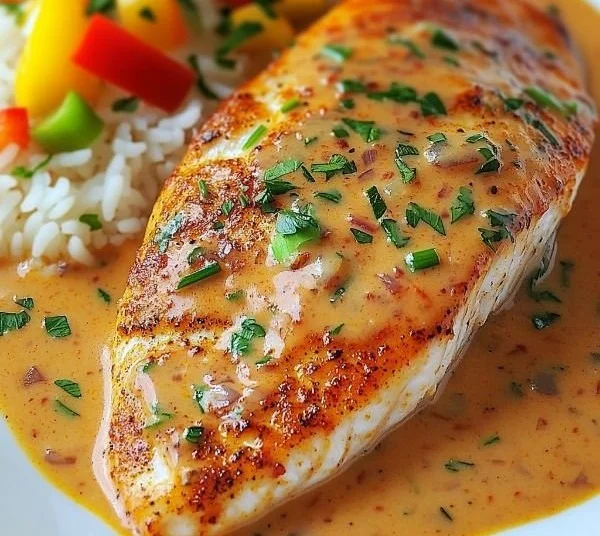
Red Snapper with Creole Sauce
Ingredients
Method
- Heat olive oil in a skillet over medium heat.
- Add chopped onion and bell pepper, and cook until softened, about 5 minutes.
- Stir in minced garlic and cook for an additional minute.
- Add diced tomatoes, heavy cream, and Creole seasoning. Simmer for 10 minutes, stirring occasionally.
- Season the red snapper fillets with salt and pepper.
- Place the fillets in the sauce, cover, and cook until the fish is opaque and flakes easily with a fork, about 10 minutes.
- Serve the red snapper topped with the Creole sauce, garnished with chopped parsley.