Roasted Eggplant Caponata
How I Found Roasted Eggplant Caponata I still remember the first time I made Roasted Eggplant Caponata for a group of friends—there was that irresistible smell of caramelized onion and garlic, a hint of vinegar that cut through the richness, and everyone kept reaching for more. I call this my go-to summer-to-fall dish because it…
How I Found Roasted Eggplant Caponata
I still remember the first time I made Roasted Eggplant Caponata for a group of friends—there was that irresistible smell of caramelized onion and garlic, a hint of vinegar that cut through the richness, and everyone kept reaching for more. I call this my go-to summer-to-fall dish because it is one of those recipes that feels fancy and completely forgiving at the same time. If you like dishes that showcase roasted vegetables, you might also enjoy a similar hearty salad like an amazing quinoa roasted veggie salad, which is how I often serve leftovers alongside grain bowls.
I’ll tell you about the ingredients as if we were in my kitchen gossiping over the stove: 1 large eggplant, cut into 1-inch cubes (Ensure to drain before roasting.), 1.5 cups bell peppers, chopped (Any color preferred.), 1 cup celery, chopped, 1 medium onion, diced, 3 cloves garlic, minced, 1 can diced tomatoes (14 oz), packed in juice, 1/4 cup capers, rinsed and drained, 1/2 cup green olives, chopped, 1/4 cup olive oil (Plus more for drizzling.), 2 tablespoons red wine vinegar (Or lemon juice for a fresh twist.), Salt and pepper (to taste). Saying it out loud like that makes it feel approachable, doesn’t it?
The Ingredient That Changes Everything
If I had to pick one thing that elevates this caponata, it would be the balance between the capers and the green olives. Those salty, briny pops against the mellow, roasted eggplant make each bite sing. But don’t underestimate the eggplant itself. I learned early on to drain the cubed eggplant before roasting; it keeps the texture from going soggy and lets the outside get pleasantly golden. I toss the drained cubes with about 1/4 cup olive oil and a generous pinch of salt, spread them on a sheet tray and let the oven do its magic.
A little story: my grandmother used to press eggplants under a heavy plate to draw out bitterness, and while modern varieties are rarely bitter, that habit taught our family to treat eggplant gently. That translates into one of my tips—roasting gives a smoky sweetness you will love, and it is a much easier route than frying.
Building the Flavor — from Prep to Pan
Preparation matters, but it does not need to be fussy. I chop 1.5 cups bell peppers and 1 cup celery, dice 1 medium onion, and mince 3 cloves of garlic while the eggplant is draining. Then I preheat the oven and roast the eggplant until the edges are browned and slightly crisp. Roasting concentrates flavors and creates texture, and I always drizzle a little extra olive oil before the last ten minutes if things look dry.
While the eggplant is in the oven I start sautéing the onions and celery in the same 1/4 cup olive oil until they are soft and just beginning to color—this is where the base flavor builds. Add the garlic toward the end so it does not burn. When the peppers go in, they should still have some bite; I like noticing the contrast between the silky eggplant and the slightly crunchy vegetables. Then comes the can of diced tomatoes (14 oz), juice and all, which brings a bright, saucy element. Stir in 1/4 cup capers and 1/2 cup chopped green olives, adjust salt and pepper, and splash 2 tablespoons red wine vinegar to let the acidity lift everything.
Combining the roasted eggplant with the sautéed mixture is a gentle process. I fold the golden cubes into the pan and let them simmer briefly so the eggplant takes on the sauce. That stage—Combining—is when the kitchen starts to smell like a little neighborhood trattoria: sweet tomatoes, tangy vinegar, and that savory olive-capercapacity. A useful tip: if the mixture looks too dry, add a spoonful of the tomato juice or a drizzle of olive oil; if it’s too wet, let it reduce a few minutes.
When It’s Done and What I Serve It With
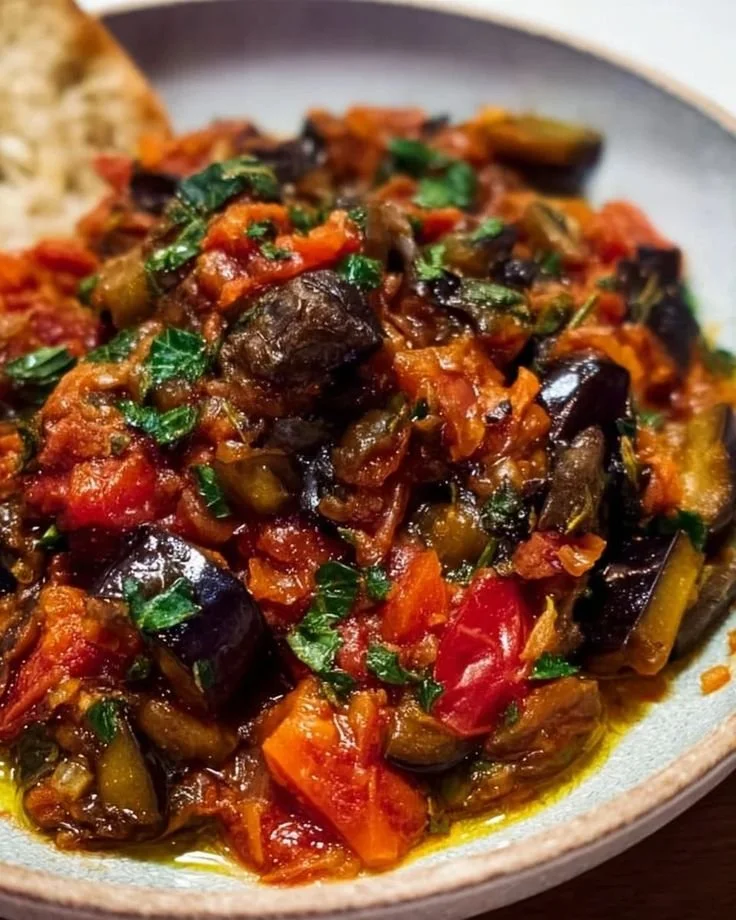
Knowing when caponata is done is more about feel than time. You want the eggplant to be tender but still hold its shape, the peppers to be softened, and the overall mixture to taste balanced—bright from the vinegar, salty from the capers and olives, and slightly sweet from the roasted eggplant. When I test a spoonful and the flavors snap into place, I consider it finished.
I love serving this warm or at room temperature. It makes an irresistible crostini topping with a drizzle of olive oil and a sprinkle of parsley, but it is equally at home beside roasted chicken or spooned over creamy polenta. For an easy weeknight option, I toss a big scoop onto quinoa or farro; sometimes I pair it with another favorite like a quinoa roasted veggie salad for a filling vegetarian spread. When entertaining, I set it out with crusty bread, marinated cheeses, and olives so people can graze.
A quick serving tip: a squeeze of lemon on top brightens everything, especially if you substituted lemon juice for the vinegar earlier.
A Few Ways to Make It Different
I am a big believer in variation. One simple change is to swap the green olives for kalamata for a deeper, fruitier olive note. Another is to make it spicier by adding a chopped red chili when you sauté the onion. If you want a Mediterranean brunch twist, fold in a handful of chopped fresh basil and serve alongside soft-scrambled eggs. Those are just two variations; a third is to add toasted pine nuts for texture and a little nutty richness.
Practical notes and storage: I often make a double batch and keep leftovers in an airtight container in the fridge for up to four days. Caponata actually tastes better the next day because the flavors meld, so it is perfect for making ahead. If I freeze some, I portion it into freezer-safe containers and it holds up well for a couple of months; just thaw in the fridge overnight and warm gently. One more tip: if you plan to make it ahead, slightly undercook the vegetables so reheating does not turn everything mushy.
If something goes wrong—say the eggplant went limp or the mixture seems flat—add a splash more red wine vinegar or a little extra capers to brighten it, and roast a few more cubes of eggplant to reintroduce texture.
Conclusion
If you want to compare techniques or see a different take on the same idea, Ina Garten’s version is a great reference for presentation and timing, and Love and Lemons offers a fresh, vegetable-forward perspective that inspired one of my last tweaks. For further reading, I recommend Ina Garten’s helpful approach in her Roasted Eggplant Caponata Recipe and a vibrant, vegetable-focused version at Eggplant Caponata Recipe – Love and Lemons.
Roasted Eggplant Caponata
Ingredients
Method
- Drain the cubed eggplant and toss it with about 1/4 cup olive oil and a generous pinch of salt, then spread on a sheet tray.
- Chop the bell peppers and celery, dice the onion, and mince the garlic while the eggplant is draining.
- Preheat the oven and roast the eggplant until the edges are browned and slightly crisp.
- Sauté the onions and celery in the same 1/4 cup olive oil until they are soft and just beginning to color. Add the garlic toward the end so it does not burn.
- Add the bell peppers and sauté until slightly crunchy.
- Stir in the can of diced tomatoes (juice and all), followed by the capers and green olives, adjusting salt and pepper.
- Add the red wine vinegar and let everything simmer.
- Combine the roasted eggplant with the sautéed mixture gently.
- Serve warm or at room temperature, with options like crostini, roasted chicken, or over creamy polenta.
- Optionally, drizzle with olive oil and sprinkle with parsley.